Global leaders and policymakers gather in India for the Raisina Dialogue as geopolitical tensions, technological disruption and economic security reshape international relations…reports Asian Lite News
Global leaders, diplomats and technology experts have gathered in India’s national capital region for the annual Raisina Dialogue, a major strategic affairs forum examining the shifting dynamics of geopolitics, economic security and technological change.
The three-day conference, organised by the Observer Research Foundation in partnership with India’s Ministry of External Affairs, runs from March 5 to 7 under the theme “Samskara: Assertion, Accommodation, Advancement.” Discussions are focusing on how emerging technologies, strategic competition and evolving alliances are reshaping the international order.
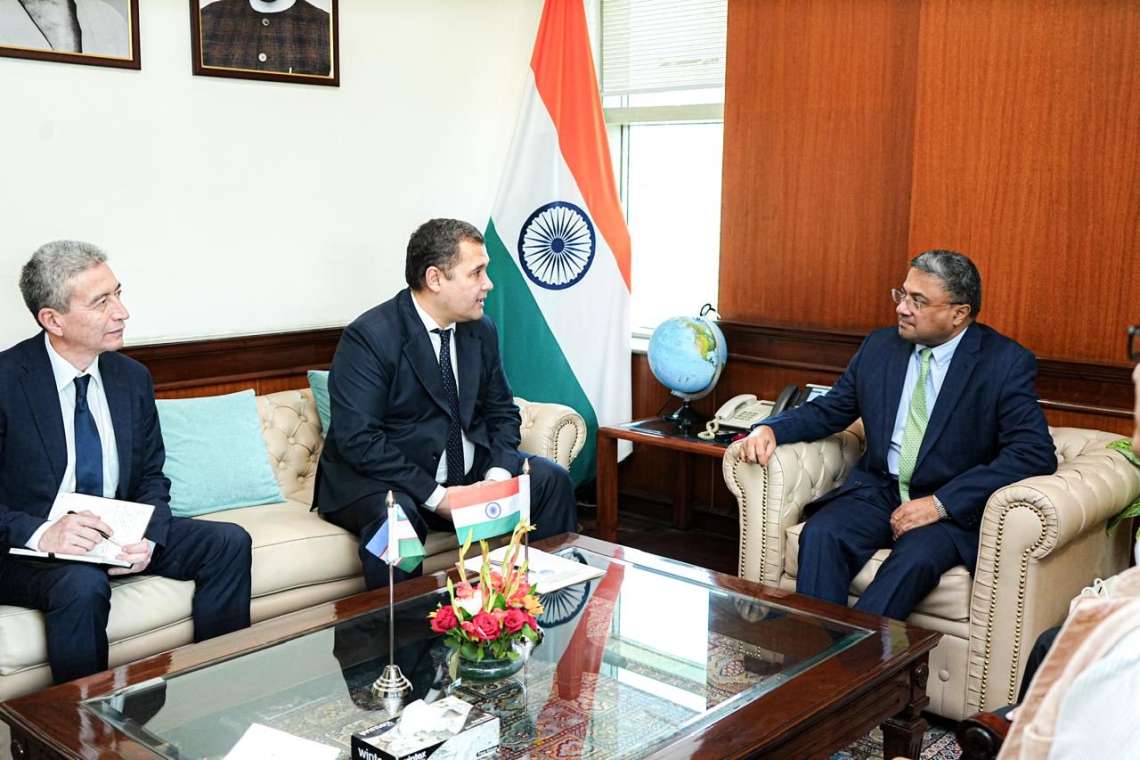
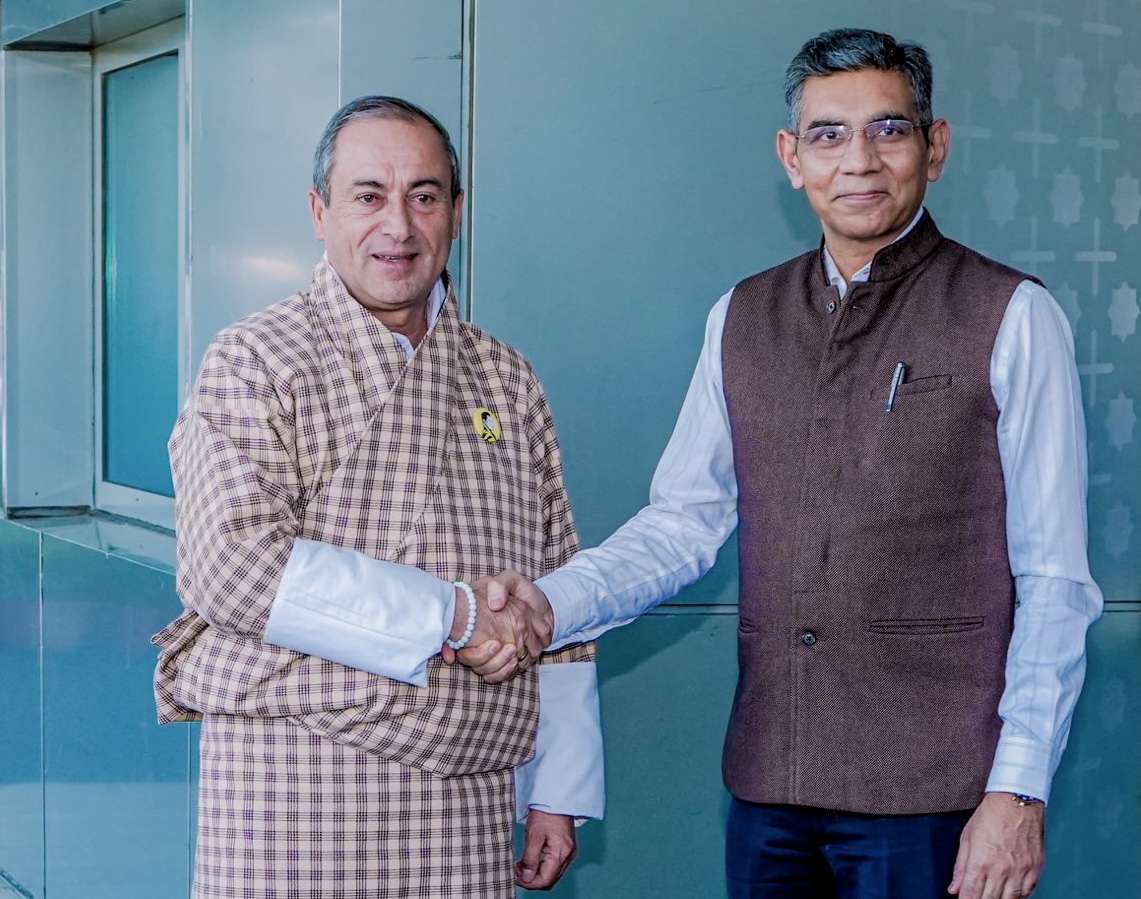
The gathering has drawn several foreign ministers and senior policymakers, including Malta’s Deputy Prime Minister and Minister for Foreign Affairs and Tourism, Ian Borg; Bhutan’s Minister for Foreign Affairs and External Trade, Lyonpo D N Dhungyel; and Mauritius’ Minister of Foreign Affairs, Regional Integration and International Trade, Dhananjay Ramful.
Other participants expected to attend include Seychelles’ Minister for Foreign Affairs and Diaspora, Barry Faure, and Sri Lanka’s Minister of Foreign Affairs, Foreign Employment and Tourism, Vijitha Herath. Finland’s President Alexander Stubb, who arrived in the national capital on Wednesday, is the chief guest for this year’s dialogue.
The Raisina Dialogue has increasingly become one of the most prominent global forums on international strategy, often compared with the Munich Security Conference. The event has also attracted growing attention from European policymakers and analysts in recent years, including in London, where discussions around transatlantic security, supply chains and digital governance closely mirror themes debated in Westminster and policy circles.
This year’s programme reflects mounting global concern about how technology is altering the balance of power. Analysts at the conference have described the world as entering a “technopolar” era, in which influence is increasingly determined by control over artificial intelligence systems, semiconductor production, and digital infrastructure.
The opening sessions are focusing on the erosion of traditional security guarantees and the emergence of digital-first governance models. Panels are also examining the future of transatlantic security and what speakers describe as the “Paradox of NATO” — the expectation that European members of the alliance may need to invest more heavily in their own defence capabilities in the face of uncertainty about long-term US commitments.
The debate is particularly relevant for European capitals such as London, where policymakers have been reassessing defence spending, military readiness and technological cooperation with allies in response to shifting global security dynamics.
Another prominent discussion will centre on India’s Digital Public Infrastructure model, which has expanded digital identity and payment systems across the country. Speakers at the conference are describing the initiative as a potential “Manhattan Project for AI for public good”, aimed at extending digital services to rural populations and informal workers.
Climate geopolitics is also expected to feature prominently in the talks. Policymakers are exploring ways to de-risk climate finance and protect green investment flows from geopolitical rivalry, while analysts highlight emerging renewable energy partnerships linking the Gulf, Europe and developing economies.
The second day of the forum will turn more directly to security risks and technological competition. One major session will examine deterrence in the Taiwan Strait and how global dependence on semiconductor production — sometimes described as “Pax Silica” — is shaping geopolitical stability.
Discussions are also expected to address the widening gap between Western defence production capacity and Russia’s wartime industrial mobilisation, an issue closely followed by defence planners in both Europe and the United Kingdom.
Multilateral institutions will also come under scrutiny. Participants are set to debate the United Nations Security Council’s declining credibility amid a rise in unilateral actions by major powers.
Other panels will examine Africa’s demographic expansion, Latin America’s role in supplying critical minerals needed for artificial intelligence and clean technology, and India’s evolving strategic partnerships with both Europe and Russia.
Experts will also discuss the risks associated with emerging forms of artificial intelligence, including concerns about autonomous systems, cyber vulnerabilities and digital sovereignty.
The final day of the dialogue will focus on economic resilience and the future global order. Sessions will explore maritime security challenges across the Indian Ocean and the Red Sea, including threats to undersea communication cables and the growing use of autonomous maritime technologies.
Participants will also debate economic coercion and supply chain security as global trade becomes increasingly entangled with geopolitical rivalry. Another key topic will be the proposed India-Middle East-Europe Economic Corridor, a connectivity initiative viewed by many analysts as a potential logistics and trade bridge linking Asia, the Middle East and Europe, including major financial centres such as London.
Across the forum’s agenda, India is presenting itself as a “bridge nation” between developed economies and the Global South, highlighting its ambitions in digital governance, maritime security and inclusive economic growth. The dialogue will conclude with discussions on India’s long-term development strategy, including the vision of “Viksit Bharat 2047”, which aims to transform the country into a developed economy by the centenary of its independence.