India successfully tests 1,000 km range cruise missile, advancing indigenous deep-strike capability and strengthening tri-service precision warfare potential amid growing focus on long-range conventional deterrence, reports India Daily News Desk
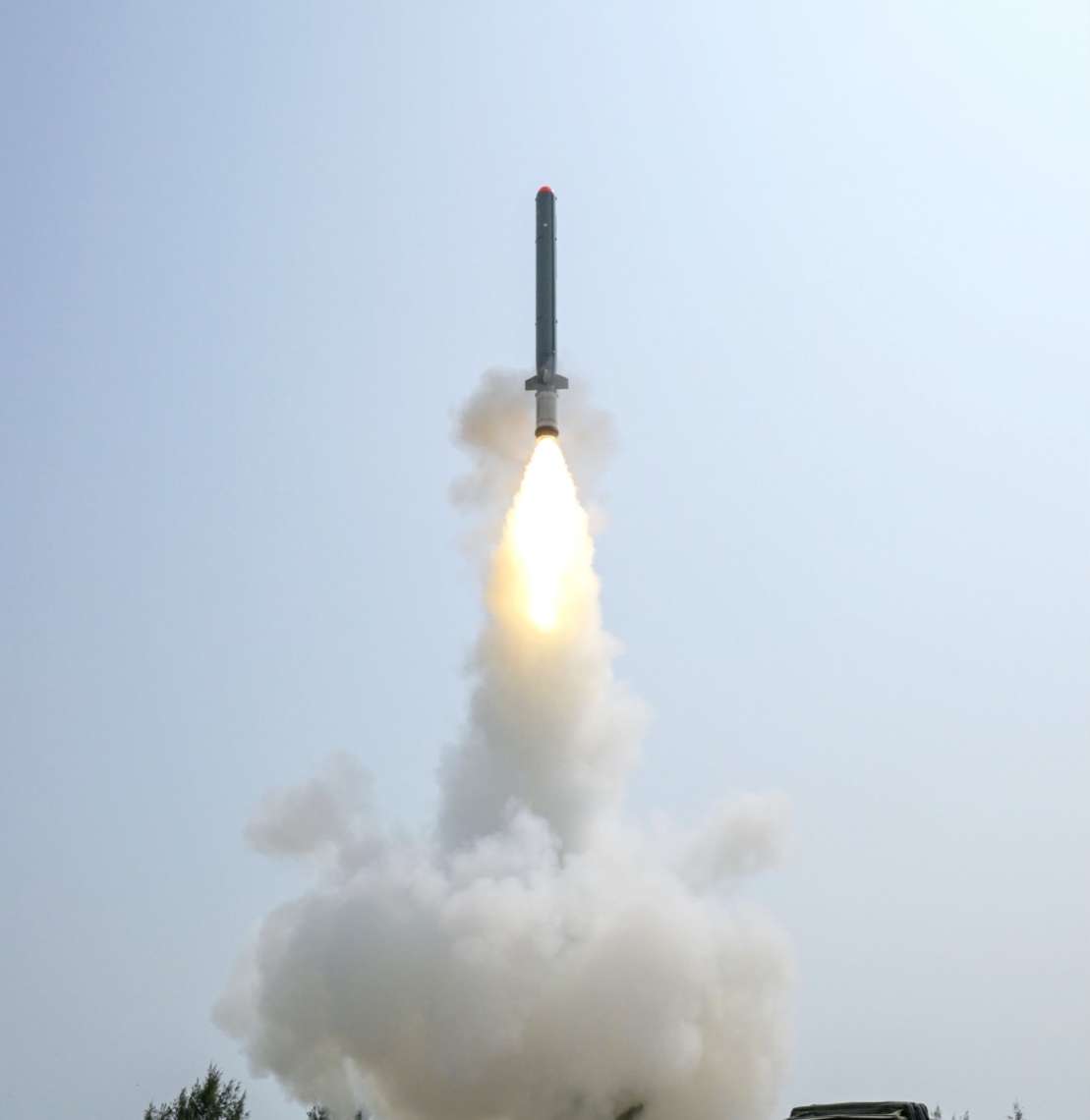
India has moved a step closer to fielding a long-range conventional strike capability, with the Defence Research and Development Organisation successfully testing its Long Range Land Attack Cruise Missile (LRLACM) from the eastern seaboard.
The flight-test, conducted from Dr APJ Abdul Kalam Island off the Odisha coast, met all mission objectives, according to officials. Data gathered through radar, telemetry and electro-optical tracking systems deployed by the Integrated Test Range at Chandipur confirmed the missile’s performance across key parameters, marking a significant milestone in its development trajectory.
The LRLACM is an indigenously developed system, with its subsystems designed and built by multiple DRDO laboratories in collaboration with domestic industry partners. The Aeronautical Development Establishment serves as the nodal agency for the programme. Senior DRDO officials, along with representatives from the Indian Navy and the Indian Air Force, witnessed the launch.
Defence Minister Rajnath Singh congratulated the scientific community and industry stakeholders involved in the project, calling the successful test a boost to India’s defence capabilities. DRDO Chairman Rajesh Kumar Singh monitored the launch and commended the teams for achieving the test objectives.
The latest trial is understood to be the second publicly known test of the missile following its maiden flight in November 2024. With an estimated range of 1,000 to 1,500 kilometres, the LRLACM places India in a select group of nations possessing long-range land-attack cruise missile capabilities.
Designed for precision strikes, the missile is capable of navigating complex flight paths using waypoint guidance and terrain-following systems, The News Indian Express reported.
Its ability to fly at low altitudes and execute manoeuvres, including sea-skimming profiles, enhances its survivability against modern radar and air-defence networks. These features are critical for penetrating heavily defended airspace and striking high-value targets deep within adversary territory.
The missile is powered by the indigenous Manik small turbofan engine, a key technological breakthrough achieved after years of development under the earlier Nirbhay programme. The Nirbhay project, initiated in 2013, faced multiple setbacks related to propulsion and guidance systems, prompting extensive redesign efforts. Those challenges ultimately led to the development of advanced navigation systems and a fully indigenous propulsion solution that now underpin the LRLACM, TNIE reported.
The system is being configured for deployment across all three branches of the armed forces. Ground-based mobile launchers, naval vertical launch systems and a prospective air-launched variant are all part of the planned operational framework, giving the missile flexibility across platforms and theatres.
Strategically, the LRLACM is expected to complement the role of the BrahMos supersonic cruise missile. While BrahMos is optimised for high-speed strikes, the LRLACM offers extended range and stealthier flight characteristics, enabling sustained deep-strike missions against targets such as command centres, airbases, logistics hubs and radar installations.
The missile’s development comes at a time when militaries worldwide are increasingly prioritising long-range precision strike capabilities. Comparable systems include the United States’ Tomahawk, Russia’s Kalibr and China’s CJ-10, all of which are designed to deliver conventional payloads with high accuracy over extended distances.
For India, the naval dimension of the LRLACM is particularly significant. Once integrated into universal vertical launch systems on frontline warships, the missile will allow the Indian Navy to target strategic locations far inland while operating from stand-off distances in the Arabian Sea or Bay of Bengal. This capability enhances deterrence while reducing exposure to hostile defences.
The programme has also received institutional backing, with initial acquisition approvals granted by India’s defence establishment. The Indian Air Force and Army have already secured early clearances for procurement, while the Navy is expected to follow once developmental trials are completed. The combined value of these acquisitions is projected to run into tens of thousands of crores, underlining the scale of the programme.