The simultaneous commissioning highlights the increasing role of domestic shipyards in delivering complex naval platforms under India’s push for self-reliance in defence manufacturing, reports India Daily News Desk
The Indian Navy is preparing to induct three newly built warships in a single ceremony in Kolkata later this month, in a move that underscores its ongoing fleet modernisation drive and expanding operational footprint in the Indian Ocean Region.
According to a report by The New Indian Express, the commissioning ceremony is scheduled for the third week of June and will feature stealth frigate INS Dunagiri, anti-submarine warfare shallow water craft INS Agray and survey vessel INS Sanshodhak. The event is expected to be attended by a senior Union government dignitary and may coincide with a planned visit by Prime Minister Narendra Modi to Kolkata.
This will mark only the second occasion in recent years where three frontline naval platforms are commissioned simultaneously. The last such instance came in January 2025, when the Prime Minister presided over the induction of INS Surat, INS Nilgiri and submarine INS Vaghsheer at Mumbai’s Naval Dockyard.

The latest inductions come amid heightened strategic competition in the Indian Ocean, with India accelerating naval acquisitions in response to the expanding presence of the Chinese Navy in the region.
INS Dunagiri, the fifth frigate under the Project 17A programme and the second built by Garden Reach Shipbuilders and Engineers, represents a key addition to the Navy’s frontline combat capabilities.
The ship is named after the Himalayan peak, Dunagiri. Her crest was unveiled on 11 June 2026. The crest depicts a Himalayan osprey flying above a mountain peak as a symbol for “precision, vigilance and dominance”. This ship inherits the name, crest and legacy of the erstwhile Leander-class frigate INS Dunagiri (1977), now decommissioned.
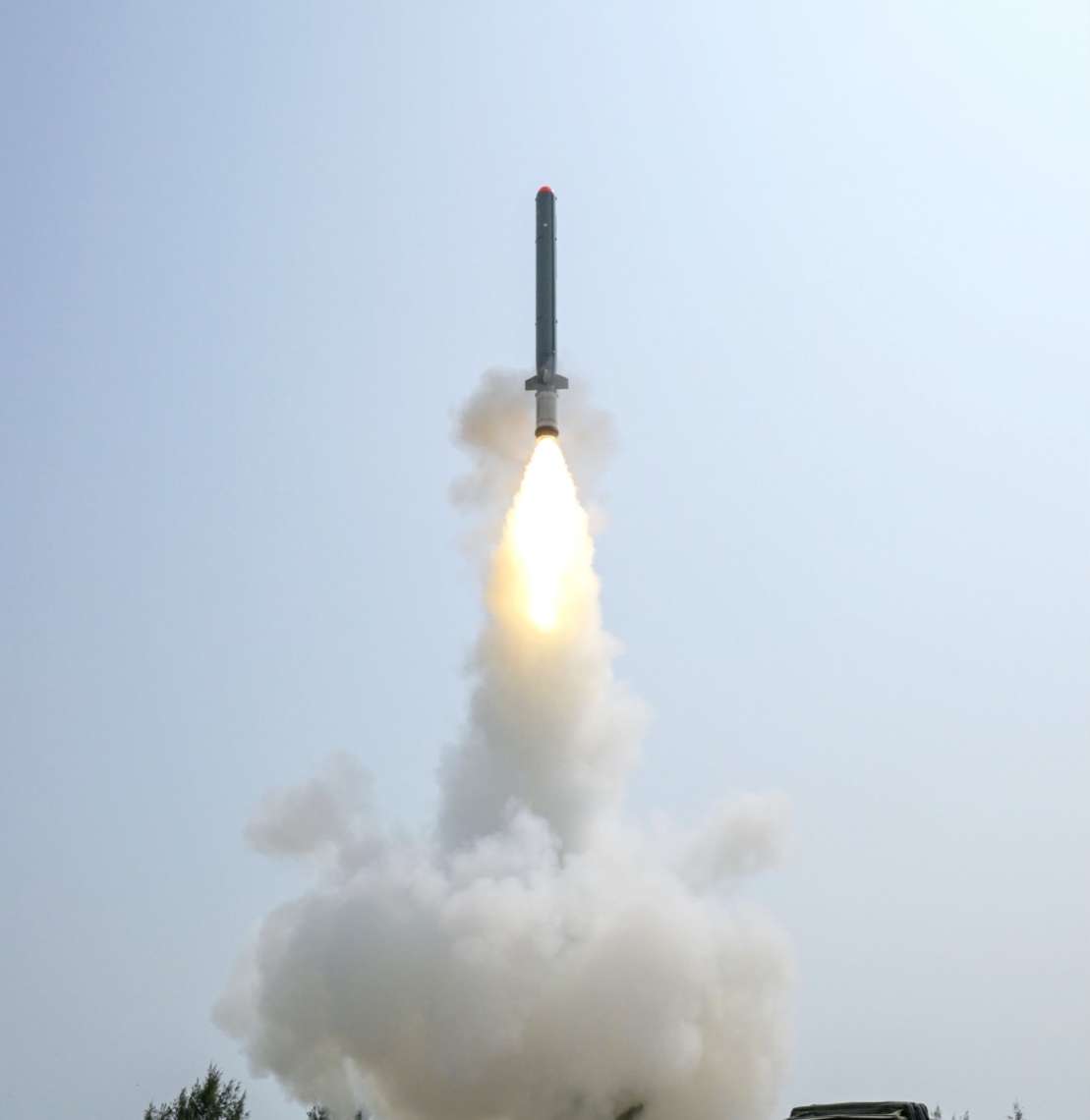
Equipped with BrahMos supersonic cruise missiles, surface-to-air missile systems and close-in weapon systems, the stealth frigate is designed for multi-role operations, including anti-air, anti-surface and anti-submarine warfare. It is powered by a Combined Diesel or Gas propulsion system and incorporates an Integrated Platform Management System. Notably, the vessel was delivered in 80 months, an improvement over the 93 months taken for the lead ship of the class, TNIE reported.
INS Agray forms part of the Arnala-class Anti-Submarine Warfare Shallow Water Craft programme, a 16-vessel project aimed at strengthening coastal defence. Designed for operations in littoral waters, the platform is equipped with lightweight torpedoes, indigenous anti-submarine rocket launchers and advanced sonar systems. Its role is particularly significant as India seeks to counter evolving underwater threats, including the Pakistan Navy’s growing submarine fleet.
The ship, Agray, was named after her predecessor, a retired Abhay-class corvette, which itself was a subclass of Soviet-origin Pauk-class corvette.
The keel laying ceremony of the ship, along with her sister ship INS Akshay, was conducted on 31 December 2022 at GRSE Main Works in Kolkata by the then Defence Secretary, Giridhar Aramane. Christened Agray, the ship was launched into the water of the Hooghly River on 13 March 2024. The chief guest of the event was the then Chief of the Air Staff, Air Chief Marshal Vivek Ram Chaudhari.
The ship was delivered to the Indian Navy on March 30 this year.

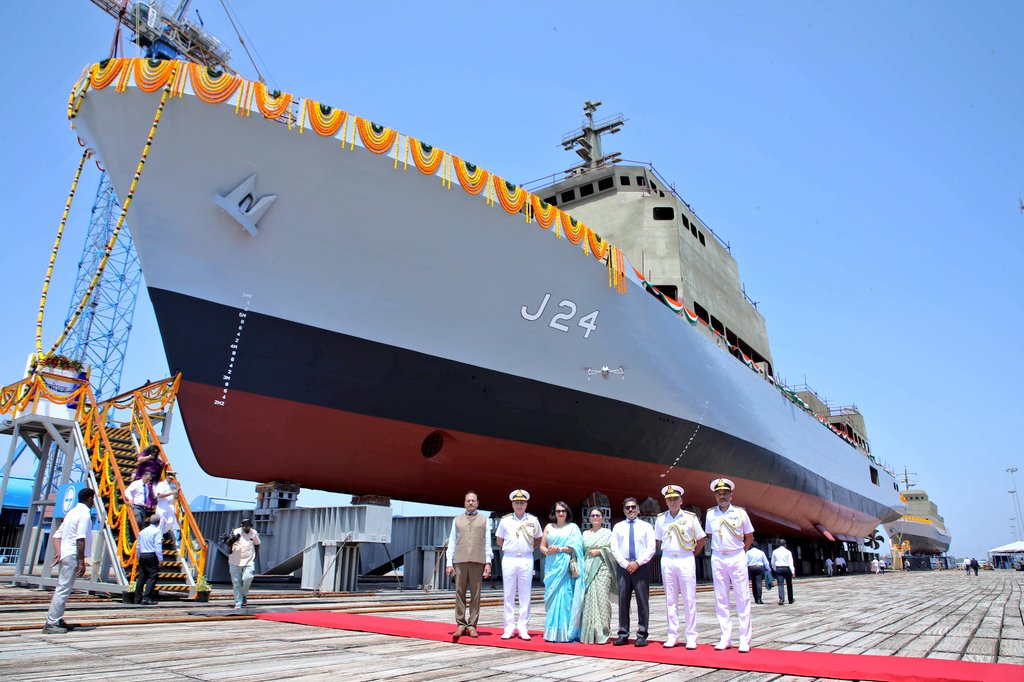
INS Sanshodhak, meanwhile, is the fourth and final vessel in the Sandhayak-class survey ship programme. The 110-metre ship, with a displacement of around 3,300 tonnes, is fitted with advanced hydrographic survey systems, Autonomous Underwater Vehicles and Remotely Operated Vehicles. These capabilities are crucial for seabed mapping, navigational charting and supporting both military and civilian maritime operations.
They have a cruising speed of 16 knots with a maximum speed of 18 knots and an operating range of 6,500 nautical miles at a speed of 14 to 16 knots. The ships have a complement of 231 and are equipped with hydrographic sensor equipment and a hangar which can accommodate one advanced light helicopter. In the secondary role, the ships can be fitted with a CRN 91 naval gun. In addition, the vessels will follow MARPOL (marine pollution) Standards of the International Maritime Organisation and will be built per Classification Society Rules and Naval Ship Regulations.
The primary role of the vessels would be to conduct coastal and deep-water hydro-graphic survey of ports, navigational channels, Exclusive Economic Zones and collection of oceanographic data for defence. Their secondary role would be to perform search & rescue, ocean research and function as hospital ships for casualties.