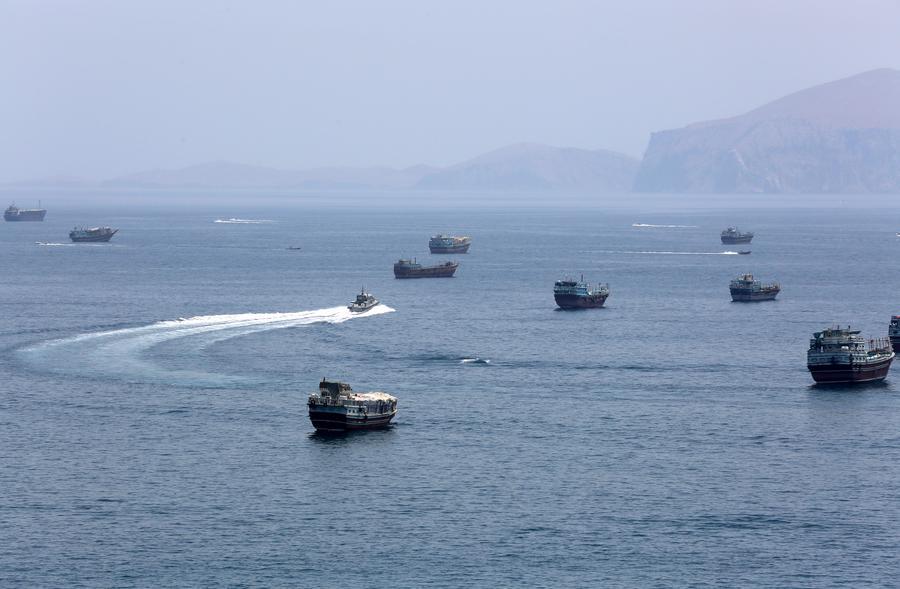
IRGC says three oil tankers were hit in the Strait of Hormuz and three US-affiliated vessels elsewhere…reports Asian Lite News Desk
Iran’s Islamic Revolutionary Guard Corps (IRGC) said it had struck three oil tankers in the Strait of Hormuz and three US-affiliated vessels elsewhere, in what it described as retaliation for American attacks on Iranian tankers.
The IRGC Navy said the three tankers targeted in the strategically vital Strait of Hormuz had attempted to cross the waterway through what it called an “unauthorised” route.
In a statement carried by the IRGC’s official Sepah News outlet, the force warned vessels operating in the Gulf and near the Strait of Hormuz against following routes it considers unauthorised.
Iran’s state-run IRIB news agency had earlier reported that three Iranian oil tankers were attacked by the US military off the country’s southern coast.
Iranian military spokesman Ebrahim Zolfaghari warned Washington that further attacks on Iranian vessels or the continuation of a naval blockade would trigger a stronger response.
He said Iranian armed forces could intensify and expand strikes against US military vessels in the region if what Tehran described as harassment of its ships continued.
The latest exchange marks a further escalation in tensions around the Strait of Hormuz, one of the world’s most important shipping chokepoints.
Meanwhile, US President Donald Trump said Washington could soon target Iran’s heavily fortified Pickaxe Mountain facility near the Natanz nuclear enrichment site.
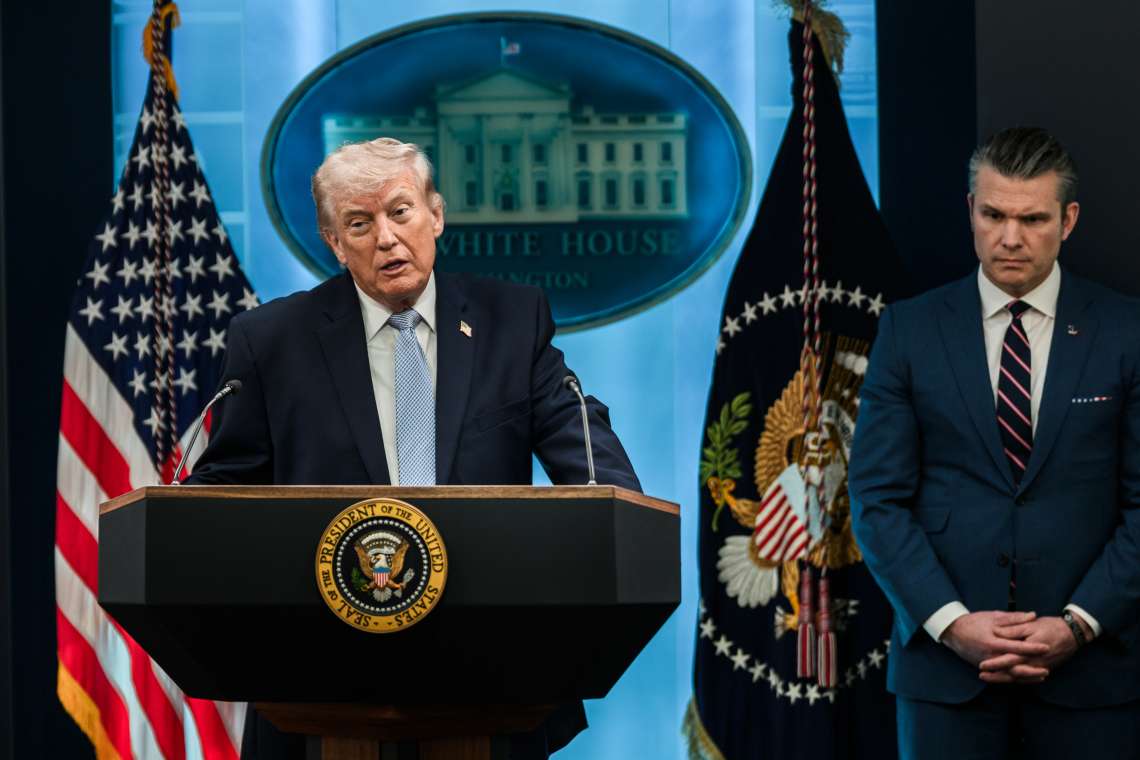
“We may hit Pickaxe very soon,” Trump told reporters at the White House, referring to an underground facility where Washington believes Iran has moved part of its stockpile of highly enriched uranium.
Trump also sought to downplay the scale of the confrontation, describing it as an intermittent military conflict rather than a full-scale war.
The tensions follow US-Israeli strikes on Iran on February 28, after which Tehran imposed restrictions on vessels passing through the Strait of Hormuz that it said were linked to the United States or Israel.
US forces subsequently imposed a naval blockade targeting ships travelling to and from Iranian ports and coastal areas, further raising fears over the security of one of the world’s busiest energy shipping routes.
The competing claims could not be independently verified, and the developments underscore the rapidly escalating maritime confrontation between Washington and Tehran.