Soekarno-Hatta Airport temporarily shut as ash from Mount Anak Krakatau disrupts dozens of domestic and international flights…reports Asian Lite News Desk
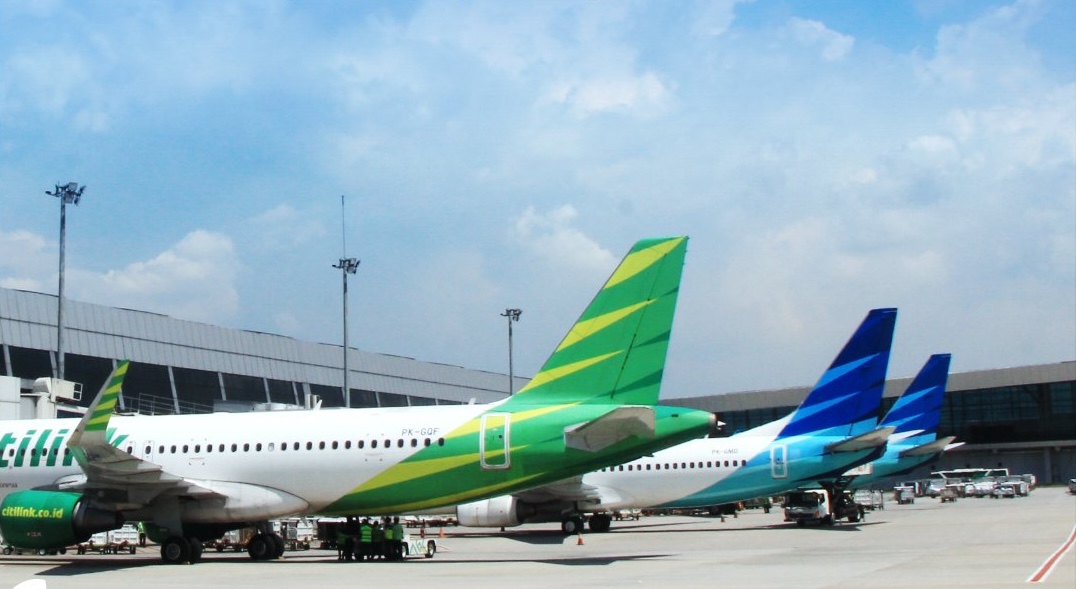
Indonesia’s main international airport was temporarily closed after volcanic ash was detected in the area, causing widespread disruption to domestic and international flights.
Soekarno-Hatta International Airport near Jakarta suspended operations early Sunday after ash from an eruption of Mount Anak Krakatau was reported around the airport, the Ministry of Transportation said.
The closure affected dozens of services, including major international routes linking Indonesia with Singapore, Hong Kong, Sydney, Seoul, Doha, Amsterdam and Kuala Lumpur.
According to Lukman F. Laisa, the ministry’s director general of civil aviation, 16 international flights were cancelled, seven were delayed and five rescheduled.
Domestic operations were also hit, with four flights cancelled and another diverted. Services to Lampung, Denpasar and Surabaya were among those affected.
Aviation authorities said they were closely monitoring the volcanic activity and working with airlines, airport operators, air navigation authorities and the Meteorology, Climatology and Geophysics Agency to determine when normal operations could safely resume.
Indonesia sits on the Pacific Ring of Fire and is home to dozens of active volcanoes, making volcanic ash a recurring threat to aviation and communities across the sprawling archipelago.
The disruption comes amid heightened volcanic activity elsewhere in the country. Mount Sinabung in North Sumatra recently sent a thick column of ash around 3,500 metres above its summit, with ash blanketing parts of the nearby city of Berastagi and reducing visibility.
Authorities urged residents in affected areas to wear masks and remain alert to further volcanic activity, while restrictions remain in place around Sinabung’s crater and surrounding river systems due to the risk of volcanic mudflows.
Mount Anak Krakatau, located in the Sunda Strait between Java and Sumatra, remains one of Indonesia’s most closely monitored volcanoes due to its frequent eruptions and potential impact on nearby population centres and air routes.