Lucknow and Ghaziabad lead Uttar Pradesh in voter deletions after electoral roll revision, while Muslim-dominated districts see relatively fewer exclusions, according to official draft data….reports Asian Lite News
Lucknow and Ghaziabad have emerged as the districts with the highest proportion of voters excluded from Uttar Pradesh’s draft electoral roll following the Special Intensive Revision (SIR), even as Muslim-dominated districts recorded comparatively fewer deletions, according to official data released by the Election Commission.
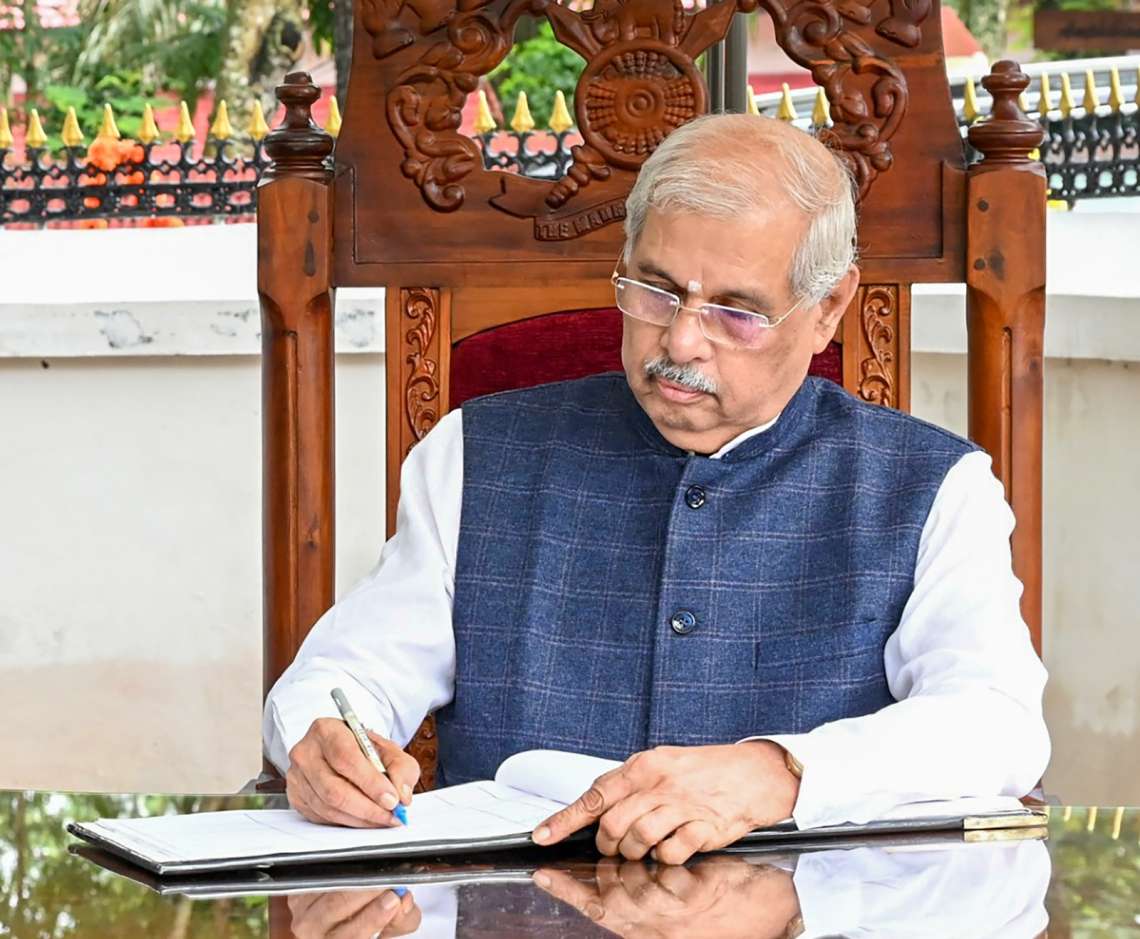
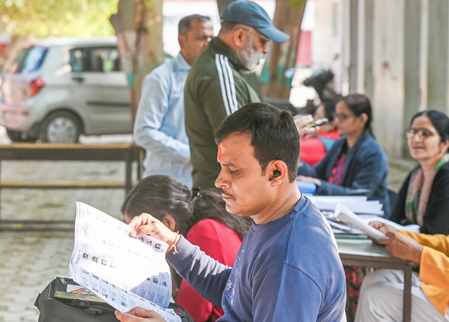
The draft roll, published on Tuesday, shows that 2.89 crore voters, or nearly 18.7 per cent of the 15.44 crore electors listed earlier, were not included in the revised list. At the same time, 12.55 crore voters were retained. Uttar Pradesh Chief Electoral Officer Navdeep Rinwa said the exclusions were due to deaths, permanent migration, multiple registrations and cases where verification forms could not be collected during the revision exercise.
Among all districts, Lucknow recorded the highest share of uncollected forms at 30.04 per cent, affecting around 12 lakh electors. The district’s electorate dropped sharply from 39.94 lakh in October 2025 to 27.94 lakh in the revised draft. Official data shows that the uncollected category in Lucknow included over 1.28 lakh death-related cases, 4.28 lakh voters marked untraceable or absent, and more than 5.36 lakh cases of permanent migration.
Ghaziabad followed closely with 28.83 per cent uncollected forms, involving approximately 5.83 lakh electors. The district’s total electorate declined from 28.38 lakh to 20.20 lakh. The data attributes the exclusions to around 64,000 deaths, over 3.20 lakh voters found untraceable or absent, and about 3.60 lakh cases of permanent shifting.
Balrampur ranked third, with 25.98 per cent of forms remaining uncollected, translating to roughly 4.11 lakh electors. Its electorate fell from 15.83 lakh to 11.18 lakh. The breakdown includes around 63,000 deaths, 1.60 lakh untraceable voters and 1.33 lakh cases of permanent migration. Kanpur Nagar followed with 25.50 per cent uncollected forms, affecting about 9.02 lakh electors, as its voter base dropped from 35.38 lakh to 26.36 lakh.
Prayagraj also saw a significant impact, with 24.64 per cent of forms uncollected, corresponding to nearly 11.56 lakh electors. The district’s electorate declined from 46.93 lakh to 35.37 lakh, with deaths, untraceable voters and permanent migration accounting for the majority of deletions.
Gautam Buddh Nagar and Agra rounded out the top eight districts, with uncollected form rates of 23.98 per cent and 23.25 per cent respectively. In Gautam Buddh Nagar, around 4.47 lakh electors were excluded, while Agra saw a reduction of approximately 8.37 lakh voters from its earlier rolls.
In contrast, districts with sizeable Muslim populations recorded relatively lower levels of voter deletions. Rampur registered 18.29 per cent uncollected forms, Moradabad 15.76 per cent, Saharanpur 16.37 per cent and Muzaffarnagar 16.29 per cent. Other districts with notable Muslim population pockets, including Aligarh at 18.60 per cent, Azamgarh at 15.25 per cent, Mau at 17.52 per cent and Pilibhit at 13.61 per cent, also remained below the levels seen in major urban centres such as Lucknow and Ghaziabad.
Several prominent political districts showed moderate figures. Varanasi recorded 18.18 per cent uncollected forms, Gorakhpur 17.61 per cent, Rae Bareli 16.35 per cent, Amethi 18.60 per cent, Etawah 18.95 per cent, Kannauj 21.57 per cent and Mathura 19.19 per cent.
The lowest levels of deletions were seen in the Bundelkhand region. Lalitpur reported just 9.95 per cent uncollected forms, the lowest in the state. Hamirpur followed with 10.78 per cent, while Mahoba, Banda, Chitrakoot and Jhansi recorded between 12 and 14 per cent. Election officials said these districts traditionally experience lower migration rates, which may partly explain the smaller number of exclusions.
Chief Electoral Officer Navdeep Rinwa said the figures reflect only the draft electoral roll and remain subject to correction. He said voters whose names are missing or incorrectly marked still have the opportunity to file claims and objections until 6 February. The final electoral roll is scheduled for publication on 6 March after the verification process is completed.
Election authorities have emphasised that the Special Intensive Revision is aimed at improving the accuracy of voter lists by removing duplication and outdated entries, rather than excluding eligible voters. Officials said extensive door-to-door verification was carried out, though the scale of migration in urban and semi-urban districts posed challenges.
With the claims and objections window now open, political parties and civil society groups are expected to intensify outreach efforts to ensure eligible voters are reinstated where required. The final figures will be closely watched, particularly in large urban districts where deletions have been highest and electoral outcomes can hinge on narrow margins.