Kerala Governor promises review of Malayalam Language Bill after concerns from Karnataka authorities, as Kannada-speaking minorities in Kasaragod warn of constitutional and educational fallout….reports Asian Lite News
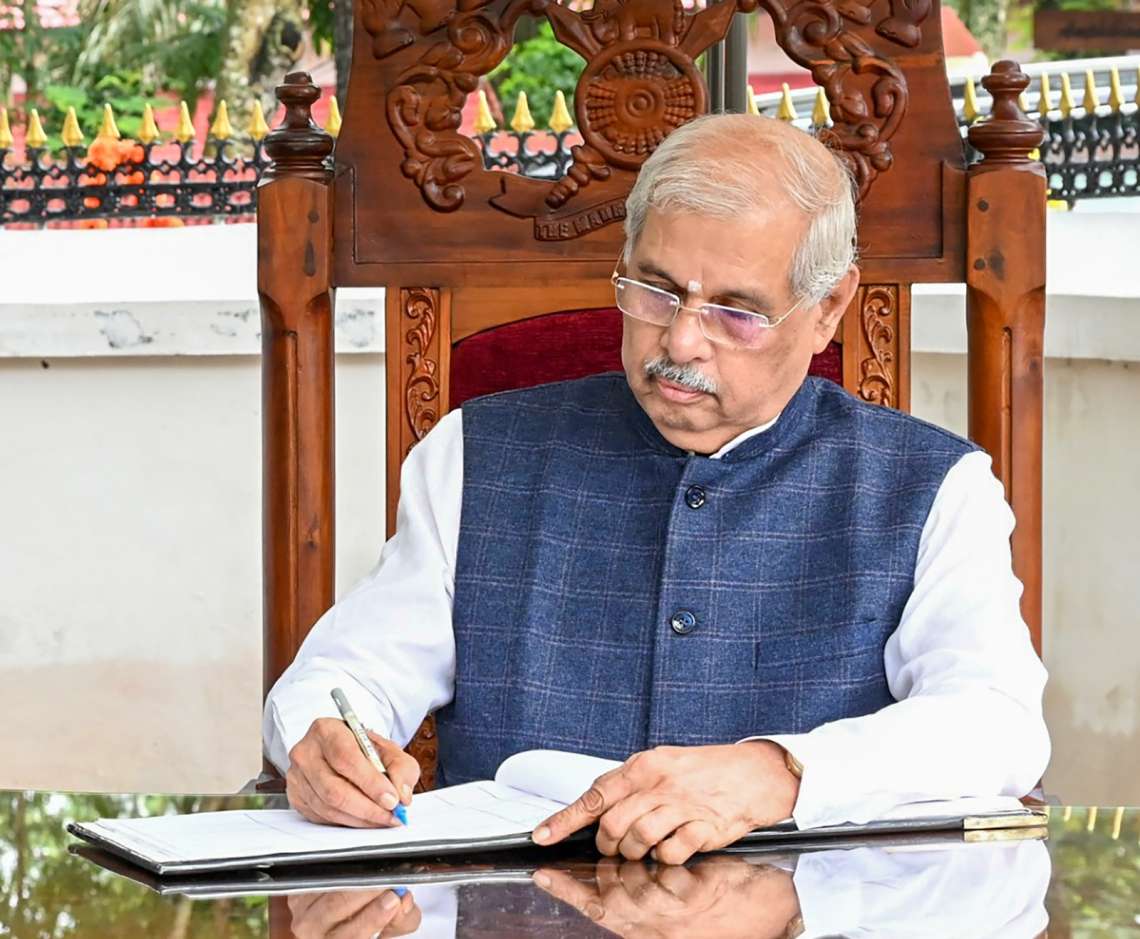
The Kerala Governor has assured a comprehensive review of the proposed Malayalam Language Bill, 2025, following strong representations from Karnataka-based authorities who argue that the legislation could adversely affect Kannada-speaking linguistic minorities in northern Kerala’s Kasaragod district.
The assurance came after a delegation from the Karnataka Border Areas Development Authority (KBADA) met Governor Rajendra Vishwanath Arlekar on Wednesday and submitted a detailed memorandum urging him to stall and reconsider the Bill. The proposed legislation seeks to make Malayalam the compulsory first language for students from Classes 1 to 10 across all government and private schools in Kasaragod, including institutions that currently function as Kannada-medium schools.
KBADA has described the Bill as “wholly unconstitutional,” warning that it undermines the educational, cultural and linguistic rights of a sizeable Kannada-speaking population that has historically resided in Kasaragod, a district bordering Karnataka. In a statement following the meeting, the Authority said the proposed law threatens constitutional safeguards meant to protect linguistic minorities across India.
The delegation pointed out that a similar attempt to impose language norms in minority-dominated regions was rejected by the President of India in 2017. It also recalled repeated advisories issued by the Union Ministry of Minority Affairs, which have urged the Kerala government to ensure that linguistic minorities are not marginalised in matters of education and administration.
KBADA has described the Bill as “wholly unconstitutional,” warning that it undermines the educational, cultural and linguistic rights of a sizeable Kannada-speaking population that has historically resided in Kasaragod, a district bordering Karnataka.
Citing Articles 30, 347, 350, 350A and 350B of the Constitution, KBADA argued that the Bill violates provisions guaranteeing minorities the right to establish and administer educational institutions, as well as the right to instruction in the mother tongue at the primary stage. The Authority stressed that these safeguards are not symbolic but binding, particularly in districts with mixed linguistic identities such as Kasaragod.
Beyond education, the delegation raised broader administrative concerns. It called for the appointment of Kannada-speaking teachers in Kannada-medium schools, the installation of Kannada signboards at police stations, railway stations and along national highways, and the use of Kannada in official correspondence where the local population warrants it. Recruitment practices in public offices, the memorandum argued, should also reflect the district’s linguistic composition.
KBADA further sought the revival of regular bi-monthly meetings of the Kasaragod district collector’s committee to address ongoing minority-related issues, warning that the absence of structured dialogue has allowed tensions to persist.
The Authority cautioned that enforcing Malayalam as the first language would place an unfair academic burden on Kannada-speaking children unfamiliar with the language, potentially affecting learning outcomes and future prospects. Students pursuing higher education outside Kerala, particularly in Karnataka and other states, could face long-term disadvantages, it said.
Members of the delegation included KBADA Secretary Prakash V Mattihalli, representatives Subbaiahkatte and Tekkekere Shankaranarayana Bhat, Jayaprakash Narayana Tottetodu, advocate Muralidhara Ballukarya, Kerala State Teachers’ Association president Sukesh A, and other Kannada community leaders from Kasaragod.
According to KBADA, Governor Arlekar assured the delegation that the Bill would not be rushed through and would be carefully examined to ensure that the rights and interests of Kannada-speaking residents are fully protected. The assurance has provided temporary relief to minority groups, though stakeholders say they will continue to closely monitor the legislative process.
The episode has once again highlighted the delicate balance between promoting regional languages and safeguarding India’s pluralistic linguistic fabric, particularly in border districts where cultural identities often overlap.