The request comes as the country continues to grapple with inflation, external financing challenges and economic uncertainty….reports Asian Lite News Desk
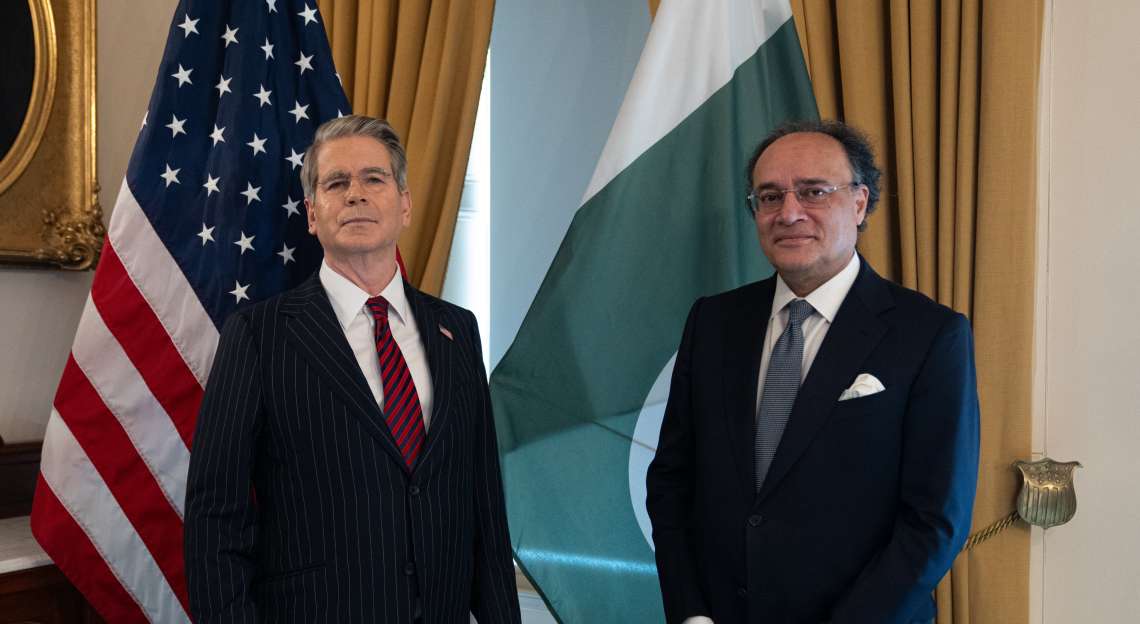
Pakistan’s Finance Minister Muhammad Aurangzeb has requested a $10 billion Exchange Stabilisation Support Facility from US Treasury Secretary Scott Bessent to strengthen the country’s foreign exchange reserves and ease debt pressures, according to a media report.
Citing Pakistan’s Dawn newspaper, India Blooms News Service reported that officials at Pakistan’s embassy in Washington confirmed Aurangzeb had raised the request during talks with Bessent. However, they did not provide further details.
The embassy’s official statement acknowledged that Aurangzeb sought US support during the meeting but did not mention the reported $10 billion figure.
According to the report, the proposed facility would enable the US Treasury, through its Exchange Stabilization Fund, to provide loans or other financial support aimed at strengthening Pakistan’s foreign exchange reserves.
Pakistan’s economic strategy is focused on improving access to international capital markets, strengthening foreign exchange reserves and enhancing its sovereign credit ratings, the report said.

In a post on X, Pakistan’s finance ministry said Aurangzeb discussed the country’s progress towards macroeconomic stability and sustainable, export-led growth with Bessent during their meeting.
The minister also highlighted the impact of regional security developments on Pakistan’s economy.
According to the report, diplomatic sources in Washington said there were “strong chances” that the US could approve the request, adding that the Trump administration remained interested in maintaining engagement with Pakistan.
The reported request comes as Pakistan continues to face significant economic challenges.
Earlier this month, reports indicated that the country’s inflation rate had climbed to 11.7 per cent in May, with economists warning that Pakistan risks entering a cycle of sluggish growth, rising prices and increasing financial stress.
Analysts attributed the higher inflation to a sharp increase in transport costs and prices of perishable food items, both of which rose by around 15 per cent. They also pointed to severe foreign exchange shortages and a rising oil import bill as key factors driving inflationary pressures.
The reports said these challenges have reduced consumer purchasing power and slowed broader economic activity.
They also noted that while the US-Iran conflict disrupted global supply chains, Pakistan remained particularly vulnerable because of its heavy reliance on imported energy and its fragile balance of payments position.