Pakistan’s prolonged economic struggles offer a cautionary lesson for Bangladesh as Islamabad grapples with debt, weak revenues and institutional weaknesses…reports Asian Lite News Desk
Pakistan’s continuing economic difficulties offer a warning for Bangladesh about the importance of political stability, investment, fiscal discipline and strong economic institutions, according to a recent report published in Bangladesh.
The report argued that Pakistan’s problems were not caused by a lack of resources or talent, but by years of political and economic instability, weak investment and difficult fiscal choices that have limited its ability to turn its economic potential into sustained prosperity.
Islamabad is now pursuing reforms, with the World Bank’s ten-year partnership framework highlighting the need for changes to Pakistan’s fiscal system, energy sector and business environment.
For Bangladesh, the report said, Pakistan’s experience underlined the need to prioritise the foundations of economic strength rather than focusing excessively on military or geopolitical influence.
A report in Bangladesh’s Daily Sun noted that Bangladesh had made significant economic and social progress since its independence in 1971, moving beyond the inequalities that existed during the Pakistan period.
“Bangladesh’s economic journey since 1971 is perhaps the strongest rebuttal to the pessimism that once surrounded the new nation. Emerging from a devastating war, widespread poverty and the legacy of economic inequality under the hegemony of Pakistan, Bangladesh chose to invest in its people, empower women, expand exports and build resilience,” the report said.
It added that Bangladesh had surpassed Pakistan on several important economic and social indicators over the past five decades, while warning that the progress should not be taken for granted.
“More than five decades later, the former East Pakistan has not merely survived independently; it has surpassed Pakistan on several important economic and social indicators. That achievement deserves recognition, but it also carries a warning: Bangladesh must not allow the pursuit of military or geopolitical strength to overshadow the economic foundations of national power,” it added.
The warning comes amid renewed debate in Pakistan over the size and cost of the federal government.
Pakistan’s Senate Functional Committee on Devolution, headed by Senator Zamir Hussain Ghumro, has recommended closing around two dozen federal ministries and departments, according to the report.
The proposed list includes ministries and departments dealing with health, education, national food security, water resources, climate change, housing, planning and development, industries and petroleum.
The committee has argued that federal spending, which has risen to Pakistani Rs 19 trillion, should be reduced to Rs 13 trillion. It has also recommended transferring several responsibilities entirely to the provinces.
The report said Pakistan’s problems extend beyond the size of its government, citing the World Bank’s assessment that the country’s development has been held back for decades by “policy and institutional weaknesses”.
Pakistan has experienced periods of economic growth, but these have repeatedly been followed by rising debt, trade imbalances and difficult economic adjustments, according to the report.
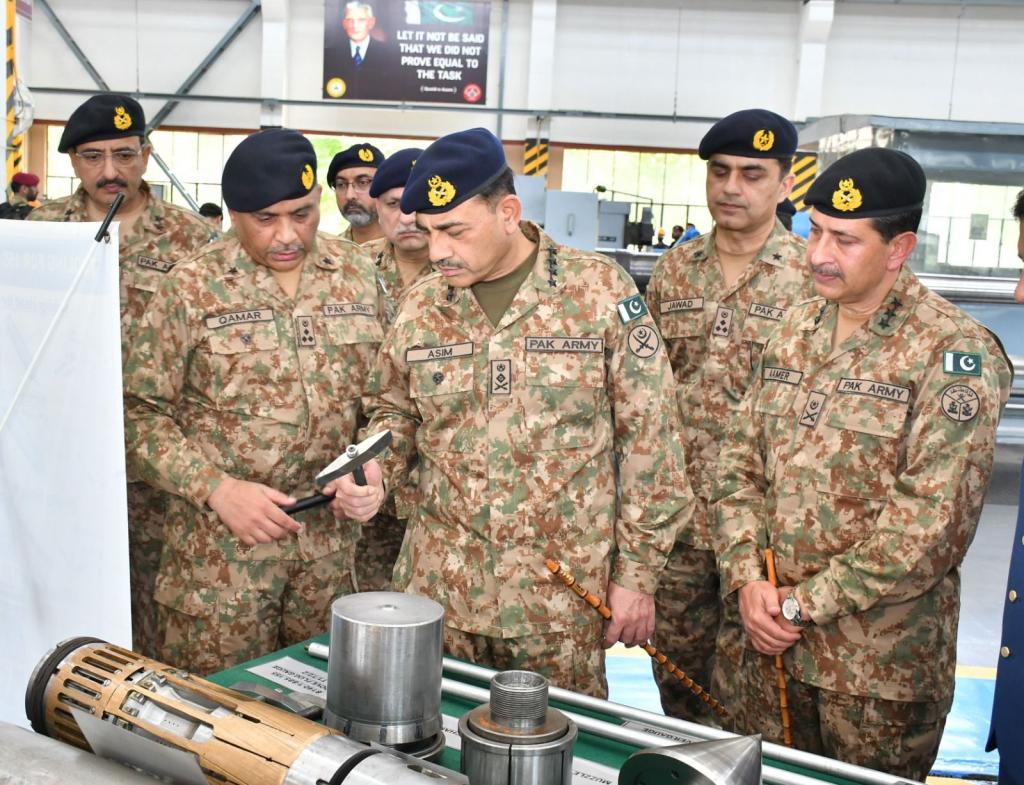
It also highlighted the country’s rising military expenditure. Citing the Stockholm International Peace Research Institute, the report said Pakistan’s military spending increased 11 per cent in 2025 to $11.9 billion, driven largely by orders for new aircraft and missiles.
The report questioned whether Pakistan’s definition of national security gives sufficient attention to economic stability amid growing fiscal pressures.
“But when a country faces crushing debt-service costs and weak public revenues, it is legitimate to ask whether national security is being defined too narrowly through military capability while economic security receives insufficient attention,” it said.
For Bangladesh, the report concluded that Pakistan’s experience should reinforce the importance of maintaining strong economic institutions, investing in human development and ensuring that national priorities remain focused on long-term economic resilience.