June 28, 2026
3 mins read

Political Witch Hunt Hits Bangladesh’s Healthcare: Report

Report says action against senior doctors is eroding institutional stability and accelerating brain drain in Bangladesh….reports Asian Lite News Desk

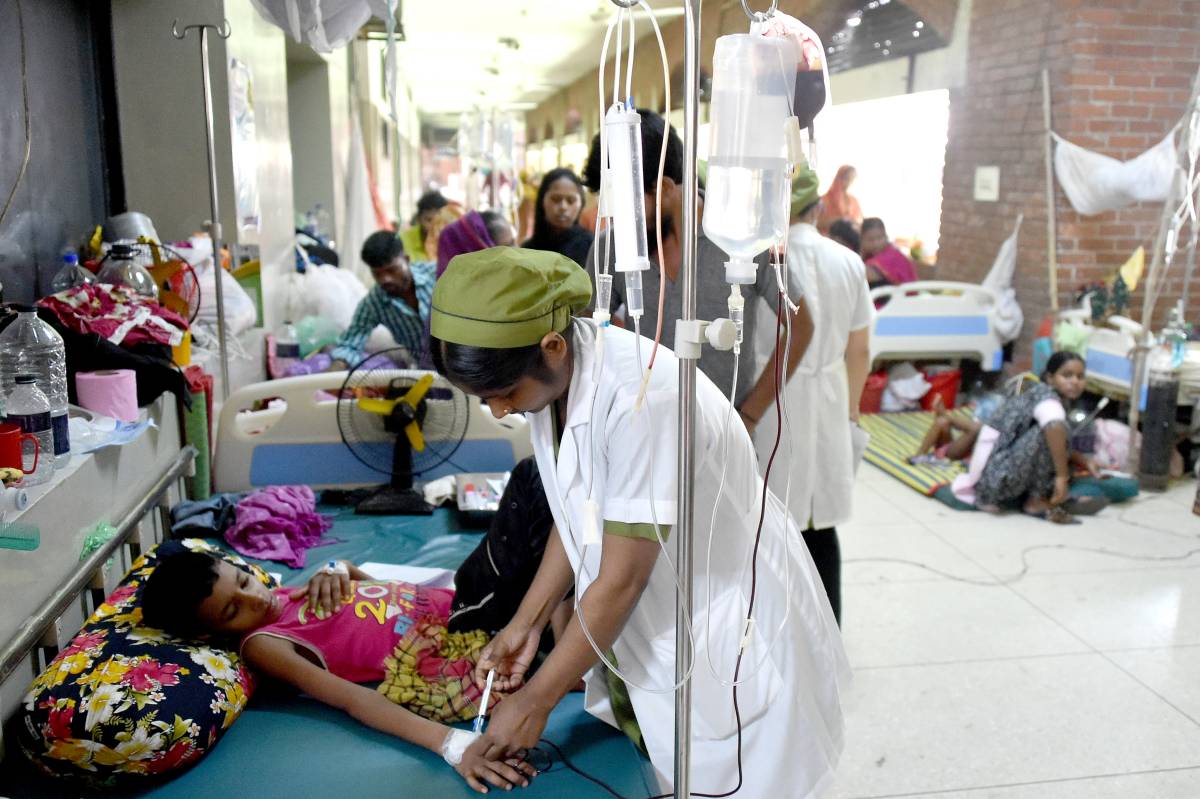
Senior medical professionals in Bangladesh are increasingly facing administrative action, legal proceedings and removal from key positions following the country’s political transition, raising concerns over institutional stability, human rights and the future of public healthcare, according to a report published by Dhaka-based news agency Pressenza.

The report argues that evaluating medical professionals primarily through the prism of political affiliation rather than professional merit risks undermining decades of institutional development and weakening Bangladesh’s healthcare system.

It notes that several of the country’s most distinguished physicians, who have played pivotal roles in clinical practice, medical education and institution-building, have been affected by the recent political changes.

Among them is Dr Samanta Lal Sen, widely recognised as a pioneer of modern plastic surgery and specialised burn treatment in Bangladesh. After serving as a technocrat Health Minister under the previous administration, he was detained in a legal case that his supporters claim is politically motivated. He has since left the country, leaving what the report describes as a significant void in specialised medical leadership.

The report also highlights the case of Prof. Dr Pran Gopal Dutta, an eminent ear, nose and throat (ENT) specialist and former Vice-Chancellor of Bangabandhu Sheikh Mujib Medical University (BSMMU). A recipient of Bangladesh’s Independence Award in 2012 for his contribution to medical science, Dutta is currently living outside Bangladesh amid legal proceedings linked to his tenure as a former Member of Parliament. According to the report, he is now teaching at a medical college in India’s Tripura while continuing to provide healthcare services to underserved communities along the border.

Another senior physician mentioned is Prof. Dr Deen Mohammad, a renowned neurologist and former Principal of Dhaka Medical College, who was instrumental in establishing the National Institute of Neurosciences and Hospital. The report says he was recently removed from his position, with those close to him attributing the decision to his perceived association with pro-Awami League medical organisations.

Prof. Dr ABM Abdullah, one of Bangladesh’s most respected internal medicine specialists and a former Dean of the Faculty of Medicine at BSMMU, has also been affected. Known for charging a nominal consultation fee to make quality healthcare accessible to low-income patients, Abdullah received the prestigious Ekushey Padak for his humanitarian contributions and also served as the personal physician to former Prime Minister Sheikh Hasina. According to the report, authorities recently revoked his lifetime appointment as Emeritus Professor and sought recovery of the salaries and benefits paid during his tenure.

The report argues that healthcare, science and education should remain insulated from political shifts, stressing that medical expertise is built over decades through education, mentorship and institutional support. Removing experienced clinicians from the system, it says, disrupts the transfer of knowledge to younger generations of doctors and weakens the country’s medical institutions.

It further warns that the perceived lack of institutional stability and merit-based recognition is accelerating Bangladesh’s brain drain, with thousands of talented students and young doctors leaving the country each year for higher education and professional opportunities abroad. For a developing nation of nearly 180 million people, the continued loss of skilled healthcare professionals could have serious long-term consequences for public health, the report concludes.
Previous Story

Seychelles confers ‘Guardian of the Blue Horizon’ honour on PM Modi

Next Story

Heatwave Death Toll in Europe Tops 1,300, WHO Sounds Alarm

Previous Story

Seychelles confers ‘Guardian of the Blue Horizon’ honour on PM Modi

Next Story

Heatwave Death Toll in Europe Tops 1,300, WHO Sounds Alarm

Latest from -Top News

Pakistan Risks Overstretching Itself in Yemen War

Pakistan’s expanding military role in Saudi Arabia amid the Yemen conflict could strain its defence resources and fragile finances…reports Asian Lite News Desk Pakistan’s military involvement in the war in Yemen may prove unsustainable because of mounting financial pressures and competing security demands, according to a new report. Islamabad’s growing military presence in Saudi Arabia risks stretching its defence resources while exposing the country to greater strategic and economic challenges. An article by Andrew Wilson in One World Outlook describes Pakistan’s involvement as a case of “fiscal and strategic overreach”, arguing that the country lacks the financial flexibility to sustain an expanded military commitment. Pakistan’s external finances depend heavily on an International Monetary Fund (IMF) programme, financial support from Gulf countries and remittances from Pakistani workers in the region. The report argues that deeper military involvement in the conflict could place additional pressure on these sources of financial stability. It also warns that deploying troops and military equipment abroad could weaken Pakistan’s capacity to address security challenges along its eastern border and deal with two domestic insurgencies. The move could also draw Islamabad into a conflict it has sought to approach cautiously. A Reuters report in May, citing Pakistani security and government sources, said Islamabad had deployed around 8,000 troops, a squadron of approximately 16 aircraft, mostly JF-17 fighter jets, two drone squadrons and a Chinese HQ-9 air-defence battery to Saudi Arabia. According to those sources, Riyadh was financing the deployment, with Pakistani personnel operating the equipment. The sources also said a confidential agreement contemplated the possibility of deploying up to 80,000 troops. Islamabad has not confirmed those figures, although it has acknowledged its military presence in Saudi Arabia, including the deployment of fighter jets at King Abdulaziz Air Base from April. The One World Outlook article argues that Saudi financial support can cover allowances and operating expenses but cannot easily replace military equipment needed elsewhere or resolve the political and strategic challenges of participating in the Yemen conflict. Pakistan’s defence budget is another concern. For the 2026-27 financial year, the federal government allocated PKR 3 trillion, or approximately $10.8 billion, to defence services. The allocation represents an 18 per cent increase from the original PKR 2.55 trillion provision and amounts to around 2.1 per cent of projected gross domestic product (GDP). Defence spending accounts for approximately 16 per cent of the federal government’s PKR 18.8 trillion expenditure. Military pensions are budgeted separately at PKR 822 billion, while debt servicing costs stand at approximately PKR 8 trillion, more than two-and-a-half times the defence allocation. The report argues that these competing financial obligations leave little room for additional military expenditure without placing further pressure on public finances. Pakistan’s reliance on IMF assistance also limits its fiscal flexibility. The country must meet the conditions attached to the programme, including a primary budget surplus target of 2 per cent of GDP and continued restraint on development spending. According to the article, these requirements make it difficult for Islamabad to finance an additional military commitment without compromising other budgetary priorities. Pakistan’s economic indicators offer limited reassurance. Economic growth for the 2025-26 financial year is estimated at between 3.6 and 3.7 per cent, while inflation reached approximately 10.3 per cent in September following an energy price shock. Foreign exchange reserves stood at around $21.5 billion at the end of September. Although this marks an improvement from the low levels recorded in 2023, the report notes that the reserves cover only a few months of imports. Financial assistance from Gulf partners remains central to Pakistan’s external stability. The article says Islamabad holds approximately $8 billion in Saudi deposits at its central bank. In July, the State Bank of Pakistan said Riyadh had extended the maturity of $5 billion in deposits to December 2028, easing the country’s immediate external financing requirements. A further $3 billion deposit was also extended in the spring. However, the article argues that these arrangements provide temporary relief rather than long-term financial independence, particularly as regional conflict threatens the stability of the Gulf economies on which Pakistan relies. The report concludes that Pakistan faces a difficult balance between supporting Saudi Arabia militarily and preserving the financial and military resources needed to address its domestic and regional challenges.

UK and Germany Ratify Kensington Treaty

Britain and Germany ratify the Kensington Treaty, agreeing new cooperation on AI, quantum research, defence and security while targeting investment, jobs and Russian hybrid threats…reports Asian Lite News Desk Britain and Germany

Economic tide is turning in Bangladesh

If there is one thing that can bring some comfort to the struggling Bangladeshi economy, it is good relations with India. Bangladesh should remember that Delhi’s backing, through easy supplies of essentials
Go toTop

Don't Miss

Secularism vs Pak-backed communalism in Bangladesh

Sheikh Hasina’s re-introduction of secularism into the Constitution, even though

‘Let his dreams resonate in every Bangladeshi hearts’

Joy also said it was very painful to say that