A new assessment highlights how South Asia’s fragile strategic balance is increasingly shaped by technology, perception and compressed decision-making timelines…reports Asian Lite News
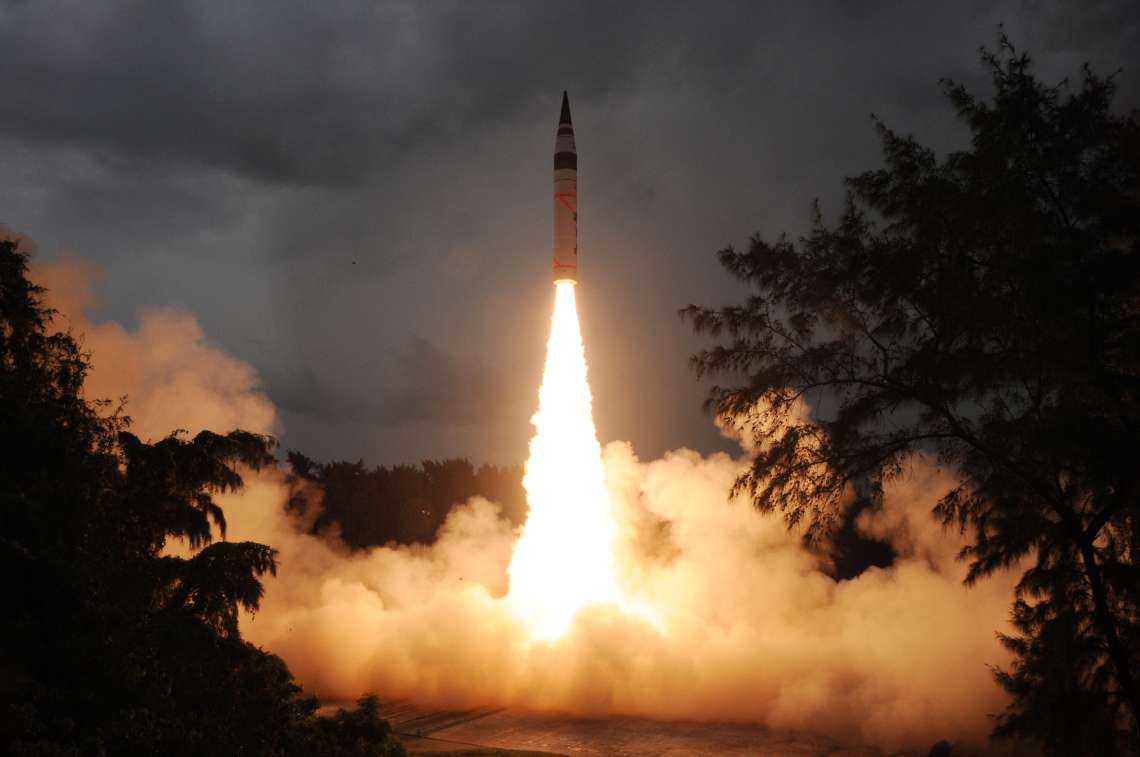
India now possesses a larger number of nuclear warheads than Pakistan, according to the latest assessment by the Stockholm International Peace Research Institute, as analysts warn that the risks surrounding nuclear stability are increasing even where overall arsenals have not changed dramatically. SIPRI’s yearbook places India as the world’s sixth-largest nuclear power, with an estimated 180 warheads, compared with Pakistan’s estimated 170, a ranking that has remained broadly stable over the past year.
The findings come against a backdrop of heightened concern among arms control experts that technological change is altering the nature of deterrence and escalation. SIPRI warns that cyber operations, activity in space and the intensifying use of information warfare are blurring the line between conventional military action and nuclear escalation, potentially shortening decision-making windows during crises.
Globally, SIPRI estimates that Russia retains the largest nuclear arsenal with around 5,400 warheads, followed closely by the United States with about 5,200. China is assessed to have around 600, placing it third, while France, the United Kingdom and India follow. Pakistan ranks just below India, ahead of Israel and North Korea. Although the overall number of nuclear warheads worldwide has not increased significantly, SIPRI argues that the qualitative risks associated with their potential use are growing.
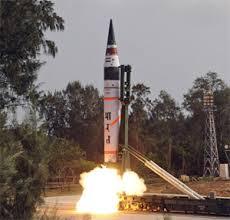
In South Asia, the nuclear balance is shaped by long-standing rivalry, unresolved territorial disputes and periodic military crises. SIPRI notes that the region is characterised by relatively short missile flight times and geographic proximity, factors that compress leaders’ reaction times in the event of an alert or miscalculation. This, the institute argues, raises the danger that conventional incidents could escalate more rapidly than in other nuclear-armed regions.
India’s nuclear posture is described as evolving within a broader modernisation of its armed forces, with investments across land, sea, air, cyber and space domains. While its nuclear doctrine has historically emphasised restraint, analysts cited by SIPRI caution that technological developments, including improved surveillance and precision capabilities, could alter perceptions of vulnerability and advantage during a crisis.
Pakistan, meanwhile, continues to expand its nuclear capabilities alongside its conventional forces, a strategy that SIPRI links to Islamabad’s security concerns and its emphasis on deterring a larger neighbour. The institute observes that Pakistan remains one of the world’s fastest-growing nuclear-armed states in terms of arsenal development, even if the overall numbers remain below those of the major nuclear powers.
Beyond raw warhead counts, SIPRI stresses that delivery systems, command-and-control structures and early-warning technologies are increasingly central to nuclear risk. Advances in missile accuracy, hypersonic weapons and dual-capable systems, combined with the integration of digital networks, may make it harder for states to distinguish between conventional and nuclear attacks in real time. This ambiguity, the report suggests, could heighten the risk of misinterpretation during fast-moving confrontations.
Cyber vulnerabilities are highlighted as a particular concern. SIPRI warns that cyber interference with early-warning systems, communications networks or decision-support tools could undermine confidence in information during a crisis. In such circumstances, leaders might feel pressure to act quickly, increasing the chance of errors with catastrophic consequences.
Space has also emerged as a new arena affecting nuclear stability. Satellites play a critical role in surveillance, navigation and communication, and any disruption to these assets during a conflict could be perceived as preparation for a broader attack. SIPRI notes that anti-satellite capabilities and counter-space operations add another layer of uncertainty to already complex deterrence relationships.
The institute’s assessment underscores that arms control and confidence-building measures have struggled to keep pace with these changes. While some bilateral and multilateral frameworks remain in place, SIPRI argues that they are increasingly strained by geopolitical tensions and rapid technological innovation. The erosion of trust between major powers, it adds, further complicates efforts to reduce nuclear risks.
In South Asia, formal arms control agreements are limited, placing greater emphasis on informal norms, communication channels and crisis management mechanisms. SIPRI suggests that without renewed efforts to strengthen transparency and dialogue, the combination of nuclear weapons, advanced technologies and regional rivalries could make future crises more dangerous.
Although SIPRI does not predict imminent nuclear conflict, its yearbook concludes that the nature of nuclear risk is changing. The danger, it argues, lies less in deliberate large-scale war than in miscalculation, misunderstanding or escalation from conventional or non-military actions. As nuclear-armed states continue to modernise their arsenals and integrate new technologies, the report warns that managing these risks will require sustained political attention and international cooperation.