July 17, 2021
3 mins read

UK Carrier Strike Group to hold wargames with Indian Navy

Following a series of successful engagements and operations in the Mediterranean, the Carrier Strike Group is now sailing East across the Indian Ocean towards India, reports Asian Lite Newsdesk

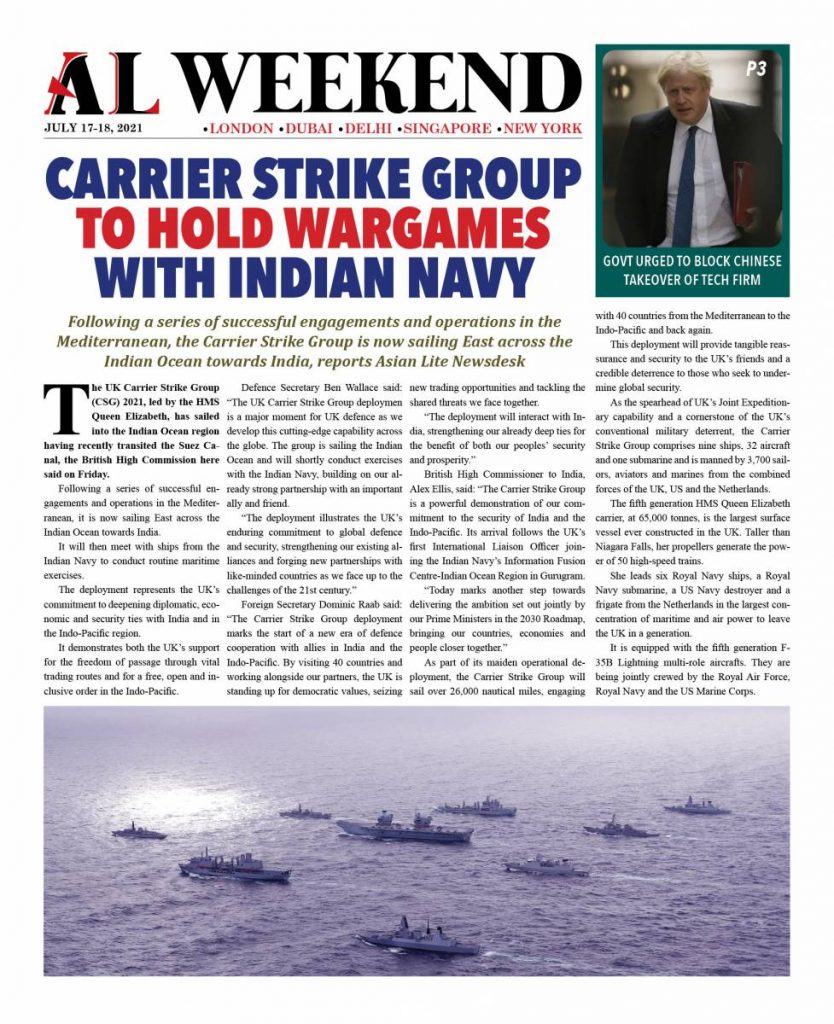
The UK Carrier Strike Group (CSG) 2021, led by the HMS Queen Elizabeth, has sailed into the Indian Ocean region having recently transited the Suez Canal, the British High Commission here said on Friday.

Following a series of successful engagements and operations in the Mediterranean, it is now sailing East across the Indian Ocean towards India.

It will then meet with ships from the Indian Navy to conduct routine maritime exercises.

The deployment represents the UK’s commitment to deepening diplomatic, economic and security ties with India and in the Indo-Pacific region.
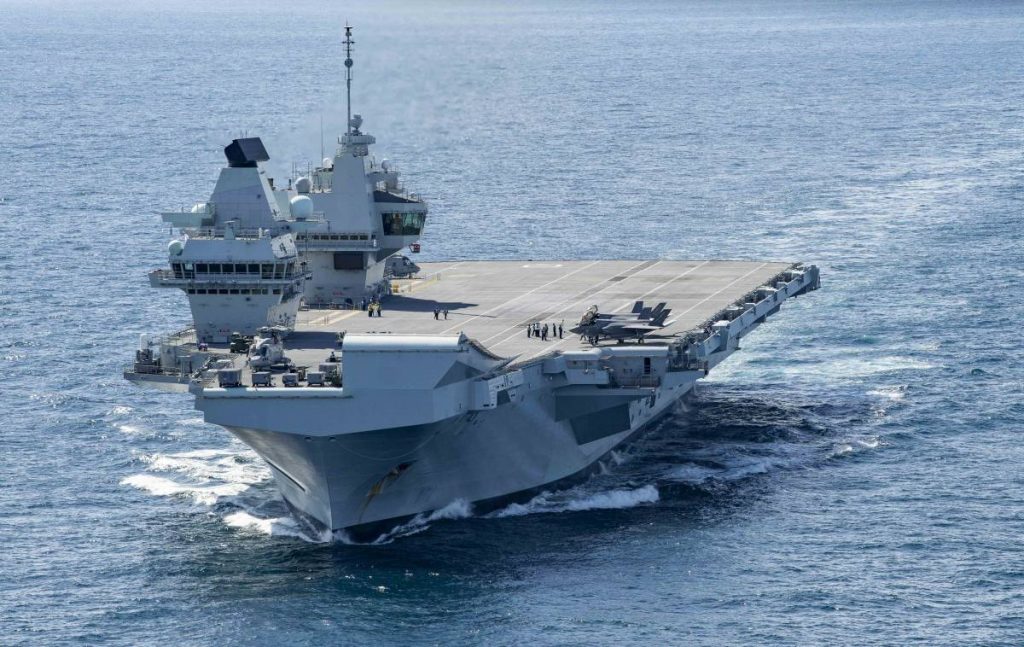
Carrier Strike Group
HMS_Queen_Elizabeth

It demonstrates both the UK’s support for the freedom of passage through vital trading routes and for a free, open and inclusive order in the Indo-Pacific.

Defence Secretary Ben Wallace said: “The UK Carrier Strike Group deploymen is a major moment for UK defence as we develop this cutting-edge capability across the globe. The group is sailing the Indian Ocean and will shortly conduct exercises with the Indian Navy, building on our already strong partnership with an important ally and friend.

ALSO READ – UK aircraft carrier joins fight against Daesh

“The deployment illustrates the UK’s enduring commitment to global defence and security, strengthening our existing alliances and forging new partnerships with like-minded countries as we face up to the challenges of the 21st century.”

Foreign Secretary Dominic Raab said: “The Carrier Strike Group deployment marks the start of a new era of defence cooperation with allies in India and the Indo-Pacific. By visiting 40 countries and working alongside our partners, the UK is standing up for democratic values, seizing new trading opportunities and tackling the shared threats we face together.

UK Foreign Secretary Dominic Raab

“The deployment will interact with India, strengthening our already deep ties for the benefit of both our peoples’ security and prosperity.”

British High Commissioner to India, Alex Ellis, said: “The Carrier Strike Group is a powerful demonstration of our commitment to the security of India and the Indo-Pacific. Its arrival follows the UK’s first International Liaison Officer joining the Indian Navy’s Information Fusion Centre-Indian Ocean Region in Gurugram.

“Today marks another step towards delivering the ambition set out jointly by our Prime Ministers in the 2030 Roadmap, bringing our countries, economies and people closer together.”

As part of its maiden operational deployment, the Carrier Strike Group will sail over 26,000 nautical miles, engaging with 40 countries from the Mediterranean to the Indo-Pacific and back again.

This deployment will provide tangible reassurance and security to the UK’s friends and a credible deterrence to those who seek to undermine global security.
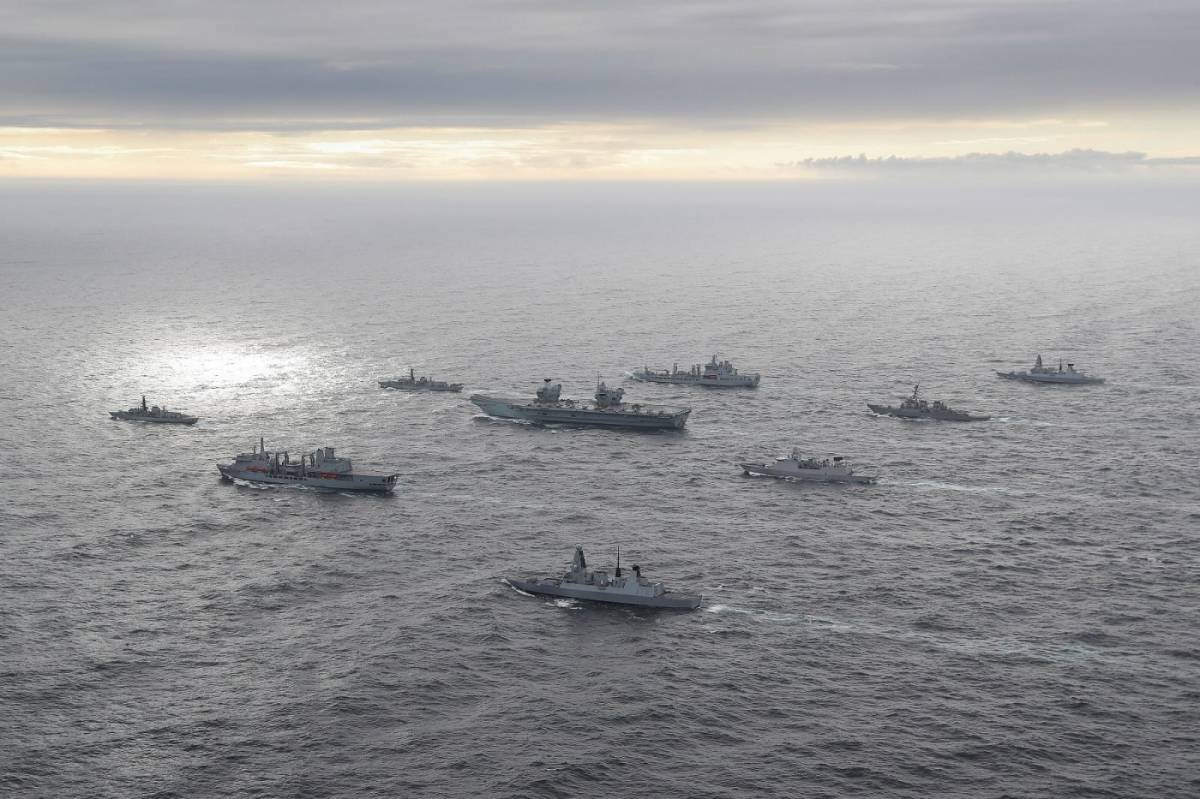
As the spearhead of UK’s Joint Expeditionary capability and a cornerstone of the UK’s conventional military deterrent, the Carrier Strike Group comprises nine ships, 32 aircraft and one submarine and is manned by 3,700 sailors, aviators and marines from the combined forces of the UK, US and the Netherlands.

The fifth generation HMS Queen Elizabeth carrier, at 65,000 tonnes, is the largest surface vessel ever constructed in the UK. Taller than Niagara Falls, her propellers generate the power of 50 high-speed trains.

She leads six Royal Navy ships, a Royal Navy submarine, a US Navy destroyer and a frigate from the Netherlands in the largest concentration of maritime and air power to leave the UK in a generation.

It is equipped with the fifth generation F-35B Lightning multi-role aircrafts. They are being jointly crewed by the Royal Air Force, Royal Navy and the US Marine Corps.

ALSO READ – Agni P: India’s Answer to China’s ‘Carrier Killers’
Newsdesk

Newsdesk

Aravind Rajeev is Deputy News Editor at Asian Lite, mostly covering the Middle East and GCC. He has over eight years of experience as a journalist, with a background in ground-level reporting, crime reporting, as well as international and regional news.

Previous Story

China not mincing words about downturn in ties with India

Next Story

COVID-19: India’s Recovery Rate Goes Past 97%

Previous Story

China not mincing words about downturn in ties with India

Next Story

COVID-19: India’s Recovery Rate Goes Past 97%

Latest from -Top News

Pakistan Risks Overstretching Itself in Yemen War

Pakistan’s expanding military role in Saudi Arabia amid the Yemen conflict could strain its defence resources and fragile finances…reports Asian Lite News Desk Pakistan’s military involvement in the war in Yemen may prove unsustainable because of mounting financial pressures and competing security demands, according to a new report. Islamabad’s growing military presence in Saudi Arabia risks stretching its defence resources while exposing the country to greater strategic and economic challenges. An article by Andrew Wilson in One World Outlook describes Pakistan’s involvement as a case of “fiscal and strategic overreach”, arguing that the country lacks the financial flexibility to sustain an expanded military commitment. Pakistan’s external finances depend heavily on an International Monetary Fund (IMF) programme, financial support from Gulf countries and remittances from Pakistani workers in the region. The report argues that deeper military involvement in the conflict could place additional pressure on these sources of financial stability. It also warns that deploying troops and military equipment abroad could weaken Pakistan’s capacity to address security challenges along its eastern border and deal with two domestic insurgencies. The move could also draw Islamabad into a conflict it has sought to approach cautiously. A Reuters report in May, citing Pakistani security and government sources, said Islamabad had deployed around 8,000 troops, a squadron of approximately 16 aircraft, mostly JF-17 fighter jets, two drone squadrons and a Chinese HQ-9 air-defence battery to Saudi Arabia. According to those sources, Riyadh was financing the deployment, with Pakistani personnel operating the equipment. The sources also said a confidential agreement contemplated the possibility of deploying up to 80,000 troops. Islamabad has not confirmed those figures, although it has acknowledged its military presence in Saudi Arabia, including the deployment of fighter jets at King Abdulaziz Air Base from April. The One World Outlook article argues that Saudi financial support can cover allowances and operating expenses but cannot easily replace military equipment needed elsewhere or resolve the political and strategic challenges of participating in the Yemen conflict. Pakistan’s defence budget is another concern. For the 2026-27 financial year, the federal government allocated PKR 3 trillion, or approximately $10.8 billion, to defence services. The allocation represents an 18 per cent increase from the original PKR 2.55 trillion provision and amounts to around 2.1 per cent of projected gross domestic product (GDP). Defence spending accounts for approximately 16 per cent of the federal government’s PKR 18.8 trillion expenditure. Military pensions are budgeted separately at PKR 822 billion, while debt servicing costs stand at approximately PKR 8 trillion, more than two-and-a-half times the defence allocation. The report argues that these competing financial obligations leave little room for additional military expenditure without placing further pressure on public finances. Pakistan’s reliance on IMF assistance also limits its fiscal flexibility. The country must meet the conditions attached to the programme, including a primary budget surplus target of 2 per cent of GDP and continued restraint on development spending. According to the article, these requirements make it difficult for Islamabad to finance an additional military commitment without compromising other budgetary priorities. Pakistan’s economic indicators offer limited reassurance. Economic growth for the 2025-26 financial year is estimated at between 3.6 and 3.7 per cent, while inflation reached approximately 10.3 per cent in September following an energy price shock. Foreign exchange reserves stood at around $21.5 billion at the end of September. Although this marks an improvement from the low levels recorded in 2023, the report notes that the reserves cover only a few months of imports. Financial assistance from Gulf partners remains central to Pakistan’s external stability. The article says Islamabad holds approximately $8 billion in Saudi deposits at its central bank. In July, the State Bank of Pakistan said Riyadh had extended the maturity of $5 billion in deposits to December 2028, easing the country’s immediate external financing requirements. A further $3 billion deposit was also extended in the spring. However, the article argues that these arrangements provide temporary relief rather than long-term financial independence, particularly as regional conflict threatens the stability of the Gulf economies on which Pakistan relies. The report concludes that Pakistan faces a difficult balance between supporting Saudi Arabia militarily and preserving the financial and military resources needed to address its domestic and regional challenges.
Go toTop

Don't Miss

NAVY Joins Kerala Relief Mission

Indian Navy join the rescue and relief mission at flood

India to join naval exercises with Africa, Europe and Russia

These engagements are aimed to further strengthen maritime security in