October 5, 2021
5 mins read

TALIBAN TARGET MINORITIES: Kabul Gurdwara Vandalised

Following the brutal killing 13 Hazaras, Taliban turn their focus on minority Sikhs in Afghanistan. They vandalised Karte Parwan Gurdwara in Kabul and takes several Sikhs in custody

A group of unidentified heavily armed Taliban officials on Tuesday entered Gurdwara Karte Parwan in Kabul and vandalized the holy shrine and as per reports took several people under their custody.

“I have received alarming reports from Kabul. A group of unidentified heavily armed Taliban officials have entered Gurdwara Karte Parwan in Kabul,” said Puneet Singh Chandhok, President, Indian World Forum.

“They have taken the community present in the Gurdwara into custody. It is being alleged by the locals on the ground that the officials have broken off the CCTV cameras of the Gurdwara and vandalising the Gurdwara currently,” added Chandhok.
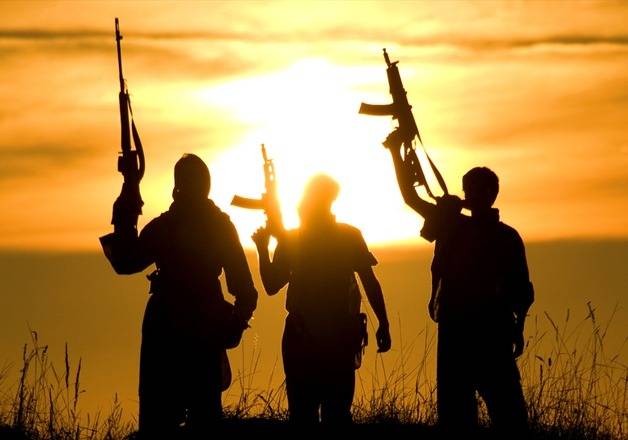
Meanwhile, the local Gurdwara management is rushing to the spot and the number of officials and people present in the vicinity is yet to be confirmed.

Karte Parwan Gurdwara is located in north-western Kabul, Afghanistan. Earlier, Nishan Sahib – Sikh holy flag was removed by the Taliban from the roof of a Gurdwara in Afghanistan’s eastern Paktia province.

The Gurdwara, located in the Chamkani area of Paktia, was once visited by Guru Nanak. After the Taliban’s takeover of Afghanistan, the minorities in Afghanistan are being subjected to targeted killings, violence, and discrimination based on their religious and ethnic identity.

13 Hazaras Executed

Taliban forces have unlawfully killed 13 ethnic Hazaras, including a 17-year-old girl, in Afghanistans Daykundi province after members of the security forces of the former government surrendered, a new investigation by Amnesty International has revealed.

The killings took place in Kahor village of Khidir district on August 30. Eleven of the victims were former members of the Afghan National Defence Security Forces (ANDSF), and two were civilians.

According to witness testimony gathered by Amnesty International, the Taliban extra-judicially executed nine of the ANDSF members after they had surrendered, killings that appear to be war crimes.

Two civilians were killed as they attempted to flee, including a 17-year-old girl was shot when the Taliban opened fire on a crowd of people.

Amnesty International verified photographs and video evidence taken in the aftermath of the killings, and identified the location of Kahor village, where they happened.
 “These cold-blooded executions are further proof that the Taliban are committing the same horrific abuses they were notorious for during their previous rule of Afghanistan,” said Agnes Callamard, Amnesty International’s Secretary General.

  “They repeatedly violate the rights of those they perceive as their adversaries, even killing those who have already surrendered. The Taliban say they are not targeting former employees of the previous government, but these killings contradict such claims.

 “The Taliban must immediately cease these cruel acts of revenge, and ensure employees of the former government and their families can live safely in Afghanistan. The new government must make clear that such grave violations will not be tolerated, and that those responsible will be prosecuted.”

  Verifying human rights abuses committed by the Taliban since they took control of Afghanistan in August 2021 has proven difficult, as the group have cut mobile phone service in many regions.

 Shortly after the fall of Kabul, Amnesty International documented how Taliban fighters massacred nine ethnic Hazara men after taking control of Ghazni province.

  The Taliban took control of Daykundi province on August 14. An estimated 34 former ANDSF members initially sought safety in Khidir district, and had government military equipment and weaponry with them. They then agreed to surrender to the Taliban as the group established its authority over vast swathes of the region.

 Mohammad Azim Sedaqat, who was leading the surrender, arranged to decommission the group’s weapons in the presence of the Taliban. On August 29, the men negotiated to surrender fully to the Taliban.

 On August 30, an estimated 300 Taliban fighters arrived in convoy close to Dahani Qul village, where the ANDSF members were staying, some with family members. As the ANDSF members attempted to leave the area with their families, one vehicle remained stuck close to Kahor village.

  When the Taliban fighters caught up with them, they opened fire on the crowd and killed the 17-year-old girl, called Masuma. One of the ANDSF members then fired back, killing one Taliban fighter and wounding another.

  The Taliban continued to shoot as the families fled, killing two ANDSF members caught in crossfire as they were fleeing the scene. After nine more ANDSF members surrendered, the Taliban promptly took them to a nearby river basin and executed them.

  On August 31, the day after the killings, villagers took the bodies to Dahani Qul, where they were then brought to family plots for burial. Amnesty International reviewed and verified information confirming the locations of two of the graves, and the identities of the people buried there.

  The Taliban then told remaining family members that anyone who had fled should return, and surrender within three days.

  Interviewees told Amnesty International that one senior Taliban official warned: “I have killed people for the past 20 years. Killing is easy for me. I can kill again.”

 On September 1, Sadiqullah Abed, the Taliban-appointed chief of police for Daykundi province, denied any killings had happened and instead only confirmed that a member of the Taliban had been wounded in an attack in the province.

READ MORE: Pandora papers leak exposes more high profile Pakistanis

READ MORE: ‘Afghanistan once again becoming safe haven for terrorists’
Previous Story

School graduates of 2000-2020 are of no use: Taliban

Next Story

PML-N leader claims Imran has two offshore firms

Previous Story

School graduates of 2000-2020 are of no use: Taliban

Next Story

PML-N leader claims Imran has two offshore firms

Latest from -Top News

Pakistan Risks Overstretching Itself in Yemen War

Pakistan’s expanding military role in Saudi Arabia amid the Yemen conflict could strain its defence resources and fragile finances…reports Asian Lite News Desk Pakistan’s military involvement in the war in Yemen may prove unsustainable because of mounting financial pressures and competing security demands, according to a new report. Islamabad’s growing military presence in Saudi Arabia risks stretching its defence resources while exposing the country to greater strategic and economic challenges. An article by Andrew Wilson in One World Outlook describes Pakistan’s involvement as a case of “fiscal and strategic overreach”, arguing that the country lacks the financial flexibility to sustain an expanded military commitment. Pakistan’s external finances depend heavily on an International Monetary Fund (IMF) programme, financial support from Gulf countries and remittances from Pakistani workers in the region. The report argues that deeper military involvement in the conflict could place additional pressure on these sources of financial stability. It also warns that deploying troops and military equipment abroad could weaken Pakistan’s capacity to address security challenges along its eastern border and deal with two domestic insurgencies. The move could also draw Islamabad into a conflict it has sought to approach cautiously. A Reuters report in May, citing Pakistani security and government sources, said Islamabad had deployed around 8,000 troops, a squadron of approximately 16 aircraft, mostly JF-17 fighter jets, two drone squadrons and a Chinese HQ-9 air-defence battery to Saudi Arabia. According to those sources, Riyadh was financing the deployment, with Pakistani personnel operating the equipment. The sources also said a confidential agreement contemplated the possibility of deploying up to 80,000 troops. Islamabad has not confirmed those figures, although it has acknowledged its military presence in Saudi Arabia, including the deployment of fighter jets at King Abdulaziz Air Base from April. The One World Outlook article argues that Saudi financial support can cover allowances and operating expenses but cannot easily replace military equipment needed elsewhere or resolve the political and strategic challenges of participating in the Yemen conflict. Pakistan’s defence budget is another concern. For the 2026-27 financial year, the federal government allocated PKR 3 trillion, or approximately $10.8 billion, to defence services. The allocation represents an 18 per cent increase from the original PKR 2.55 trillion provision and amounts to around 2.1 per cent of projected gross domestic product (GDP). Defence spending accounts for approximately 16 per cent of the federal government’s PKR 18.8 trillion expenditure. Military pensions are budgeted separately at PKR 822 billion, while debt servicing costs stand at approximately PKR 8 trillion, more than two-and-a-half times the defence allocation. The report argues that these competing financial obligations leave little room for additional military expenditure without placing further pressure on public finances. Pakistan’s reliance on IMF assistance also limits its fiscal flexibility. The country must meet the conditions attached to the programme, including a primary budget surplus target of 2 per cent of GDP and continued restraint on development spending. According to the article, these requirements make it difficult for Islamabad to finance an additional military commitment without compromising other budgetary priorities. Pakistan’s economic indicators offer limited reassurance. Economic growth for the 2025-26 financial year is estimated at between 3.6 and 3.7 per cent, while inflation reached approximately 10.3 per cent in September following an energy price shock. Foreign exchange reserves stood at around $21.5 billion at the end of September. Although this marks an improvement from the low levels recorded in 2023, the report notes that the reserves cover only a few months of imports. Financial assistance from Gulf partners remains central to Pakistan’s external stability. The article says Islamabad holds approximately $8 billion in Saudi deposits at its central bank. In July, the State Bank of Pakistan said Riyadh had extended the maturity of $5 billion in deposits to December 2028, easing the country’s immediate external financing requirements. A further $3 billion deposit was also extended in the spring. However, the article argues that these arrangements provide temporary relief rather than long-term financial independence, particularly as regional conflict threatens the stability of the Gulf economies on which Pakistan relies. The report concludes that Pakistan faces a difficult balance between supporting Saudi Arabia militarily and preserving the financial and military resources needed to address its domestic and regional challenges.

UK and Germany Ratify Kensington Treaty

Britain and Germany ratify the Kensington Treaty, agreeing new cooperation on AI, quantum research, defence and security while targeting investment, jobs and Russian hybrid threats…reports Asian Lite News Desk Britain and Germany

Economic tide is turning in Bangladesh

If there is one thing that can bring some comfort to the struggling Bangladeshi economy, it is good relations with India. Bangladesh should remember that Delhi’s backing, through easy supplies of essentials
Go toTop

Don't Miss

Citizens extend support to Javed Akhtar, Naseeruddin Shah

The signatories claimed that in his video clip which went

GHANI TO TALIBAN: Who will benefit if Afghanistan is ruined?

Taliban has taken control of several districts across the country