October 6, 2021
4 mins read

UAE’s next space mission to explore Venus, 7 asteroids

The mission is scheduled for launch in 2028, with the primary goal of exploring the asteroid belt between Mars and Jupiter, the source of most meteorites that impact earth, reports Asian Lite News

The United Arab Emirates Space Agency on Tuesday announced the commencement of a new Emirati interplanetary mission, designed to further accelerate the young nation’s space engineering, scientific research and exploration capabilities and drive innovation and opportunity in the country’s private sector.

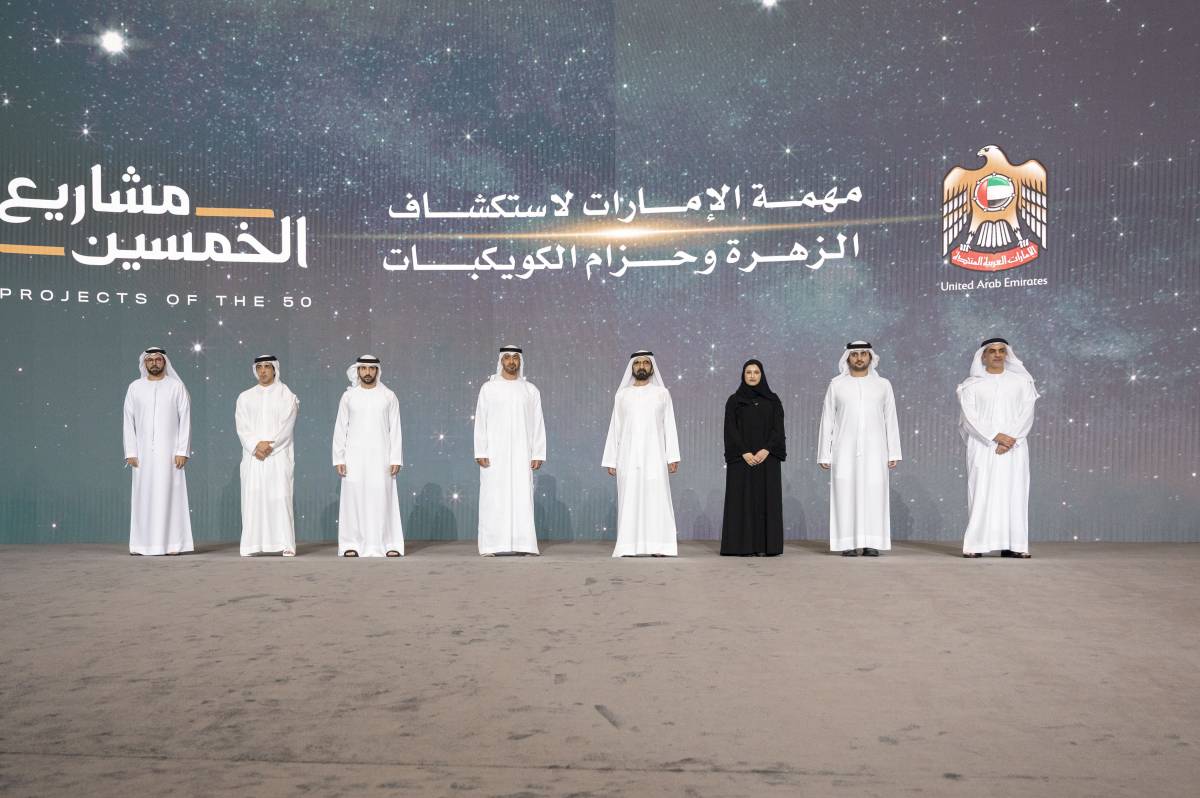
The announcement was made during a ceremony attended by Sheikh Mohammed bin Rashid Al Maktoum, Vice President, Prime Minister and Ruler of Dubai, and Sheikh Mohamed bin Zayed Al Nahyan, Crown Prince of Abu Dhabi and Deputy Supreme Commander of the UAE Armed Forces, that took place in Qasr Al Watan Palace in Abu Dhabi.
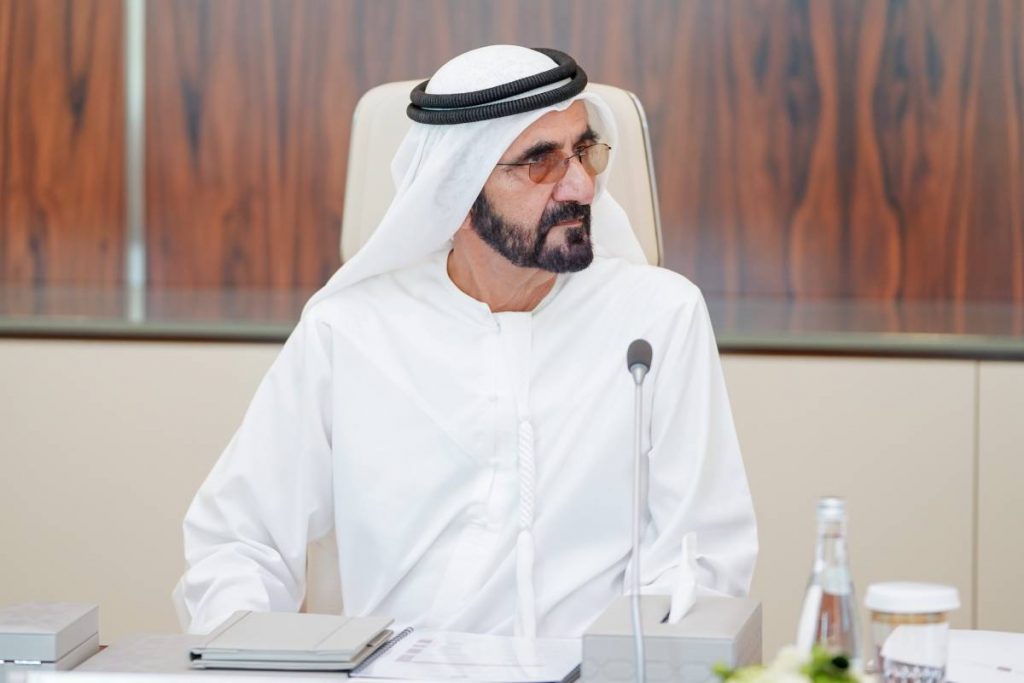
Mohammed bin Rashid

Sheikh Mohammed bin Rashid said, “We have set our eyes to the stars because our journey to development and progress has no boundaries, no borders and no limitations. Today we are investing in the generations to come.”

“With each new advancement we make in space, we create opportunities for young people here on earth,” he added.

Built on the knowledge and experience gained from the Emirates Mars Mission (EMM), the new mission will involve significant participation from Emirati private sector companies. It is scheduled for launch in 2028, with the primary goal of exploring the asteroid belt between Mars and Jupiter, the source of most meteorites that impact earth.

ALSO READ: UAE officials discuss solutions to global challenges

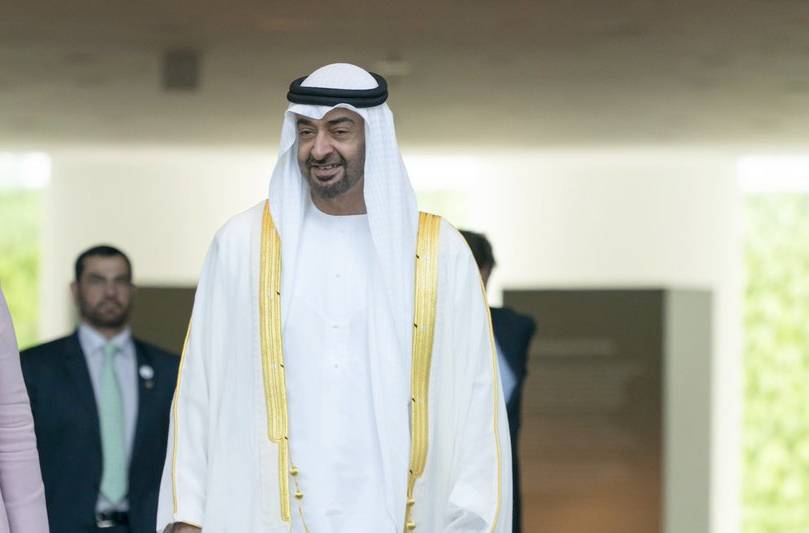
Sheikh Mohamed bin Zayed said, “This new mission tests and extends the capabilities of Emirati youth in achieving Zayed’s ambition to explore space. We are certain that our talented local engineers, academic and research institutions, which have so far made quantum leaps in developing our space sector, are well equipped to take on this daring new challenge.”
The spacecraft will undertake a 3.6 billion-kilometre, five-year journey, which will see it perform gravity assist manoeuvres by orbiting first Venus, then Earth in order to build the velocity required in order to reach the main asteroid belt, located beyond Mars. Its trajectory around Venus will see it reaching a solar proximity of 109 million kilometres, requiring substantial thermal protection and a furthest distance from the sun of 448 million kilometres, requiring high levels of insulation and spacecraft operation with minimal levels of available solar energy.

Through its journey, it will study seven main belt asteroids. It will be built using the substantial heritage and intellectual property (IP) acquired during the development of the Emirates Mars Mission and its Hope Probe, currently orbiting Mars and gathering unique data on Mars’ atmospheric composition and interactions.

Sarah bint Yousif Al Amiri, Minister of State for Advanced Sciences and Chair of the UAE Space Agency, said, “Our goal is clear: to accelerate the development of innovation and knowledge-based enterprises in the Emirates. This can’t be done by going steady-state, this requires leaps in imagination, in faith and the pursuit of goals that go beyond prudent or methodical. When we embarked on the Emirates Mars Mission, we took on a six-year task that was in the order of five times more complex than the earth observation satellites we were developing. This mission is in the order of five times more complex than EMM.”

The mission will make its first close planetary approach orbiting Venus in mid-2028, followed by a close orbit of Earth in mid-2029. It will make its first fly-by of a main asteroid belt object in 2030, going on to observe a total of seven main belt asteroids before its final landing on an asteroid 560 million kilometres from Earth in 2033. This will make the Emirates the fourth nation to land a spacecraft on an asteroid.

The mission brings extensive challenges that go beyond EMM in terms of spacecraft design and engineering, interplanetary navigation and complex systems integration, requiring new levels of performance from its communications, power and propulsion systems as well as demanding intensive mission control. The precise science goals and instrumentation to be deployed on the mission are to be announced in mid-2022.

The mission is to be developed in partnership with the Laboratory for Atmospheric and Space Physics (LASP) at the University of Colorado, Boulder. LASP was the primary knowledge transfer partner for EMM, bringing over seventy years’ experience in spacecraft and instrumentation design and development and helping advise, train and develop the team of Emirati engineers, software developers and scientists who worked on EMM, many of whom will go on to work on this new mission.

Five initiatives are being launched around the new mission by the UAE Space Agency to accelerate the development of the UAE’s space sector: a fully funded programme to establish Emirati space sector businesses; priority access to contracts and procurement for the mission by Emirati companies; a vocational training programme to train young Emiratis on component assembly and space subsystems engineering; a programme to bring local and international universities and research centres together to work on the mission, including LASP and Emirates University.

Previous Story

The Indologists of 19th Century Germany

Next Story

Under fire, Boris tries to return to election agenda

Previous Story

The Indologists of 19th Century Germany

Next Story

Under fire, Boris tries to return to election agenda

Latest from -Top News

Pakistan Risks Overstretching Itself in Yemen War

Pakistan’s expanding military role in Saudi Arabia amid the Yemen conflict could strain its defence resources and fragile finances…reports Asian Lite News Desk Pakistan’s military involvement in the war in Yemen may prove unsustainable because of mounting financial pressures and competing security demands, according to a new report. Islamabad’s growing military presence in Saudi Arabia risks stretching its defence resources while exposing the country to greater strategic and economic challenges. An article by Andrew Wilson in One World Outlook describes Pakistan’s involvement as a case of “fiscal and strategic overreach”, arguing that the country lacks the financial flexibility to sustain an expanded military commitment. Pakistan’s external finances depend heavily on an International Monetary Fund (IMF) programme, financial support from Gulf countries and remittances from Pakistani workers in the region. The report argues that deeper military involvement in the conflict could place additional pressure on these sources of financial stability. It also warns that deploying troops and military equipment abroad could weaken Pakistan’s capacity to address security challenges along its eastern border and deal with two domestic insurgencies. The move could also draw Islamabad into a conflict it has sought to approach cautiously. A Reuters report in May, citing Pakistani security and government sources, said Islamabad had deployed around 8,000 troops, a squadron of approximately 16 aircraft, mostly JF-17 fighter jets, two drone squadrons and a Chinese HQ-9 air-defence battery to Saudi Arabia. According to those sources, Riyadh was financing the deployment, with Pakistani personnel operating the equipment. The sources also said a confidential agreement contemplated the possibility of deploying up to 80,000 troops. Islamabad has not confirmed those figures, although it has acknowledged its military presence in Saudi Arabia, including the deployment of fighter jets at King Abdulaziz Air Base from April. The One World Outlook article argues that Saudi financial support can cover allowances and operating expenses but cannot easily replace military equipment needed elsewhere or resolve the political and strategic challenges of participating in the Yemen conflict. Pakistan’s defence budget is another concern. For the 2026-27 financial year, the federal government allocated PKR 3 trillion, or approximately $10.8 billion, to defence services. The allocation represents an 18 per cent increase from the original PKR 2.55 trillion provision and amounts to around 2.1 per cent of projected gross domestic product (GDP). Defence spending accounts for approximately 16 per cent of the federal government’s PKR 18.8 trillion expenditure. Military pensions are budgeted separately at PKR 822 billion, while debt servicing costs stand at approximately PKR 8 trillion, more than two-and-a-half times the defence allocation. The report argues that these competing financial obligations leave little room for additional military expenditure without placing further pressure on public finances. Pakistan’s reliance on IMF assistance also limits its fiscal flexibility. The country must meet the conditions attached to the programme, including a primary budget surplus target of 2 per cent of GDP and continued restraint on development spending. According to the article, these requirements make it difficult for Islamabad to finance an additional military commitment without compromising other budgetary priorities. Pakistan’s economic indicators offer limited reassurance. Economic growth for the 2025-26 financial year is estimated at between 3.6 and 3.7 per cent, while inflation reached approximately 10.3 per cent in September following an energy price shock. Foreign exchange reserves stood at around $21.5 billion at the end of September. Although this marks an improvement from the low levels recorded in 2023, the report notes that the reserves cover only a few months of imports. Financial assistance from Gulf partners remains central to Pakistan’s external stability. The article says Islamabad holds approximately $8 billion in Saudi deposits at its central bank. In July, the State Bank of Pakistan said Riyadh had extended the maturity of $5 billion in deposits to December 2028, easing the country’s immediate external financing requirements. A further $3 billion deposit was also extended in the spring. However, the article argues that these arrangements provide temporary relief rather than long-term financial independence, particularly as regional conflict threatens the stability of the Gulf economies on which Pakistan relies. The report concludes that Pakistan faces a difficult balance between supporting Saudi Arabia militarily and preserving the financial and military resources needed to address its domestic and regional challenges.
Go toTop

Don't Miss

RTA endorses 5-Year Sustainability Plan

Dubai’s Roads and Transport Authority (RTA) has endorsed a five-year

Sheikh Mohammed meets Presidents of Senegal and Sierra Leone

Sheikh Mohammed bin Rashid and the Senegalese President discussed new