September 16, 2022
4 mins read

Expectations from India at SCO summit

India is well-placed to be a neutral arbiter among the highly-divided factions in the emerging global order because it has always fielded for the common good, rather than partisan strategic objectives…reports Asian Lite News

The 22nd Summit of the Council of Heads of the Shanghai Cooperation Organisation Member States (SCO-COHS) being held at Samarkand, Uzbekistan, on September 15-16 has hogged much limelight due to the ongoing turbulence in geopolitics, including the Russia-Ukraine conflict and tensions over Taiwan.

The SCO Summit is taking place at a time when there are sharp differences between the West, China and Russia on the issues of sovereignty, democracy, human rights and economic sanctions, to name a few, and the prevailing flux on who is with whom.

India is well-placed to be a neutral arbiter among the highly-divided factions in the emerging global order because it has always fielded for the common good, rather than partisan strategic objectives.

India’s participation in the SCO assumes importance because it is expected to do a balancing act by bringing forth the main issues of concern to the SCO members, including cooperation for economic growth and promotion of trade and investment, climatic change and sustainable development and terrorism at a time when there is a danger of SCO being dominated by groupism within and against the West.

The bilaterals on the sidelines of the SCO Summit offer important opportunity to all the member countries to enhance their ties with other members and break the stalemate on crucial issues.

The success and failure of the SCO would be judged by its potential to address the issues of common interest on one hand, and making way through open-minded bilateral engagements on the sidelines to remove doubts and open a gateway towards resolving bilateral frictions on the other.

It is important for the SCO members to appreciate that the organisation is one of the largest multilateral organisations in the world, accounting for nearly 30 per cent of the global GDP and 40 per cent of the world’s population.

The cooperation among SCO members for economic development, building collective response to climatic change and sustainable development and combating terrorism will count not only on post Covid-19 economic recovery, but in bringing peace and prosperity in the long run.

India being aware of this vast potential of SCO has always wished to use this forum for bringing and promoting peace, prosperity and cohesion based on the principle of mutual co-existence and win-win strategies for all the stakeholders.

Since 2017, when it became a full-fledged member of the SCO, India has made sincere efforts to encourage peace, prosperity, and stability of the whole Eurasian region in general and SCO member countries in particular.

India has also repeatedly called for the deepening of cooperation on regional security related concerns including defence,countering terrorism and illicit drug and narcotics trade etc.

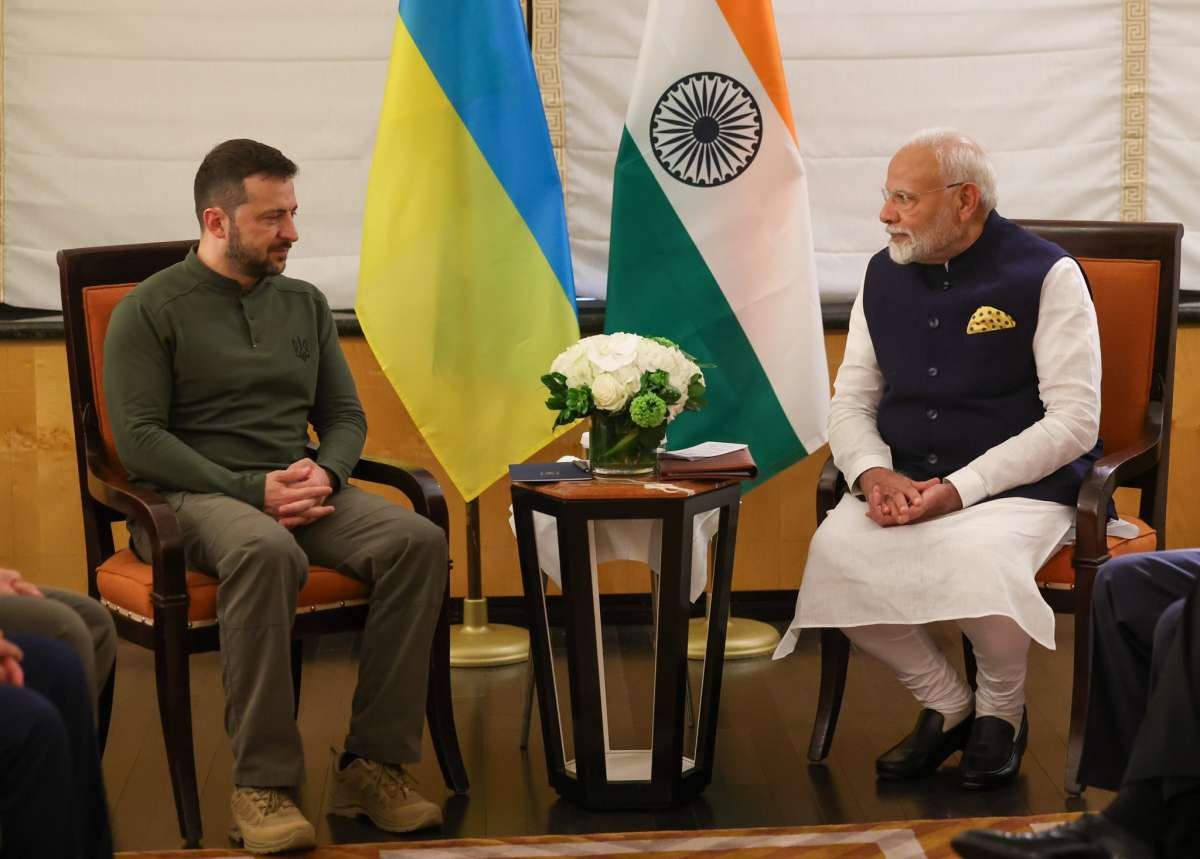
Prime Minister Narendra Modi attending the Summit is being keenly watched by the business communities of the region. India is expected to use the platform to push the agenda of regional and cross-regional connectivity and remove barriers to transport, communication and trade.

Since Pakistan remains stubborn on the issue of removing these barriers, India is expected to push in the Summit the Chabahar Port project and the International North-South Transport Corridor (INSTC) to allow the Central Asian countries and SCO members to realise full potential of trade, economic cooperation and people-to-people contact.

India, Iran and Uzbekistan have already established a tri-lateral working group since 2020 to seek greater convergence on Chabahar Port and other connectivity projects.

With the SCO members looking up to graduating into the list of high income countries, uninterrupted energy supply would be crucial. In view of this, PM Modi is expected to urge the SCO members to ensure energy cooperation and remove all the glitches in the ongoing projects, including the Turkmenistan, Afghanistan, Pakistan-India (TAPI) power transmission line.

The SCO has come of age. The Shanghai Five formed in 1996, became the Shanghai Cooperation Organisation (SCO) in 2001 with the inclusion of Uzbekistan. With India and Pakistan entering the grouping in 2017 and the decision to admit Tehran as full member in 2021, the SCO’s membership increased to eight (China, India, Kazakhstan, Kyrgyzstan, Russia, Pakistan, Tajikistan and Uzbekistan).

There are four observer states interested in acquiring full membership, including Afghanistan, Belarus, Iran and Mongolia. Uzbekistan is the current chair of SCO and India would be the next in line. India is being looked up with hope to take SCO to the next level to make it an effective platform for promoting cooperation for peace, prosperity and sustainable development.

ALSO READ-Want to transform India into manufacturing hub: Modi at SCO Summit
Previous Story

Pakistan receives 100 int’l flights of relief items

Next Story

Safeguarding India’s security important: SL Prez

Previous Story

Pakistan receives 100 int’l flights of relief items

Next Story

Safeguarding India’s security important: SL Prez

Latest from -Top News

Pakistan Risks Overstretching Itself in Yemen War

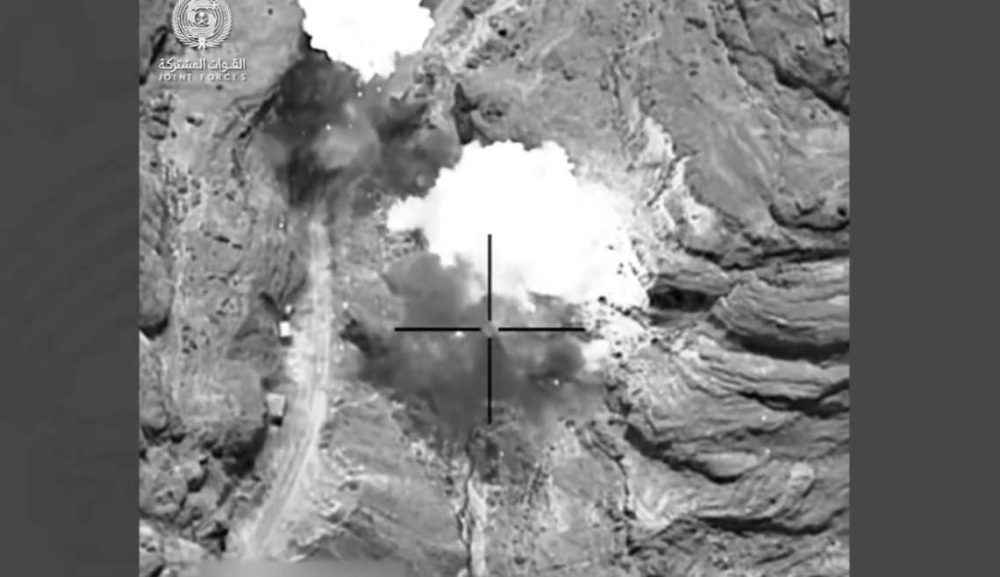
Pakistan’s expanding military role in Saudi Arabia amid the Yemen conflict could strain its defence resources and fragile finances…reports Asian Lite News Desk Pakistan’s military involvement in the war in Yemen may prove unsustainable because of mounting financial pressures and competing security demands, according to a new report. Islamabad’s growing military presence in Saudi Arabia risks stretching its defence resources while exposing the country to greater strategic and economic challenges. An article by Andrew Wilson in One World Outlook describes Pakistan’s involvement as a case of “fiscal and strategic overreach”, arguing that the country lacks the financial flexibility to sustain an expanded military commitment. Pakistan’s external finances depend heavily on an International Monetary Fund (IMF) programme, financial support from Gulf countries and remittances from Pakistani workers in the region. The report argues that deeper military involvement in the conflict could place additional pressure on these sources of financial stability. It also warns that deploying troops and military equipment abroad could weaken Pakistan’s capacity to address security challenges along its eastern border and deal with two domestic insurgencies. The move could also draw Islamabad into a conflict it has sought to approach cautiously. A Reuters report in May, citing Pakistani security and government sources, said Islamabad had deployed around 8,000 troops, a squadron of approximately 16 aircraft, mostly JF-17 fighter jets, two drone squadrons and a Chinese HQ-9 air-defence battery to Saudi Arabia. According to those sources, Riyadh was financing the deployment, with Pakistani personnel operating the equipment. The sources also said a confidential agreement contemplated the possibility of deploying up to 80,000 troops. Islamabad has not confirmed those figures, although it has acknowledged its military presence in Saudi Arabia, including the deployment of fighter jets at King Abdulaziz Air Base from April. The One World Outlook article argues that Saudi financial support can cover allowances and operating expenses but cannot easily replace military equipment needed elsewhere or resolve the political and strategic challenges of participating in the Yemen conflict. Pakistan’s defence budget is another concern. For the 2026-27 financial year, the federal government allocated PKR 3 trillion, or approximately $10.8 billion, to defence services. The allocation represents an 18 per cent increase from the original PKR 2.55 trillion provision and amounts to around 2.1 per cent of projected gross domestic product (GDP). Defence spending accounts for approximately 16 per cent of the federal government’s PKR 18.8 trillion expenditure. Military pensions are budgeted separately at PKR 822 billion, while debt servicing costs stand at approximately PKR 8 trillion, more than two-and-a-half times the defence allocation. The report argues that these competing financial obligations leave little room for additional military expenditure without placing further pressure on public finances. Pakistan’s reliance on IMF assistance also limits its fiscal flexibility. The country must meet the conditions attached to the programme, including a primary budget surplus target of 2 per cent of GDP and continued restraint on development spending. According to the article, these requirements make it difficult for Islamabad to finance an additional military commitment without compromising other budgetary priorities. Pakistan’s economic indicators offer limited reassurance. Economic growth for the 2025-26 financial year is estimated at between 3.6 and 3.7 per cent, while inflation reached approximately 10.3 per cent in September following an energy price shock. Foreign exchange reserves stood at around $21.5 billion at the end of September. Although this marks an improvement from the low levels recorded in 2023, the report notes that the reserves cover only a few months of imports. Financial assistance from Gulf partners remains central to Pakistan’s external stability. The article says Islamabad holds approximately $8 billion in Saudi deposits at its central bank. In July, the State Bank of Pakistan said Riyadh had extended the maturity of $5 billion in deposits to December 2028, easing the country’s immediate external financing requirements. A further $3 billion deposit was also extended in the spring. However, the article argues that these arrangements provide temporary relief rather than long-term financial independence, particularly as regional conflict threatens the stability of the Gulf economies on which Pakistan relies. The report concludes that Pakistan faces a difficult balance between supporting Saudi Arabia militarily and preserving the financial and military resources needed to address its domestic and regional challenges.
Go toTop

Don't Miss

India’s ‘SECURE’ Agenda at SCO Summit

The SECURE principle was emphasized as the central theme of

SCO’s role very important in post-Covid world: Modi

SCO should strive to develop “reliable, resilient and diversified” supply