Trump criticised the disparity in tariffs, highlighting that India and Brazil impose steep duties on US imports, while the US does not respond in kind….reports Asian Lite News
US President-elect Donald Trump has reaffirmed his commitment to imposing reciprocal tariffs on countries like India and Brazil, which he claims levy high duties on American products. Speaking at a press conference at his Mar-a-Lago resort, Trump emphasized the need for balanced trade practices.
“Reciprocal. If they tax us, we tax them the same amount,” Trump stated. He criticised the disparity in tariffs, highlighting that India and Brazil impose steep duties on US imports, while the US does not respond in kind.
Using a hypothetical example, Trump said, “If India charges us 100 or 200 percent on a bicycle, and we charge them nothing for the same, it’s not fair. If they want to charge us, that’s fine, but we’ll charge them the same in return.”
Trump’s remarks came in response to a broader question about potential trade agreements, particularly with China. He underlined his administration’s focus on ensuring fairness in international trade.
Howard Lutnick, Trump’s pick for Commerce Secretary, echoed this sentiment, emphasizing that reciprocity would be a cornerstone of the new administration’s trade policies. “How you treat us is how you should expect to be treated,” Lutnick stated.
The comments signal a tougher stance on trade relations with countries perceived to exploit tariff imbalances, setting the stage for potentially significant shifts in US trade policy under the incoming administration.
Trump names India critic for civil rights job
President-elect Donald Trump has named Republican Party activist Harmeet Dhillon, who is a supporter of the farmers’ protest in India and raised allegations of “Indian death squads”, to be the assistant attorney general for civil rights.
“In her new role at the DOJ (Department of Justice), Harmeet will be a tireless defender of our Constitutional Rights, and will enforce our Civil Rights and Election Laws FAIRLY and FIRMLY”, Trump said on Truth Social announcing on Monday.
Trump also noted that she “is a respected member of the Sikh religious community”.
On social media X, Dhillon who goes as “@pnjaban”, has expressed support for the farmers’ protest and raised what she said were “apparently Indian death squads operating in North America targeting Sikh activists”.
In a criticism of the administration of President Joe Biden, she virtually accused it of a cover-up, writing, “Our government refuses to provide details. Why”?
The mention of “death squads” was an apparent reference to the case filed against an Indian citizen and a former RAW official accusing them of plotting to kill a Khalistani activist in the US and echoes Canadian Prime Minister Justin Trudeau’s accusations against India.
Mentioning her family’s agrarian roots, another post by Dhillon said, “I stand with the #FarmersProtests”!
In yet another post she urged Prime Minister Narendra Modi to meet with the protesters and make a compromise.
“As the Punjab-born descendant of farmers, my heart breaks to see Punjabi farmers assaulted for protesting Indian gov’t’s pro-big-corporation farm bill that will destroy their farms, way of life, and culture. Hear them, meet with them, & compromise, PM Modi”, she posted.
The post of assistant attorney general for civil rights, for which she has been named, does not directly have international responsibilities and it does not oversee the two controversial cases involving India.
The ongoing case alleging the conspiracy against the Khalistani will not come under her purview as it will be the domain of the assistant attorney general of the national security division.
The case alleging bribery by Indian business leaders is under the deputy assistant attorney general in charge of the Criminal Division.
Trump has not announced names for those positions.
“Throughout her career, Harmeet has stood up consistently to protect our cherished Civil Liberties”, Trump said in his Truth Social post.
He added, “Harmeet is one of the top Election lawyers in the Country, fighting to ensure that all, and ONLY, legal votes are counted”.
If her appointment is approved by the Senate, Dhillon will become the second Indian American to hold the top civil rights position after Vanita Gupta, who held that position in former President Barack Obama’s administration and was the associate attorney general for two years under President Biden.
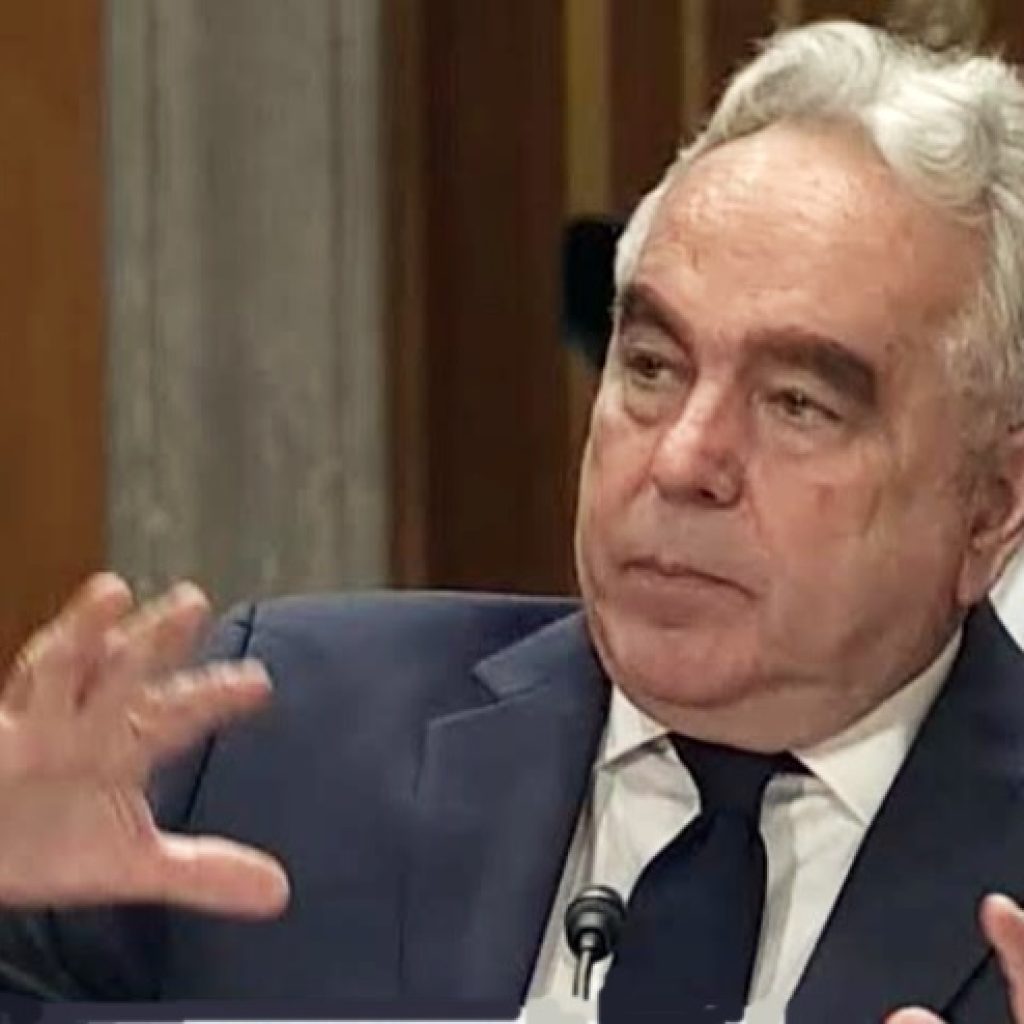
‘Leaving India-US ties in a perfect place’
The outgoing Biden administration has emphasised that it is leaving the US-India relationship in a robust state, expressing confidence that this partnership will continue to thrive under President-elect Donald Trump.
Deputy Secretary of State Kurt Campbell noted the ambitious progress achieved during Biden’s term, including high-level engagements such as the QUAD summit in Delaware.
In his remarks during a conference call, Campbell assured that the bilateral relationship would transition to the incoming administration at its strongest, with substantial backing from industries spanning technology, finance, and defence.
Principal Deputy National Security Advisor Jon Finer echoed Campbell’s sentiments, highlighting the US-India partnership as a stabilizing force not only in the Indo-Pacific but globally.
He pointed to joint initiatives in space, including training Indian astronauts at NASA’s Johnson Space Center for an upcoming collaborative mission to the International Space Station.
“This partnership plays a critical role in driving development, building prosperity, and ensuring security across regions,” Finer remarked.
The administration officials underscored the bipartisan consensus underpinning US-India ties over the past two decades, attributing their resilience to consistent efforts across successive governments in Washington and New Delhi.
This continuity is also reflected in the QUAD alliance, which originated under President George W. Bush and gained momentum through the Trump and Biden administrations.
A senior official described India’s growing ambition as a driving force within the QUAD, citing significant progress in areas such as space exploration, technology, and defence.
“India has expressed its commitment to advancing these endeavours, and we expect this ambition to persist,” the official stated.
Looking ahead, the Biden administration foresees continued collaboration in intelligence sharing, Indo-Pacific engagement, and Indian Ocean initiatives, bolstered by bipartisan support.
Officials stressed that the US-India relationship transcends any single administration or framework, driven instead by shared interests in technology, defence, and global economic issues.
“This enduring partnership is a testament to the shared vision of both nations, and we have every reason to believe it will remain strong,” a senior official concluded.
ALSO READ: India, Moldova sign MoU on training for diplomats
ALSO READ: De Lille promotes SA tourism in India