June 8, 2025
4 mins read

Trump deploys National Guard in LA 

The development came after two days of confrontations that had seen federal agents shoot flash-bang grenades and tear gas toward crowds angry at the arrests of dozens of migrants in a city with a large Latino population

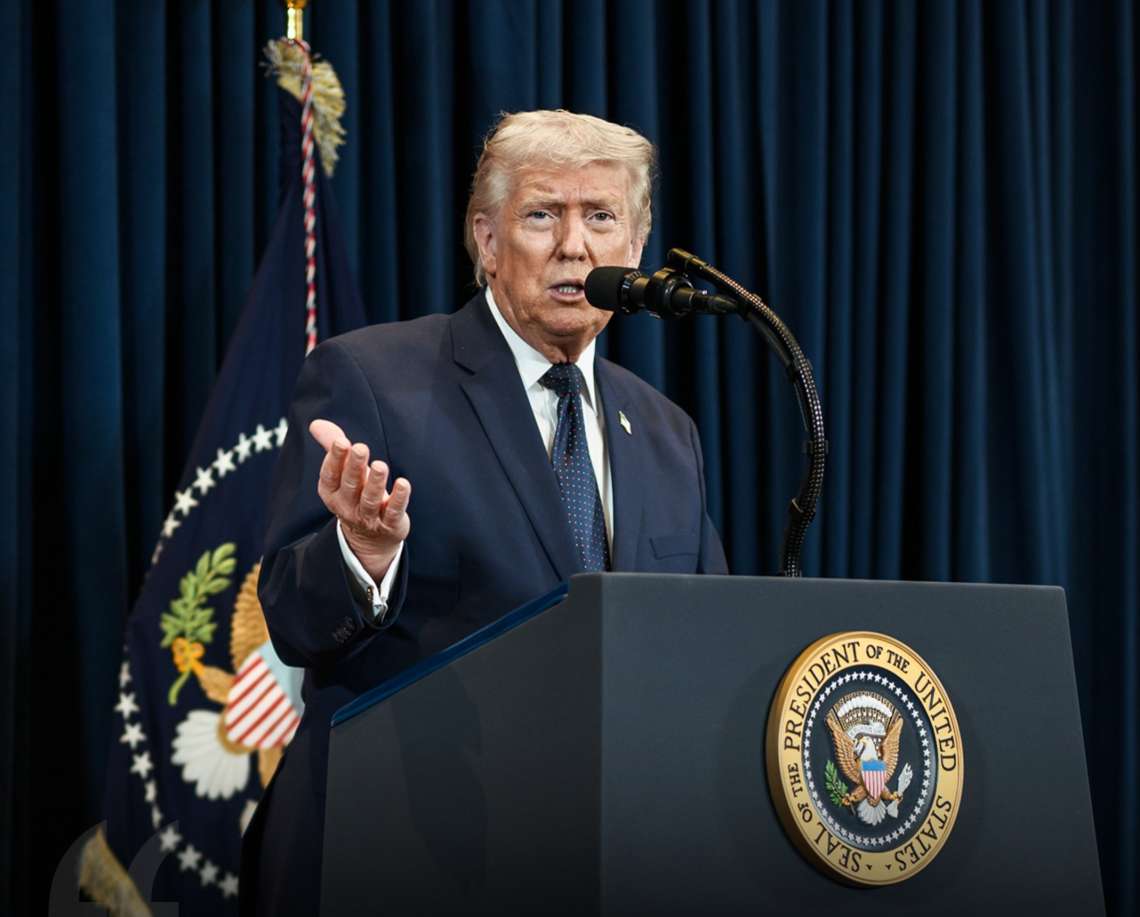
Donald Trump ordered 2,000 National Guard troops to the streets of Los Angeles on Saturday in what the White House said was an effort to quell “lawlessness” after sometimes-violent protests erupted over immigration enforcement raids.

The US president took federal control of California’s state military to push soldiers into the country’s second-biggest city, where they could face off against demonstrators. It is a rare move that Governor Gavin Newsom said was “purposefully inflammatory.”

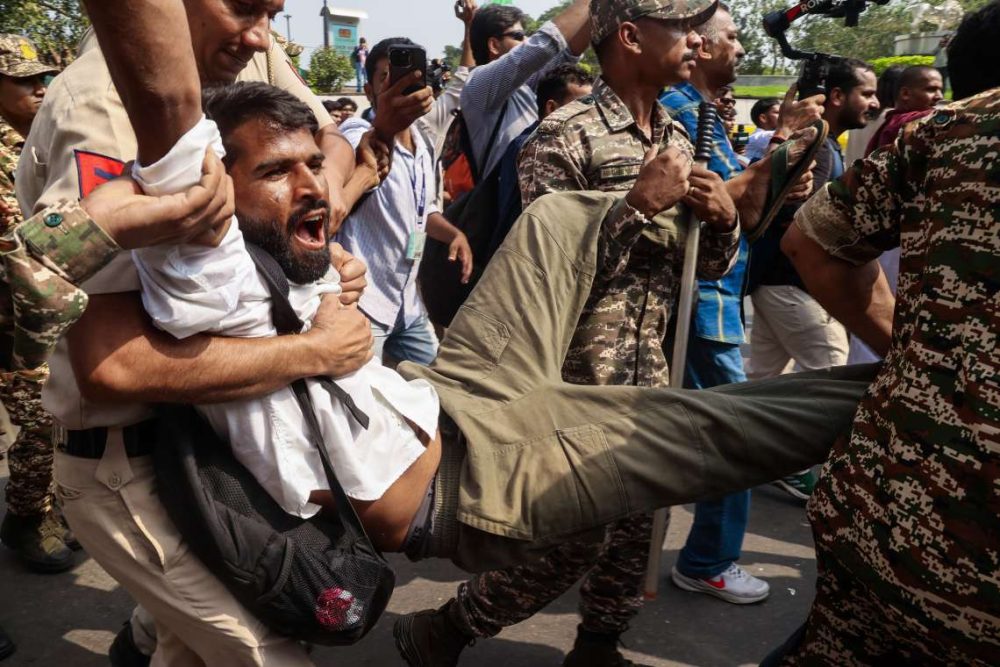
The development came after two days of confrontations that had seen federal agents shoot flash-bang grenades and tear gas toward crowds angry at the arrests of dozens of migrants in a city with a large Latino population.

Footage showed a car that had been set alight at a busy intersection, while in video circulating on social media a man in a motorbike helmet can be seen throwing rocks at speeding federal vehicles.

In other scenes, demonstrators threw fireworks at lines of local law enforcement who had been called in to try to keep the peace.

“President Trump has signed a Presidential Memorandum deploying 2,000 National Guardsmen to address the lawlessness that has been allowed to fester,” White House Press Secretary Karoline Leavitt said, blaming what she called California’s “feckless” Democratic leaders.

“The Trump Administration has a zero tolerance policy for criminal behavior and violence, especially when that violence is aimed at law enforcement officers trying to do their jobs.”

The National Guard — a reserve military — is frequently used in natural disasters, like in the aftermath of the LA fires, and occasionally in instances of civil unrest, but almost always with the consent of local politicians. That was not the case Saturday.

Newsom, a frequent foil for Trump and a long-time foe of the Republican, took to social media to decry Saturday’s White House order. “That move is purposefully inflammatory and will only escalate tensions,” he wrote on X, formerly Twitter.

“The federal government is taking over the California National Guard and deploying 2,000 soldiers in Los Angeles — not because there is a shortage of law enforcement, but because they want a spectacle. Don’t give them one. Never use violence. Speak out peacefully.” US Attorney for the Central District of California Bill Essayli said guardsmen would be in place “within the next 24 hours.”

Trump’s Defense Secretary Pete Hegseth threatened to ramp up tensions further, warning that nearby regular military forces could get involved. “If violence continues, active duty Marines at Camp Pendleton will also be mobilized — they are on high alert,” he wrote on social media.

Law professor Jessica Levinson said Hegseth’s intervention appeared symbolic because of the general legal restriction on the use of the US military as a domestic policing force in the absence of an insurrection. “At this moment, it’s not using the Insurrection Act,” she said, rather Trump was relying on what is known as Title 10.

“The National Guard will be able to do (no) more than provide logistical (and) personnel support.” Since taking office in January, Trump has delivered on a promise to crack down hard on the entry and presence of undocumented migrants — who he has likened to “monsters” and “animals.”

The Department for Homeland Security said Immigration and Customs Enforcement (ICE) operations in Los Angeles this week had resulted in the arrest of “118 aliens, including five gang members.” Saturday’s standoff took place in the suburb of Paramount, where demonstrators converged on a reported federal facility, which the local mayor said was being used as a staging post by agents.

On Friday, masked and armed immigration agents carried out high-profile workplace raids in separate parts of Los Angeles, attracting angry crowds and setting off hours-long standoffs. Los Angeles Mayor Karen Bass acknowledged that some city residents were “feeling fear” following the federal immigration enforcement actions.

“Everyone has the right to peacefully protest, but let me be clear: violence and destruction are unacceptable, and those responsible will be held accountable,” she said on X. FBI Deputy Director Dan Bongino said multiple arrests had been made following Friday’s clashes.

“You bring chaos, and we’ll bring handcuffs. Law and order will prevail,” he said on X. On Saturday, amid chants for ICE agents to get out, some protesters waved Mexican flags while others set a US flag on fire, the Los Angeles Times reported.

Cement blocks and overturned shopping carts served as crude roadblocks. The White House has taken a hard line against the protests, with deputy chief of staff Stephen Miller calling them “an insurrection against the laws and sovereignty of the United States.”
Previous Story

Iran Warn E3

Next Story

UK Delays AI Regulation

Previous Story

Iran Warn E3

Next Story

UK Delays AI Regulation

Latest from -Top News

Pakistan Risks Overstretching Itself in Yemen War

Pakistan’s expanding military role in Saudi Arabia amid the Yemen conflict could strain its defence resources and fragile finances…reports Asian Lite News Desk Pakistan’s military involvement in the war in Yemen may prove unsustainable because of mounting financial pressures and competing security demands, according to a new report. Islamabad’s growing military presence in Saudi Arabia risks stretching its defence resources while exposing the country to greater strategic and economic challenges. An article by Andrew Wilson in One World Outlook describes Pakistan’s involvement as a case of “fiscal and strategic overreach”, arguing that the country lacks the financial flexibility to sustain an expanded military commitment. Pakistan’s external finances depend heavily on an International Monetary Fund (IMF) programme, financial support from Gulf countries and remittances from Pakistani workers in the region. The report argues that deeper military involvement in the conflict could place additional pressure on these sources of financial stability. It also warns that deploying troops and military equipment abroad could weaken Pakistan’s capacity to address security challenges along its eastern border and deal with two domestic insurgencies. The move could also draw Islamabad into a conflict it has sought to approach cautiously. A Reuters report in May, citing Pakistani security and government sources, said Islamabad had deployed around 8,000 troops, a squadron of approximately 16 aircraft, mostly JF-17 fighter jets, two drone squadrons and a Chinese HQ-9 air-defence battery to Saudi Arabia. According to those sources, Riyadh was financing the deployment, with Pakistani personnel operating the equipment. The sources also said a confidential agreement contemplated the possibility of deploying up to 80,000 troops. Islamabad has not confirmed those figures, although it has acknowledged its military presence in Saudi Arabia, including the deployment of fighter jets at King Abdulaziz Air Base from April. The One World Outlook article argues that Saudi financial support can cover allowances and operating expenses but cannot easily replace military equipment needed elsewhere or resolve the political and strategic challenges of participating in the Yemen conflict. Pakistan’s defence budget is another concern. For the 2026-27 financial year, the federal government allocated PKR 3 trillion, or approximately $10.8 billion, to defence services. The allocation represents an 18 per cent increase from the original PKR 2.55 trillion provision and amounts to around 2.1 per cent of projected gross domestic product (GDP). Defence spending accounts for approximately 16 per cent of the federal government’s PKR 18.8 trillion expenditure. Military pensions are budgeted separately at PKR 822 billion, while debt servicing costs stand at approximately PKR 8 trillion, more than two-and-a-half times the defence allocation. The report argues that these competing financial obligations leave little room for additional military expenditure without placing further pressure on public finances. Pakistan’s reliance on IMF assistance also limits its fiscal flexibility. The country must meet the conditions attached to the programme, including a primary budget surplus target of 2 per cent of GDP and continued restraint on development spending. According to the article, these requirements make it difficult for Islamabad to finance an additional military commitment without compromising other budgetary priorities. Pakistan’s economic indicators offer limited reassurance. Economic growth for the 2025-26 financial year is estimated at between 3.6 and 3.7 per cent, while inflation reached approximately 10.3 per cent in September following an energy price shock. Foreign exchange reserves stood at around $21.5 billion at the end of September. Although this marks an improvement from the low levels recorded in 2023, the report notes that the reserves cover only a few months of imports. Financial assistance from Gulf partners remains central to Pakistan’s external stability. The article says Islamabad holds approximately $8 billion in Saudi deposits at its central bank. In July, the State Bank of Pakistan said Riyadh had extended the maturity of $5 billion in deposits to December 2028, easing the country’s immediate external financing requirements. A further $3 billion deposit was also extended in the spring. However, the article argues that these arrangements provide temporary relief rather than long-term financial independence, particularly as regional conflict threatens the stability of the Gulf economies on which Pakistan relies. The report concludes that Pakistan faces a difficult balance between supporting Saudi Arabia militarily and preserving the financial and military resources needed to address its domestic and regional challenges.
Go toTop

Don't Miss

Durham slams FBI’s handling of Trump-Russia probe

Durham concluded that the FBI should never have launched a

Trump claims prosecutors curbing his free speech rights

Legal counsel for Trump bolstered his perspective, arguing that the