India challenges Pakistan’s leadership of key UN sanctions and counter-terror panels, warning that vested interests and opaque decision-making are undermining credibility, accountability and global counter-terror efforts.
India has sharply criticised Pakistan’s leadership role in two key UN Security Council (UNSC) bodies overseeing sanctions against the Taliban and global counter-terrorism efforts, warning that such assignments create inherent conflicts of interest and undermine the credibility of the system.
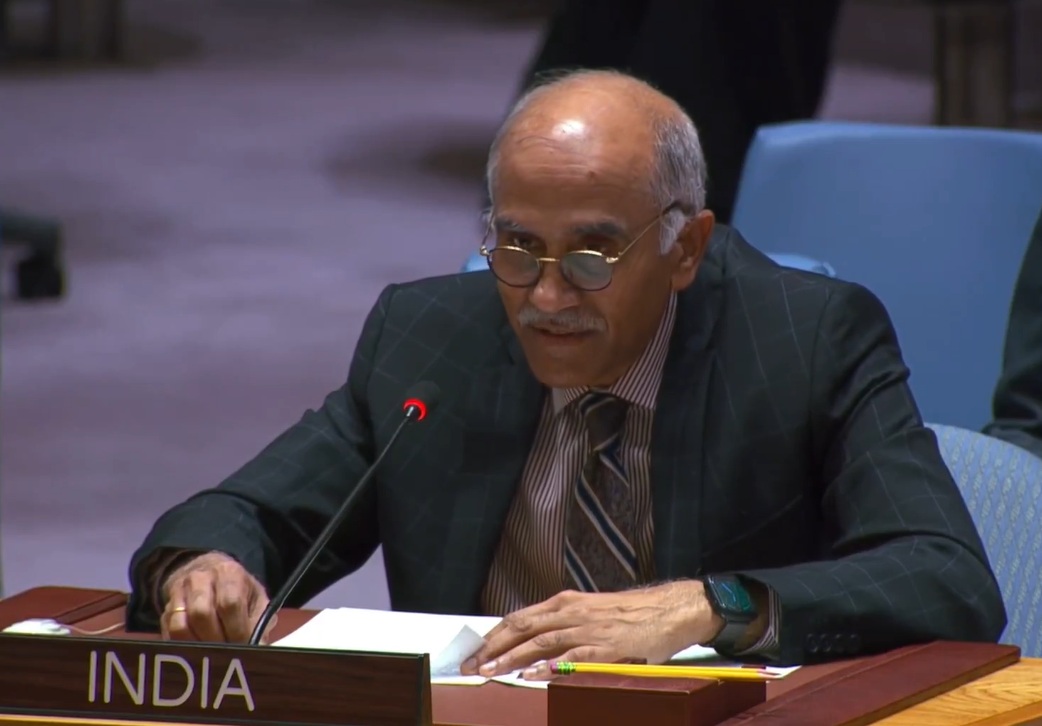
Speaking at a Council debate on working methods on Friday, India’s Permanent Representative P Harish said the UN must ensure that member states with “vested interests” are not placed in positions where impartiality is essential.
“Obvious and outright conflicts of interest can have no place in the Council,” he told members, without directly naming Pakistan. But his remarks were clearly aimed at Islamabad, which currently chairs the UNSC’s Taliban sanctions committee — known as the 1988 Committee — and serves as co-chair of the counter-terrorism committee.
The 1988 Committee oversees travel bans, asset freezes and arms embargoes against Taliban members. India has previously faced delays in securing a travel waiver for Afghanistan’s acting Foreign Minister Amir Khan Muttaqi, whose visit to New Delhi was held up by procedural obstacles within the panel.
Despite its seat on these bodies, Pakistan remains entangled in a simmering conflict with Taliban-led Afghanistan, with regular skirmishes along their shared border. India argues that such dynamics make Pakistan an unsuitable steward of sanctions and counter-terrorism mechanisms.
Harish also pointed to Islamabad’s record of hosting or tolerating UN-sanctioned militant groups and leaders, including those responsible for attacks in India. This, he suggested, should automatically disqualify Pakistan from co-chairing the counter-terrorism committee.
Calling for sweeping reforms, the envoy urged the Council to overhaul how chairs of subsidiary bodies and “pen-holders” — the members who draft resolutions or lead negotiations — are chosen. These decisions, he said, must be “transparent, objective and time-bound” to prevent political manipulation.
Harish criticised the opaque manner in which certain committees, particularly the 1267 sanctions panel for ISIS and al-Qaeda, reject listing proposals for terrorist leaders. China has repeatedly blocked joint India–US efforts to sanction Lashkar-e-Tayyiba and Jaish-e-Mohammad figures, with decisions taken behind closed doors and without explanation to non-Council states.
He also renewed India’s long-standing objections to the UN Military Observer Group in India and Pakistan (UNMOGIP), which monitors the ceasefire in Kashmir. New Delhi maintains the mission has outlived its mandate, while Pakistan insists on its continuation.
“Continuation of mandates that have outlived their utility for narrow political interests of certain states must not be allowed,” Harish said, urging the Council to consider “sunset clauses” for peacekeeping missions to avoid unnecessary drain on UN resources.
The remarks underline India’s growing impatience with what it sees as structural flaws within the Security Council, particularly procedural opacity and political obstruction that prevent effective global counter-terrorism action.