For years, Afghanistan depended heavily on Pakistan’s Torkham and Spin Boldak crossings for the movement of goods
Afghanistan is accelerating its shift toward alternative trade routes through Iran and Central Asia as tensions with Pakistan continue to disrupt cross-border commerce, forcing Kabul to reduce its long-standing reliance on its eastern neighbour.
According to a Reuters report cited by Afghanistan’s leading broadcaster Ariana News, the country’s trade with Iran over the past six months has surged to $1.6 billion — significantly higher than the $1.1 billion in trade conducted with Pakistan during the same period. The figures underline the depth of Kabul’s strategic realignment amid repeated border closures and diplomatic friction with Islamabad.
Abdul Salam Jawad Akhundzada, spokesman for Afghanistan’s commerce ministry, confirmed that the increased use of Iran’s Chabahar Port — developed by India on the Gulf of Oman — has played a pivotal role in boosting trade volumes. He said that Chabahar’s improved facilities have reduced delays and offered Afghan traders greater certainty that shipments will move uninterrupted, even when Pakistan shuts its border crossings.
For years, Afghanistan depended heavily on Pakistan’s Torkham and Spin Boldak crossings for the movement of goods. But prolonged closures, political tensions, and harsh restrictions have increasingly pushed Afghan traders to seek alternatives. As reported by IANS earlier, the unpredictability along the Pakistan-Afghanistan border has reached a point where traders on both sides together lose about $1 million per day, according to Khan Jan Alokozai, President of the Afghanistan-Pakistan Joint Chamber of Commerce.
Alokozai said that nearly 2,000 vehicles once crossed the border daily, but the continued closure of key checkpoints in recent weeks has halted all movement, causing massive losses — particularly to shipments of perishable goods such as fresh fruits and vegetables. These products form a substantial portion of Afghanistan’s cross-border commerce and are highly vulnerable to delays.
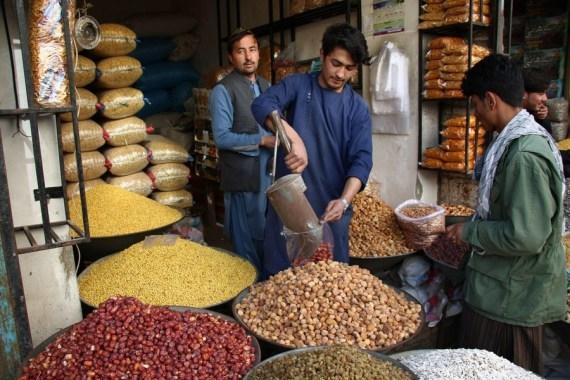
The disruption comes at a time when Afghanistan’s agricultural exports offered one of the few positive indicators for its struggling economy. Dried fruits — including almonds, pistachios, raisins, dried apricots, and walnuts — have been performing strongly in recent months, emerging as some of the country’s most valuable export commodities. However, traders say repeated border blockages have risked this fragile recovery.
As border tensions worsen, Kabul is leaning more decisively toward Iran. Last month, Afghanistan’s Foreign Minister Amir Khan Muttaqi underscored the growing significance of the Chabahar route while speaking in New Delhi. Calling the port a “good trade route,” he emphasised that both Afghanistan and India should work to address the complications arising from U.S. sanctions on Iran, which have slowed full-scale operationalisation of the port’s potential.
Muttaqi said that Chabahar could unlock new opportunities for exporting Afghan dried fruits, saffron, and handicrafts to India and international markets, creating an alternative transit corridor that bypasses Pakistan entirely. The port provides landlocked Afghanistan a direct maritime link to the Arabian Sea, which analysts say could gradually reshape regional trade dynamics.
Afghan traders also point to growing opportunities through Central Asia. Routes through Uzbekistan, Turkmenistan, and Tajikistan — supported by regional railway links and road corridors — are increasingly being used for exports and imports. These options, while costlier in some cases, offer stability and predictability that traders say Pakistan can no longer provide.
The economic strain caused by Pakistan’s border closures has further deepened resentment among Afghan business groups, who accuse Islamabad of using commercial checkpoints as political leverage. Analysts note that the Taliban’s shift toward Iran and Central Asia is not merely a temporary adjustment but part of a longer-term strategy to diversify trade partners.
Akhundzada said that the government is actively encouraging businesses to expand their use of Chabahar and other alternative routes. Afghan officials believe the shift will reduce dependence on Pakistan and create more resilient supply chains, especially during moments of political stress.
With no sign of the border impasse easing soon, Kabul’s realignment appears to be gaining momentum. The rising trade volume with Iran and increasing traffic toward Central Asia signal a new phase in Afghanistan’s regional economic integration — one driven as much by necessity as by strategy.