Rising UK temperatures are set to become a lasting feature of the climate, according to government advisers, as new Met Office data points to 2025 being the hottest year on record…reports Asian Lite News
Rising temperatures in the UK will become “the new normal”, a senior government climate adviser has warned, calling for faster action to prepare the country for the impacts of climate change. The warning follows new analysis from the Met Office showing that 2025 is on course to be the UK’s hottest year since records began in the late 19th century.
With just over a week of the year remaining, the Met Office said the average UK air temperature for 2025 is tracking at around 10.05C. That would narrowly exceed the current record of 10.03C set in 2022, making this year the warmest in more than 140 years of observations.
“This is our future, encapsulated in data,” Professor Rachel Kyte said. She added: “Now the question is ‘how are we going to prepare ourselves and build our resilience to this?’”
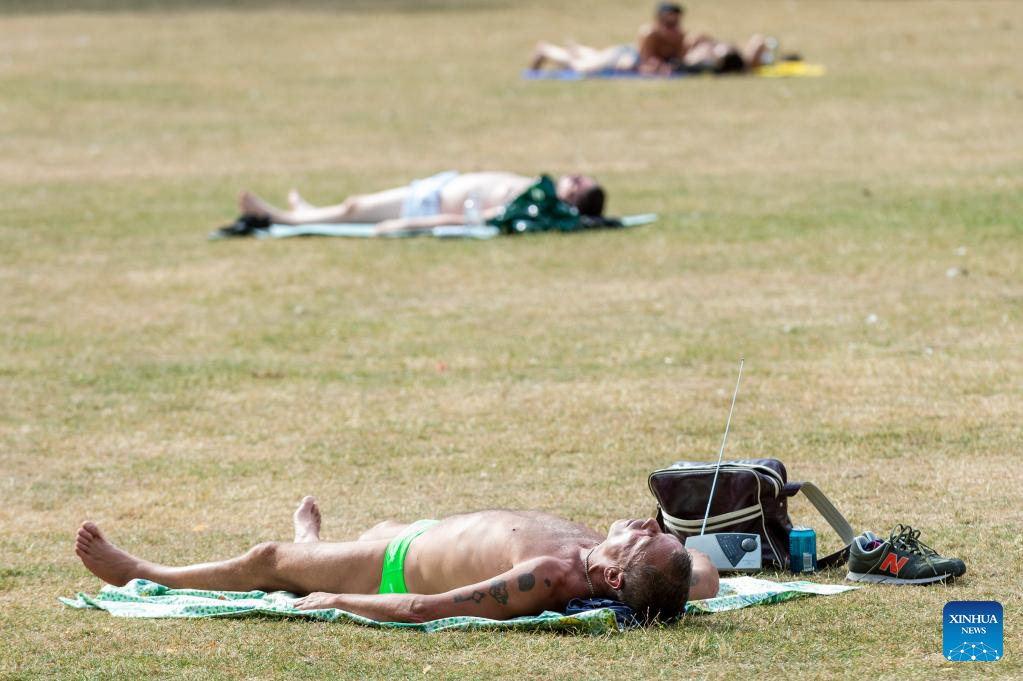
The record-breaking warmth has been driven by persistently high temperatures across much of the year, particularly in spring and summer. A combination of limited rainfall and sustained warmth left parts of the UK vulnerable to drought and wildfires, increasing pressure on water resources, agriculture and emergency services.
While scientists stress that temperatures fluctuate naturally from year to year, they are clear that the underlying trend is being driven by human activity. The build-up of greenhouse gases in the atmosphere, particularly carbon dioxide from burning fossil fuels, is raising average temperatures and increasing the likelihood of extreme heat.
“The pollution [carbon dioxide] we’ve put in for the last 20–30 years is now what is driving this warmth, and so not curbing emissions well enough means we’re going to continue to see these kinds of impacts,” Prof Kyte, the UK’s special representative for climate, said.
She said the country needed to focus not only on cutting emissions but also on adapting to the changes that are already unavoidable. That includes investing in infrastructure, nature-based solutions and public services that can cope with higher temperatures and more frequent extremes.
“If we don’t invest in our adaptation now, it’s going to cost us way more,” she warned.
By the end of 2025, the UK’s 10 warmest years on record will all have occurred within the past two decades. Temperature measurements stretching back to the late 1800s show a clear upward trend, with recent decades significantly warmer than earlier periods.
“Anthropogenic [human-caused] climate change is causing the warming in the UK as it’s causing the warming across the world,” said Amy Doherty, a climate scientist at the Met Office. She said the pace of warming seen in recent decades is expected to continue.
“What we have seen in the past 40 years, and what we’re going to continue to see, is more records broken, more extremely hot years […] so what was normal 10 years ago, 20 years ago, will become [relatively] cool in the future,” she said.
The Met Office’s assessment of 2025 is based on observed temperatures up to 21 December, combined with an assumption that the remaining days of the year will be around 2C below the long-term December average. Slightly cooler conditions are forecast over Christmas, meaning the Met Office cannot say with absolute certainty that 2025 will end as the hottest year. However, scientists say it is the most likely outcome.
If confirmed, it would mark the sixth time this century that the UK has set a new annual temperature record, following previous records in 2002, 2003, 2006, 2014 and 2022.
“The changes we are seeing are unprecedented in observational records back to the 19th Century,” said Mike Kendon, another climate scientist at the Met Office.
The expected new record has been built on exceptional warmth earlier in the year. Although winter weather has since returned, both spring and summer were the warmest ever recorded in the UK. Each month from March to August was more than 2C above the long-term average for the period between 1961 and 1990.
Temperatures peaked at 35.8C during the year, below the extreme highs of more than 40C recorded in July 2022. However, hot conditions occurred repeatedly rather than as a single event. Four separate, though relatively short-lived, heatwaves were declared across large parts of the country.
The prolonged warmth prompted the UK Health Security Agency to issue multiple heat-health alerts during the summer months. These alerts warned of increased risks to health, particularly for older people, those with underlying conditions and others vulnerable to heat.