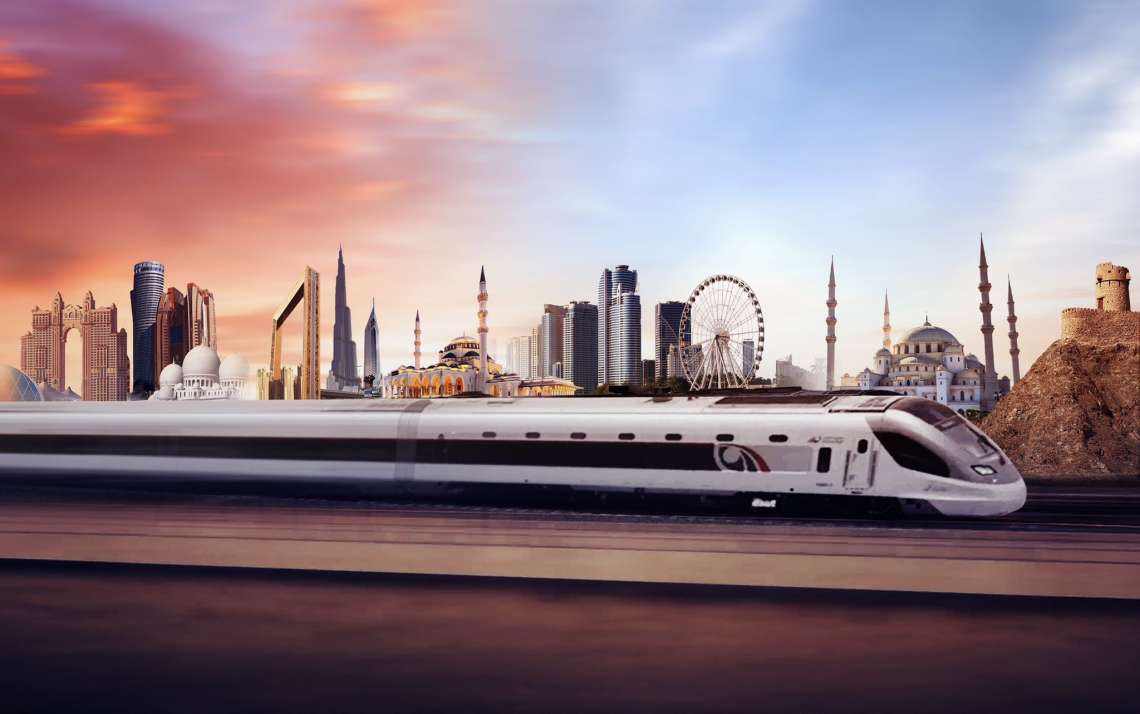
Etihad Rail unveils the UAE’s first national passenger railway, connecting 11 cities and reshaping intercity travel with fast, sustainable and people-centred transport from 2026….reports Asian Lite News
The United Arab Emirates is set to enter a new era of national connectivity after Etihad Rail unveiled full details of the country’s first fully integrated passenger railway network, a landmark infrastructure project scheduled to begin phased operations in 2026.
Designed to connect 11 cities and regions across the Emirates, the passenger rail network will form the backbone of a unified national transport system, offering fast, reliable and sustainable intercity travel for citizens, residents and visitors. Once operational, it will significantly reshape how people move across the country, reducing reliance on road travel while strengthening economic and social links between the Emirates.
Etihad Rail confirmed that stations across the network will be rolled out in phases throughout 2026. The planned stations include major urban hubs such as Abu Dhabi, Dubai, Sharjah and Fujairah, alongside Al Sila’, Al Dhannah, Al Mirfa, Madinat Zayed, Mezaira’a, Al Faya and Al Dhaid. Together, these locations have been strategically selected to ensure nationwide coverage and accessibility, connecting population centres, economic zones and emerging communities.
Earlier in 2025, Etihad Rail had announced the first four passenger stations in Abu Dhabi, Dubai, Sharjah and Fujairah. The latest announcement completes the picture of the full national network, marking a major milestone in the UAE’s long-term transport and infrastructure strategy.
Azza AlSuwaidi, Deputy CEO of Etihad Rail Mobility, said preparations for the launch of passenger services reflect the leadership’s vision of building an integrated transport ecosystem that supports both economic growth and social cohesion. She described the passenger railway as a cornerstone of the UAE’s national transport framework, strengthening connectivity across the Emirates while supporting long-term development goals.
AlSuwaidi noted that the project builds on Etihad Rail’s proven success in operating the national freight rail service since 2023, highlighting close collaboration between government entities, strategic partners and national talent. She added that the network has been equipped with a next-generation fleet and advanced technologies, developed in partnership with leading international operators to meet the highest global standards of safety, reliability and quality.
Beyond infrastructure, the passenger rail project is being positioned as a symbol of national identity and unity. AlSuwaidi said the trains will carry a distinctly Emirati character, reinforcing national cohesion while serving as a long-term investment in the country’s transport and infrastructure sectors. She added that the network is expected to boost domestic tourism, improve community wellbeing and set a new regional benchmark for sustainable, people-centred mobility.
Passengers can expect a modern and seamless travel experience. The trains have been designed with comfort and efficiency in mind, featuring ergonomic seating, contemporary interiors, full Wi-Fi coverage and individual power outlets at every seat. Services will run on a precise and regular timetable, offering a congestion-free alternative to road travel and significantly reducing journey times between cities.
Mohammed Alshehii, Chief Projects Officer at Etihad Rail, confirmed that passenger services will officially launch in 2026, with the first phase linking 11 carefully selected cities and areas. He highlighted key locations such as Mohammed Bin Zayed City in Abu Dhabi, Jumeirah Golf Estates in Dubai, University City in Sharjah and the Al Hilal area in Fujairah as examples of how stations have been integrated into major residential and activity hubs.
Alshehii said ten of the 13 trains in the fleet have already arrived and undergone rigorous testing and certification to international safety and quality standards. Each train can accommodate up to 400 passengers and will be operated using advanced systems designed to ensure reliability, security and seamless integration with other modes of transport.
Reflecting on the scale of the project, Alshehii described it as the result of three years of intensive planning, design and delivery, involving more than 7,000 experts and workers and accounting for 24.5 million working hours.
Beyond mobility, Etihad Rail expects the passenger network to deliver wide-ranging national benefits, from supporting emissions reduction goals to strengthening economic integration and making the UAE feel more connected, accessible and future-ready.