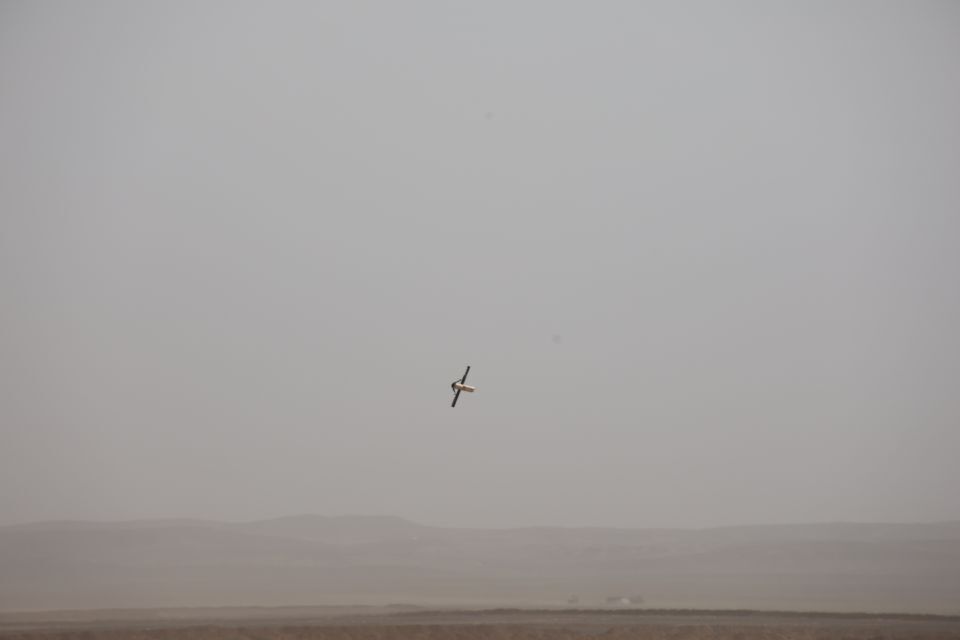
UK tests Skyhammer interceptor missiles in Jordan, boosting defences against drone threats as Defence Minister Luke Pollard strengthens security ties with Gulf partners during regional visit, reports London Daily Newsdesk
The UK Ministry of Defence has successfully tested a new generation of British-built interceptor missiles in the Middle East, in a move aimed at strengthening air defence capabilities against drone threats across the region.
The Skyhammer interceptor system, developed by UK start-up Cambridge Aerospace, was trialled in desert conditions in Jordan, demonstrating its ability to counter fast-moving aerial threats, including Shahed-style attack drones that have become increasingly prominent in recent conflicts.
The Skyhammer interceptors are designed with a range of up to 30 kilometres and can reach speeds of 700 km/h, offering rapid-response capability against low-cost, high-impact drone attacks. The system forms part of a broader push by the UK to adapt to lessons learned from conflicts in Ukraine and the Middle East, where drone warfare has reshaped battlefield dynamics.
The successful trial follows a recently signed multi-million-pound contract between the UK government and Cambridge Aerospace, with the first tranche of missiles expected to be delivered to the UK Armed Forces later this month.
Luke Pollard, Minister for Defence Readiness and Industry, witnessed the trial and described it as a demonstration of how British defence innovation can deliver “cutting-edge technology at pace”.
The test coincided with Pollard’s visit to Kuwait and Jordan, where he held talks with regional leaders on security cooperation, including discussions around the Strait of Hormuz and broader maritime and aerial defence challenges.
During his visit, Pollard met Kuwait’s Defence Minister Abdullah Ali Abdullah Al-Salem Al-Sabah, praising the efforts of local armed forces and UK personnel in protecting civilians and infrastructure during recent Iranian missile and drone attacks prior to the current ceasefire.
The UK has deployed systems such as Rapid Sentry and ORCUS in Kuwait, enabling early detection and interception of aerial threats. British personnel have also conducted defensive air patrols over Jordan and surrounding areas in support of regional stability.
In Jordan, Pollard met Chairman of the Joint Chiefs of Staff Yousef Alhnaity, reaffirming the strength of the UK-Jordan defence partnership. Discussions focused on joint efforts to counter emerging threats and enhance interoperability between allied forces.
The UK government said the Skyhammer programme underscores its commitment to supporting long-term partners in the Gulf and Middle East, particularly amid heightened tensions linked to Iran’s regional activities.
Beyond its strategic implications, the deal is expected to provide a boost to the UK defence sector. The contract with Cambridge Aerospace is projected to create more than 50 new jobs while supporting over 125 existing roles, aligning with broader plans to increase defence spending to 2.6% of GDP by 2027.
Steven Barrett, chief executive of Cambridge Aerospace, said the successful trial demonstrated the system’s cost-effectiveness and capability to counter the growing threat posed by drone warfare.
The Ministry of Defence is also accelerating efforts to streamline defence exports to Gulf partners through its National Armaments Director Group, including the creation of a dedicated task force to coordinate with industry and manage supply chain demands.
Officials said the initiative aims to ensure rapid delivery of defensive capabilities while responding to increased demand driven by regional conflicts and evolving security threats.