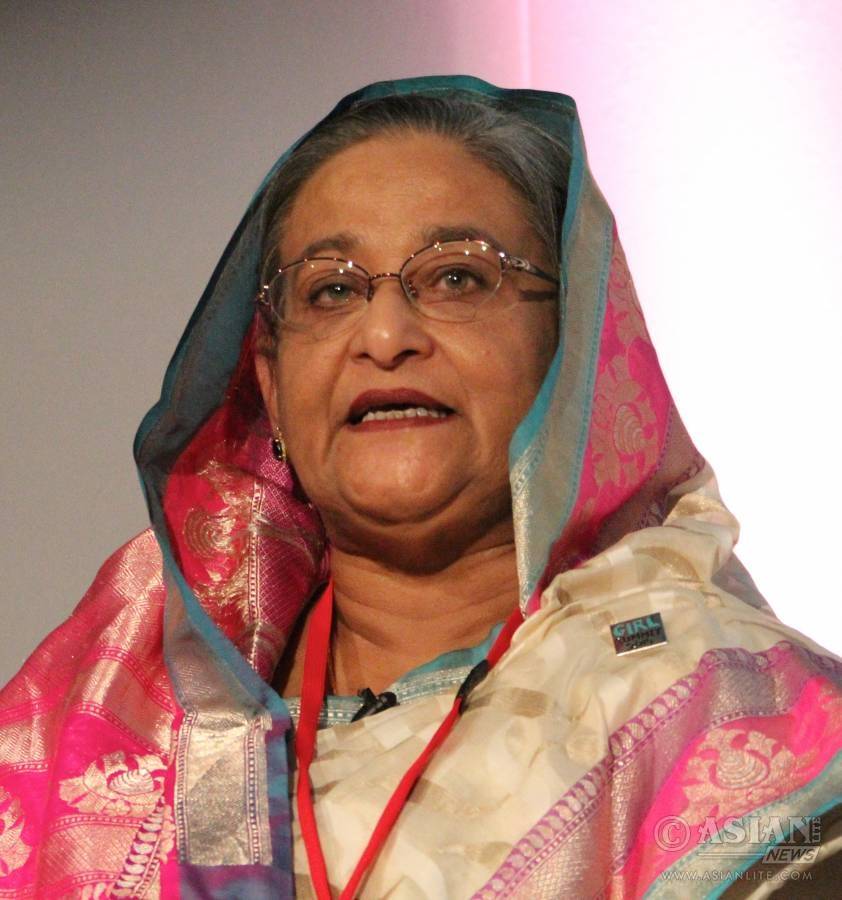
Sheikh Hasina’s announcement that she plans to return to Bangladesh has reignited debate over the country’s extradition request and the legal validity of the International Crimes Tribunal proceedings…reports Asian Lite News Desk
Bangladesh’s request for the extradition of former Prime Minister Sheikh Hasina from India has come under renewed scrutiny following her announcement that she intends to return to the country and surrender voluntarily later this year, according to a report by the Hong Kong-based newspaper Asia Times.
The report said Hasina’s decision to return to Bangladesh by December, accompanied by senior Awami League leaders including former Home Minister Asaduzzaman Khan Kamal, has revived questions surrounding the legal process against her and the implications for India’s consideration of the extradition request.
Bangladesh formally sought Hasina’s extradition under the bilateral extradition treaty signed with India in 2013. Under the agreement, India may refuse an extradition request if it believes it is politically motivated or not made in good faith.
According to Asia Times, Hasina’s announcement does not resolve the legal dispute. Instead, it places greater focus on whether India should assess not only the extradition request itself but also the judicial process awaiting the former Prime Minister if she returns.
In November last year, Bangladesh’s International Crimes Tribunal (ICT) sentenced Hasina and former Home Minister Asaduzzaman Khan Kamal to death in absentia after convicting them of crimes against humanity linked to the July-August 2024 demonstrations.
The report noted that eight months after the verdict, Hasina had announced her intention to return to Bangladesh and “surrender voluntarily”, arguing that she wanted to present her case in person rather than allow her record to be determined through a trial conducted in her absence.
According to Asia Times, the move transforms what appeared to be a concluded legal process into a renewed political and legal issue, while raising broader questions about the tribunal responsible for the convictions.
The report alleged that Bangladesh’s former interim government, led by Muhammad Yunus, amended the International Crimes Tribunal’s founding legislation four times through executive ordinances while governing without a functioning Parliament. It argued that the Bangladeshi Constitution required parliamentary ratification of those amendments, which it said did not occur.
It also questioned the composition of the tribunal, claiming the bench was reconstituted with judges who did not meet the legal requirements following the removal of the country’s Chief Justice and several senior judges.
According to the report, prosecution evidence, including leaked surveillance recordings, was admitted without hearings into how it had been obtained or whether the methods used were lawful. It further claimed that the proceedings moved from the appointment of defence counsel to the delivery of death sentences in less than five months.
The report also referred to findings by a United Nations fact-finding mission, stating that the evidence available on the events of 2024 did not yet support individual criminal convictions.
Asia Times argued that Hasina’s stated intention to return means India does not need to take a position on Bangladesh’s domestic politics but should instead examine whether the tribunal and its proceedings satisfy the legal standards required under the bilateral extradition treaty.
According to the report, such an assessment would be a legal determination rather than a political one and could be made independently of any judgment about the events surrounding the 2024 protests.