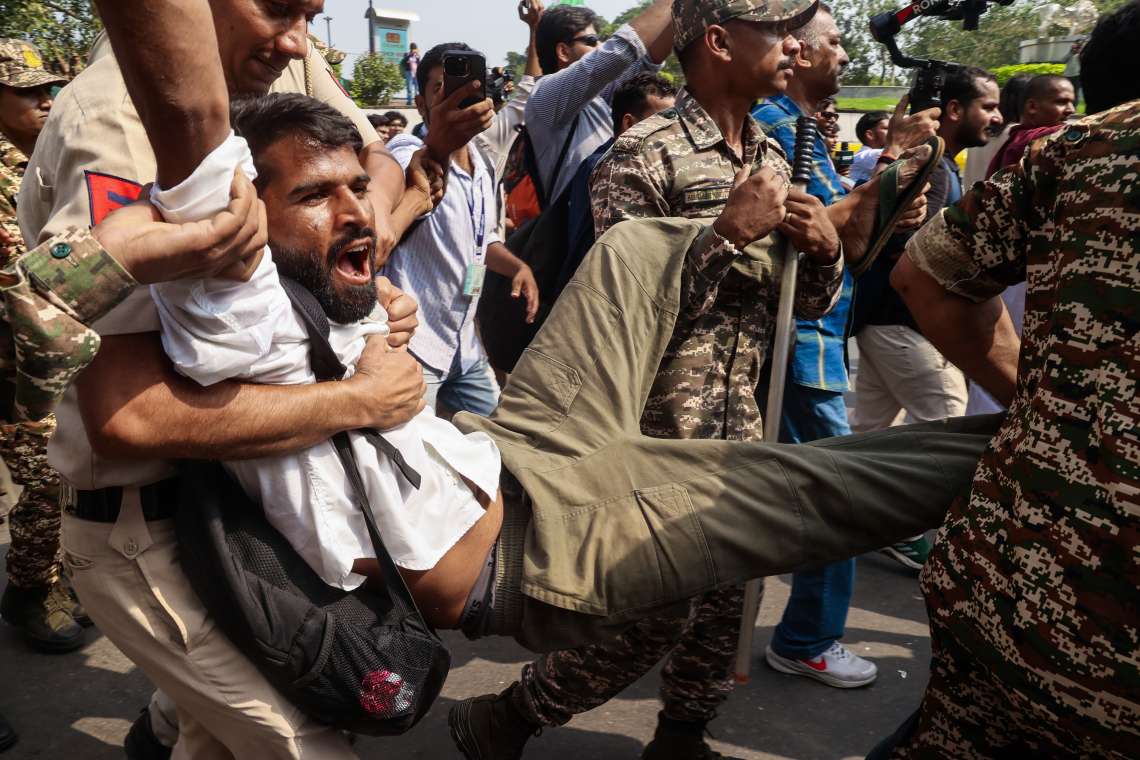
Delhi detains CJP leaders, YouTuber Dhruv Rathee and opposition figures ahead of protests demanding election chief Gyanesh Kumar’s resignation over alleged voter-list irregularities and restrictions…reports Asian Lite News Desk
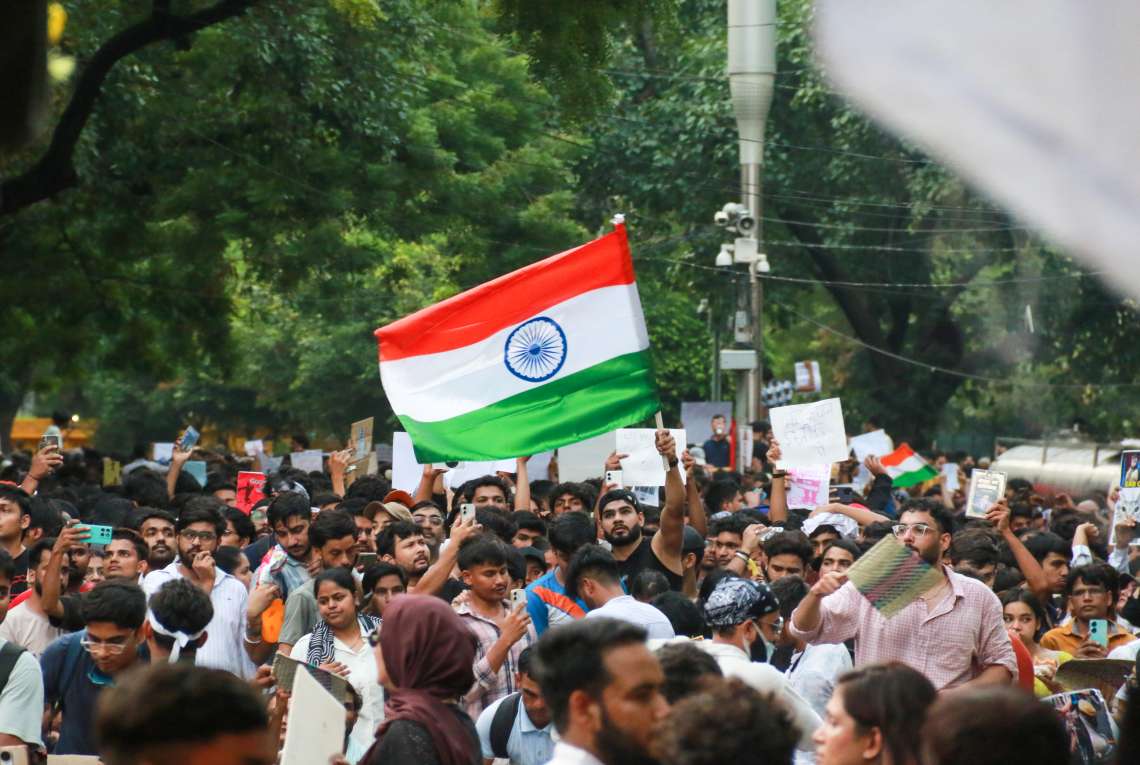
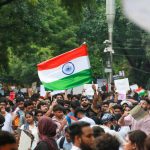
Delhi witnessed an extensive security crackdown on Saturday as police detained hundreds of protesters, political leaders and media personnel ahead of a planned demonstration demanding the resignation of Chief Election Commissioner Gyanesh Kumar over alleged irregularities in electoral rolls.
The protest, organised by the Cockroach Janta Party (CJP) and supported by student groups and opposition figures, was scheduled to take place at Jantar Mantar on October 10. However, the authorities’ security operation, transport restrictions and detention of key organisers disrupted efforts to assemble in central Delhi.
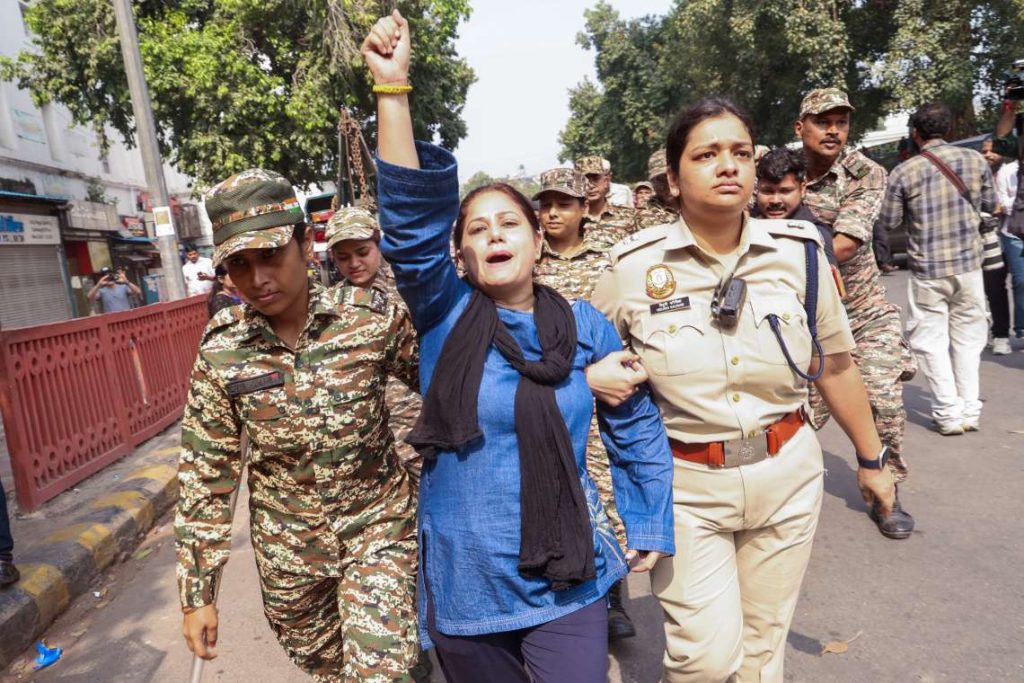
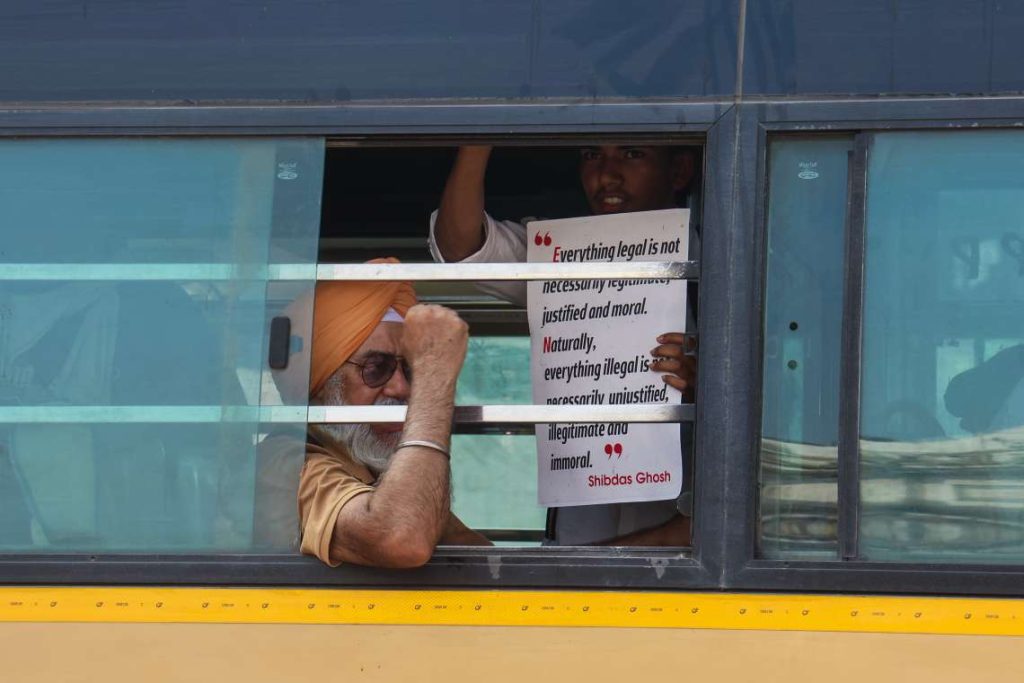
Reports on Saturday afternoon said more than 1,500 people had been detained across the capital, although figures are not accurate. Thousands of police and paramilitary personnel were deployed, with some reports putting the force at around 35,000.
The action prompted criticism from opposition politicians and civil liberties advocates, while the Supreme Court had already cautioned authorities against imposing disproportionate restrictions on public transport ahead of the demonstration.
CJP founder Abhijeet Dipke detained from aircraft
CJP founder Abhijeet Dipke and senior leaders Saurav Das and Ashutosh Ranka were detained by Delhi Police after their flight from Mumbai landed at Indira Gandhi International Airport on Saturday morning.
Police personnel entered the aircraft and took the three leaders into custody before they could reach the planned protest venue. Video footage showed the leaders questioning the officers and raising slogans.
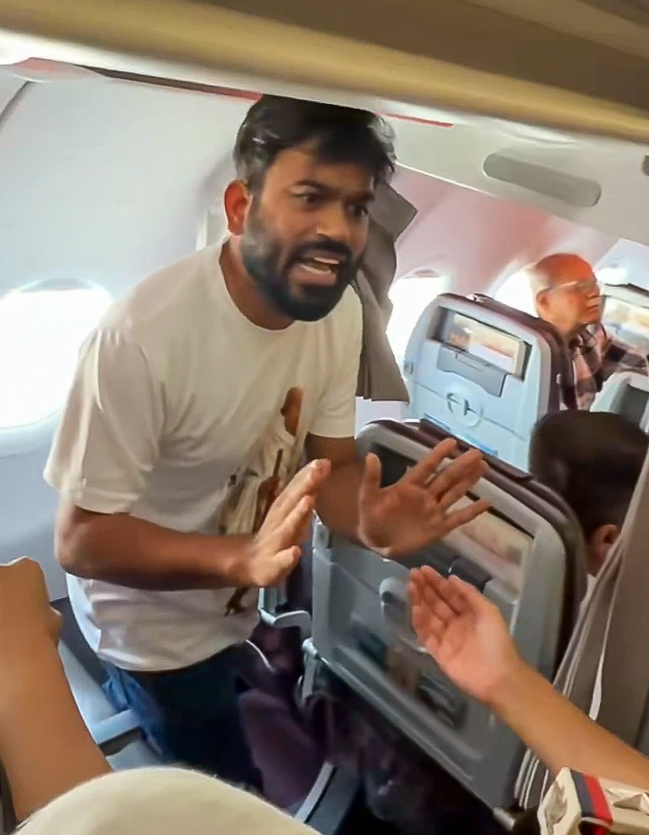
The CJP condemned the detentions, describing them as a pre-planned attempt to prevent its leadership from reaching Jantar Mantar. The group demanded their immediate release.
Dipke subsequently named Ajinkya Shinde to lead the protest campaign while the senior leaders remained in custody. The group said its demonstration would continue despite the restrictions.
The whereabouts of the detained leaders were not immediately clear in the latest reports, with some outlets saying they had been taken to an undisclosed location.
Dhruv Rathee, other public figures detained
YouTuber and political commentator Dhruv Rathee was detained at his residence in Gurugram ahead of the demonstration, according to reports. Police had reportedly approached him to prevent him from travelling to Delhi to join the protest.
Content creator Kavya Karnatac was also reported to have been detained in the capital. Actor Raj Zutshi was among those named in reports about the wider detention operation.
Former Kerala chief minister Pinarayi Vijayan was taken into custody while proceeding towards Jantar Mantar, along with several other Communist Party of India (Marxist) leaders.
Those reported detained included CPI(M) general secretary M A Baby, Rajya Sabha MP John Brittas, former Kerala finance minister K N Balagopal, M V Govindan, A Vijayaraghavan, K K Shailaja, Brinda Karat and P K Sreemathy.
The detentions extended beyond political organisers. The Indian Express reported that 15 journalists were among those taken to temporary detention centres, alongside social media content creators and other civilians. Reuters also reported that representatives of digital media outlets said some of their reporters had been detained while covering the protest.
Police also detained people attempting to reach the demonstration from different parts of the city. The CJP said some supporters had been stopped while travelling towards the capital, while reports described detentions near Jantar Mantar and other central Delhi locations.
The distinction between preventive detention and formal arrest remains important. Many of the reported actions were described as detentions or preventive custody, and the available reports did not establish that every person taken into custody had been formally arrested or charged.
Why are protesters demanding the election chief’s resignation?
The demonstration centres on the Election Commission’s Special Intensive Revision (SIR) of electoral rolls and allegations about the removal of voters’ names.
The CJP, student organisations and opposition figures have demanded Kumar’s resignation, arguing that the voter-list revision raises questions about electoral fairness and transparency.
The controversy intensified after a report by The Indian Express said Kumar’s two fellow Election Commissioners had raised questions and disagreed with him over aspects of the revision process. Critics have also raised concerns about changes involving Form 6, used to apply for inclusion in the electoral roll.
Reports cited by protesters put the number of names removed from electoral rolls during the revision exercise at around 130 million. The figure and the circumstances surrounding individual deletions have become central to the political dispute.
The Election Commission has defended the revision as a voter-verification exercise. The BJP has rejected allegations that electoral processes were manipulated to benefit the ruling party, attributing its electoral success to Prime Minister Narendra Modi’s popularity and its record in government.
The CJP has described its planned rally as a “Save Democracy” demonstration. The October 10 action followed days of protests and detentions in different parts of the country.
The movement, which began as a satirical youth initiative, has emerged as a rallying point for sections of young protesters. Its name traces back to remarks by Chief Justice of India Surya Kant describing unemployed youth as “cockroaches”, which prompted criticism and helped galvanise supporters.
Delhi put under heavy security
Delhi Police denied permission for the planned CJP demonstration at Jantar Mantar, citing security and law-and-order concerns. Police also said the request had not been submitted within the prescribed notice period.
Authorities imposed prohibitory restrictions and established multiple security cordons around central Delhi. Barricades and concrete blocks were placed on major roads, while police carried out intensive checks on vehicles and people entering the city.
Spike strips, drones and anti-riot vehicles were reported at key locations. Security personnel were deployed around railway stations, bus terminals, government buildings and the approaches to Jantar Mantar.
The restrictions affected daily life well beyond the proposed protest site. Entry and exit gates at 45 Delhi Metro stations were ordered closed from Friday night until Saturday evening, although interchange facilities remained available at affected stations apart from New Delhi Metro station.
Reports also said more than 250 train services connected to New Delhi and Hazrat Nizamuddin had been cancelled or affected during the security operation. Traffic diversions were introduced at around 30 locations, while some markets and commercial areas experienced disruption.
Mobile internet services were suspended within a four-kilometre radius of the protest area for a 24-hour period beginning on Friday night, according to a police notification cited in reports.
The restrictions complicated efforts by demonstrators to coordinate travel and gather at Jantar Mantar. Some protesters who reached central Delhi were detained before they could assemble.
Supreme Court questions transport curbs
The security measures had come under scrutiny in the Supreme Court a day before the protest.
On Friday, a bench led by Chief Justice Surya Kant expressed concern about the closure of Metro stations and cancellations of trains, stressing that security measures should follow the principle of proportionality.
The court directed the authorities to ensure there was no complete prohibition on the movement of Metro trains or railway services to Delhi and that commuters were not subjected to unnecessary inconvenience.
The Chief Justice cautioned that authorities could take preventive measures but should not use excessive restrictions to address the risk of disruption.
On Saturday, advocate Shailendra Mani Tripathi filed a contempt petition alleging that authorities had continued to restrict Metro and rail services despite the court’s directions. The petition named Union Home Secretary Govind Mohan, Delhi Police Commissioner Anurag Kumar and Delhi Metro Rail Corporation chairperson D Thara as respondents.
The allegations in the petition had not been adjudicated at the time of the latest reports.
Opposition criticises crackdown
The detentions and restrictions drew criticism from opposition politicians, who accused the authorities of attempting to prevent peaceful dissent.
Congress MP Shashi Tharoor said a government confident in the fairness of its elections should welcome questions rather than respond by turning the capital into a fortress.
Aam Aadmi Party convenor Arvind Kejriwal criticised the detention of CJP leaders and accused the authorities of suppressing democratic protest. The party also alleged that police had placed heavy security around his residence after he said he would join the demonstration.
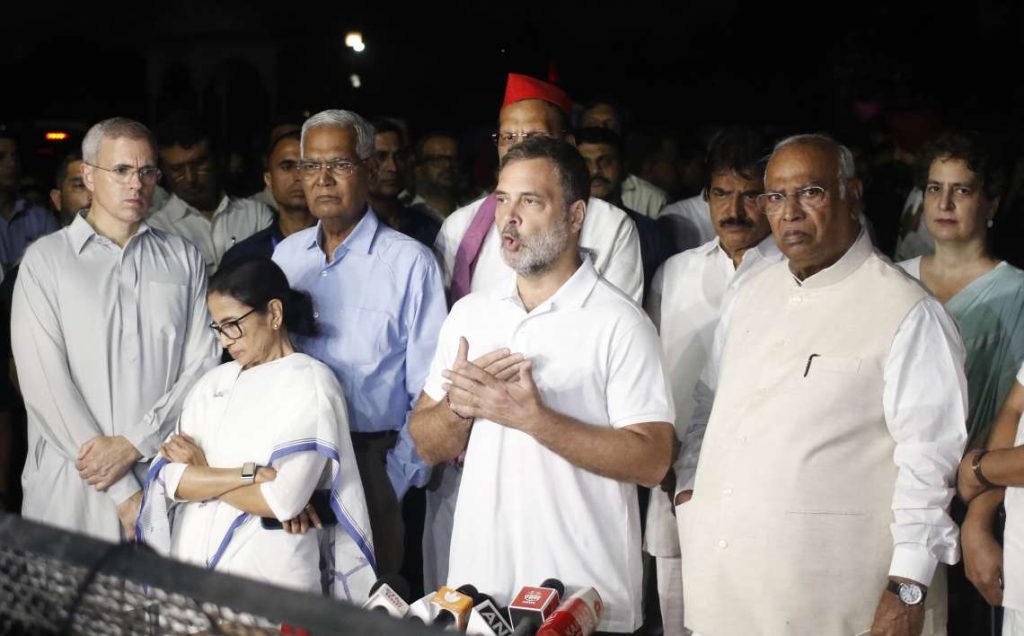
Congress leader Rahul Gandhi reiterated his demand for Kumar’s removal, but the Congress party did not formally participate in the CJP-led protest, according to reports.
The CPI(M) also criticised the detentions of its leaders. The CJP urged supporters to remain peaceful and said the movement would continue despite the police action.
Amnesty International India called on Delhi Police and the government to facilitate the right to peaceful protest, describing the restrictions as sweeping and disproportionate. The organisation said authorities should protect freedom of assembly while maintaining public order.
The confrontation has brought the dispute over voter-list revisions into sharper focus ahead of upcoming state elections.
Opposition parties have repeatedly accused the government and election authorities of failing to ensure adequate transparency in electoral processes. The Election Commission has defended its procedures, while the BJP has rejected claims that the revision exercise was politically motivated.
The CJP demonstration was intended to bring together young activists, student groups and opposition supporters around demands for accountability from the election chief. The detention of prominent organisers and the restrictions across Delhi significantly disrupted those plans.
By Saturday afternoon, the full number of people detained, the status of several prominent figures and the extent to which the planned protest could continue remained unclear.