A report urges the international community to learn from Tibet’s ignored warning as China continues to assert its ambitions towards Taiwan....report Asian Lite News DeskThe international community must remember Tibet’s failure to heed an early warning about China’s intentions as Beijing continues to assert its ambitions elsewhere, particularly towards Taiwan, a report has said. Gyalo Thondup, the brother of the Dalai Lama, warned the Tibetan government in 1952 that China was preparing to consolidate its control over Tibet, but his concerns were dismissed, according to the report.
The report said Tibet’s experience highlighted the risks of trusting promises of autonomy made by authoritarian governments without adequate safeguards or international support.
Tibet signed the 17-point agreement with China in 1951, following the Chinese military advance into the region in 1950. The agreement promised regional autonomy under Chinese sovereignty, but, according to the report, failed to reflect Beijing’s broader intentions.
Thondup’s warning received little attention, partly because Tibet was isolated from international politics and its leadership placed faith in the agreement. The report also cited cultural confidence and an underestimation of the Chinese Communist Party (CCP) as factors that prevented Tibet from preparing for resistance or seeking international support.

Tibet’s experience raises concerns over autonomy promises
The consequences became increasingly severe in the years that followed. The Tibetan uprising of 1959 was crushed, forcing the Dalai Lama into exile. Tibet subsequently experienced cultural destruction and political repression, the report said.
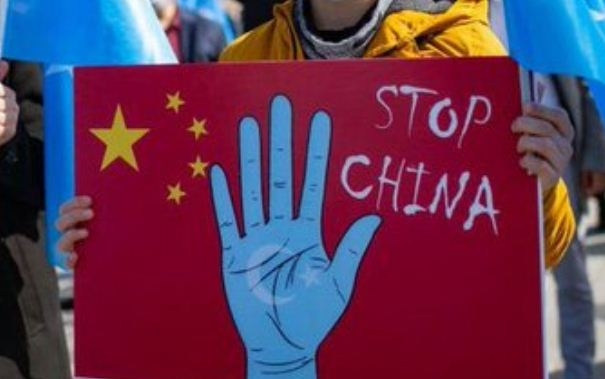
Khedroob Thondup, the Dalai Lama’s nephew, highlighted parallels between Tibet’s experience and developments in Hong Kong and Xinjiang, arguing that Beijing’s assurances of autonomy had repeatedly failed to protect local freedoms.
Also Read: China dumps US debt as India’s Treasury holdings surge
“The examples of Tibet, Hong Kong, and Xinjiang show that Beijing’s guarantees of autonomy have been consistently broken—a lesson for Taiwan, which is being offered ‘one country, two systems.’ In conclusion, scrutinising the promises of authoritarian regimes and maintaining vigilance and international solidarity are the way to preserve freedom,” Khedroob Thondup wrote in a report published by the Institute of Middle East Asia Information Strategy.
The report argued that Taiwan faces a similar challenge as China continues to promote its ‘one country, two systems’ framework as a possible arrangement for reunification.
It cited Tibet’s experience as a warning that promises of autonomy could ultimately lead to assimilation and repression. Hong Kong was also presented as an example of how political freedoms could be curtailed despite earlier assurances.

Taiwan faces pressure from Beijing
According to the report, Taiwan’s democratic system is fundamentally incompatible with the CCP’s authoritarian model. It added that Taiwan had drawn lessons from Tibet’s experience and recognised that surrendering its sovereignty could put its democracy, freedom and cultural identity at risk.
“In 1952, Gyalo Thondup saw clearly what others refused to acknowledge: Tibet was on the brink of losing its freedom. His warning was laughed off, and Tibet paid the price. Today, his story stands as a reminder that authoritarian regimes rarely honour their promises, and that vigilance is the only safeguard against subjugation. The world must remember Tibet’s ignored warning as it confronts Beijing’s ambitions elsewhere. To laugh off foresight is to invite tragedy; to heed it is to preserve freedom,” Khedroob Thondup wrote.
China considers Taiwan part of its territory and has repeatedly called for reunification with the mainland, reserving the option of using force. Taiwan, meanwhile, continues to assert its sovereignty, backed by strong public support.
Beijing has increased the frequency and scale of military exercises around Taiwan in recent years, intensifying concerns over regional security.
The report concluded that the international community should scrutinise assurances made by authoritarian governments and strengthen international solidarity to protect political freedoms and sovereignty.