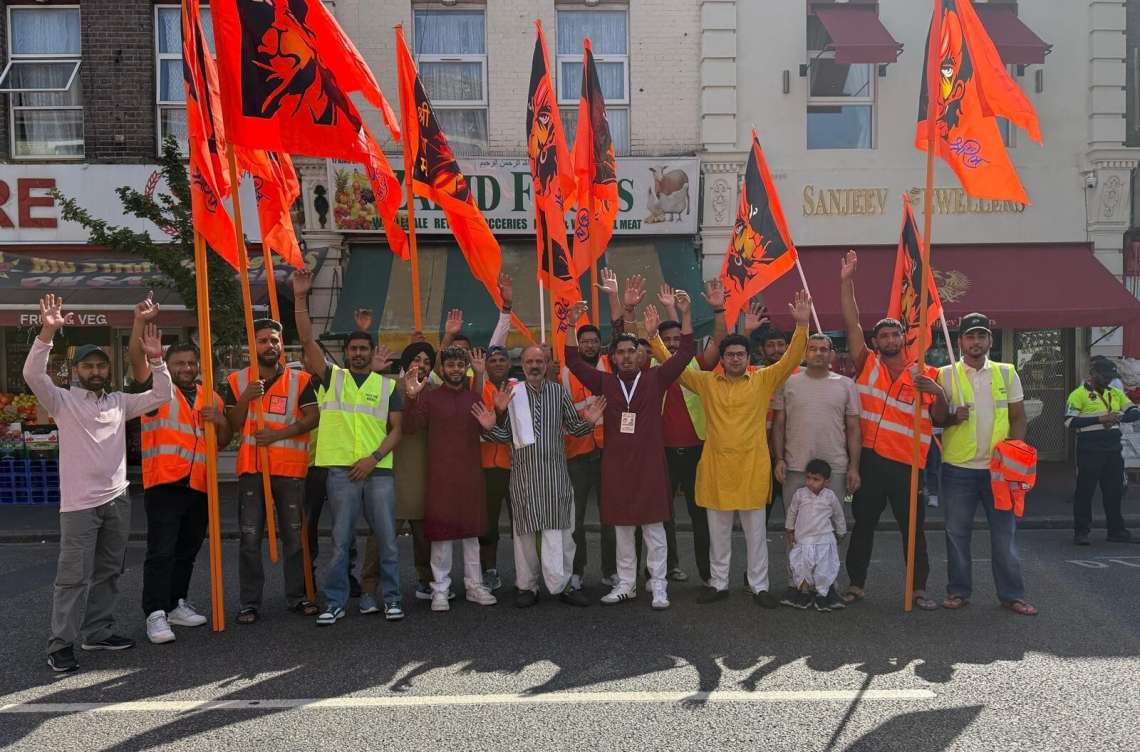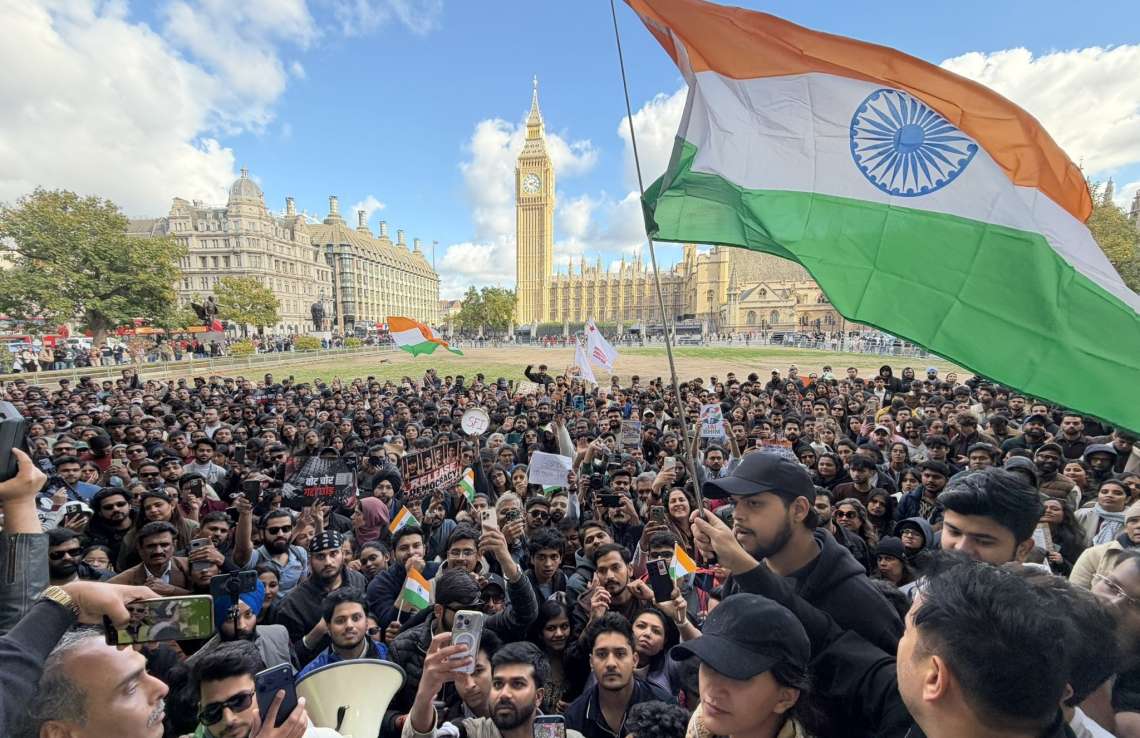
The recent demonstrations in London, including gatherings outside India’s High Commission and the subsequent confrontations between opposing groups, illustrate the danger of allowing disagreements over Indian politics to become public spectacles of division here in Britain…writes Virendra Sharma
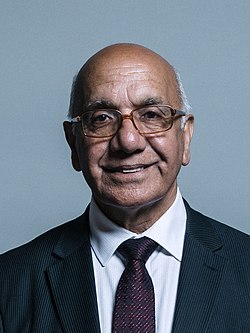
The recent demonstrations in London associated with the Cockroach Janata Party, its supporters and opposition groups have once again brought into focus a question of considerable importance to British Indian communities: how should we express our political differences while preserving the unity, dignity and mutual respect that are essential to our shared future?
My position is clear. I strongly disagree with political activities that deepen divisions within our communities, encourage confrontation between people of Indian origin, or import the bitterness of political disputes from the subcontinent into the streets of Britain. I believe in democracy, public participation, freedom of expression and the right of every individual to hold and express political opinions. However, I also believe that these freedoms carry responsibilities. Political engagement must ultimately serve the public interest, strengthen democratic understanding and contribute to the common good.
I played no part in organising, supporting or participating in these protests. Nor have I ever sought to build my public life by setting one community against another. My commitment has always been to constructive dialogue, progressive politics and the democratic values that unite people across religious, cultural, regional and political boundaries.
Right to protest and responsibility to unite
Britain is a democracy in which peaceful protest is a legitimate and important right. Throughout our history, campaigns for workers’ rights, racial equality, women’s equality, social justice and democratic reform have helped to transform society. Many of the rights that we enjoy today were secured because ordinary people had the courage to challenge injustice and mobilise public opinion.
I would never suggest that people should remain silent when they believe that an injustice has occurred. Nor should any individual be denied the right to criticise a government, an institution or a political leader. Such freedoms are fundamental to democracy.
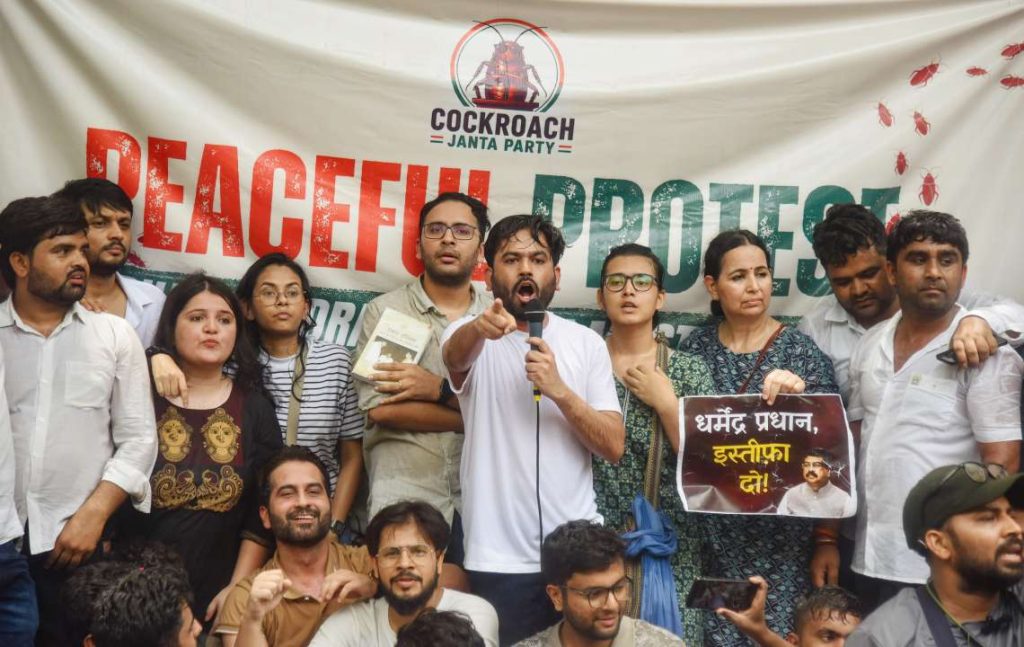
However, the existence of a democratic right does not automatically make every political campaign wise, constructive or beneficial. We must distinguish between a protest that seeks to persuade the public through evidence and reasoned argument and a campaign that risks turning political disagreement into hostility between communities.
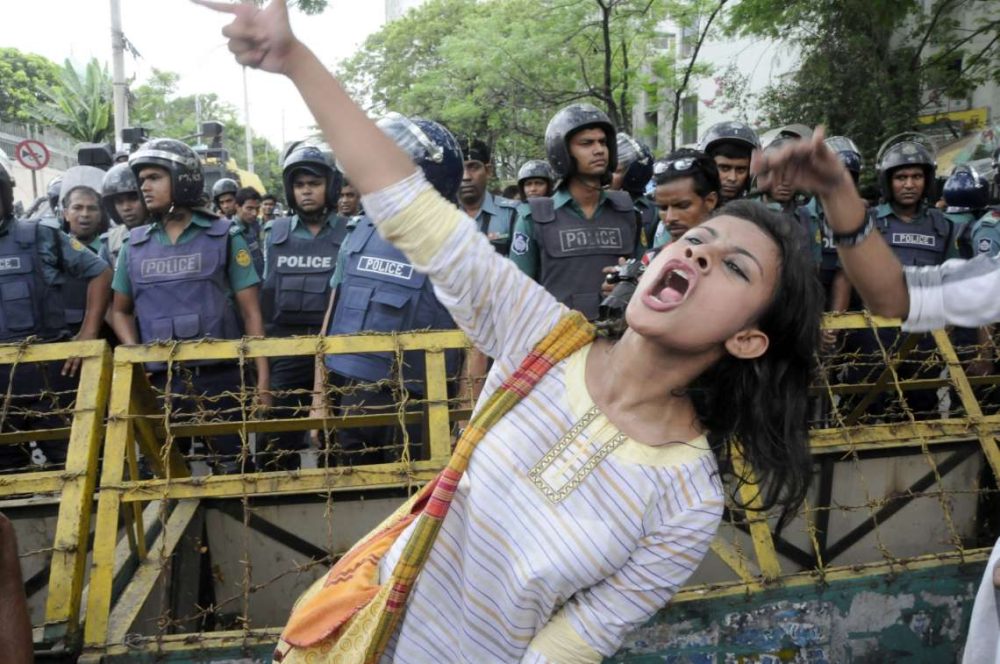
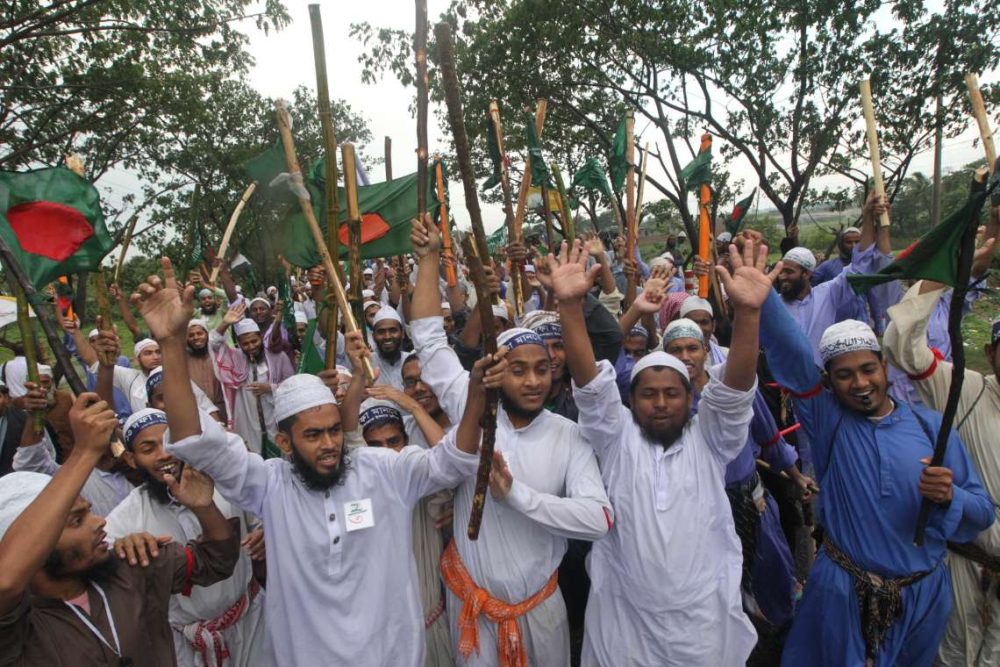
The recent demonstrations in London, including gatherings outside India’s High Commission and the subsequent confrontations between opposing groups, illustrate the danger of allowing disagreements over Indian politics to become public spectacles of division here in Britain.
The central question is not whether people are entitled to disagree. They are. It is whether the way in which they choose to express that disagreement advances a meaningful democratic purpose or simply reinforces existing antagonisms.
British Indian communities are more than imported political rivalries
For generations, people of Indian origin have made an invaluable contribution to British society. Our communities have worked hard, established businesses, created employment, served in public institutions, supported the National Health Service, contributed to education and strengthened local civic life.
We have also built temples, mosques, gurdwaras, churches, cultural organisations and community associations that provide essential services, preserve our heritage and bring people together.
These achievements have not been possible because we have always agreed with one another. They have been possible because, despite our differences, we have found ways to live and work together.
The British Indian community is not a single political constituency. It includes people with different religious beliefs, regional identities, languages, generations and political loyalties. Some support India’s present government; others support opposition parties. Many have reservations about several political parties and prefer to judge issues on their individual merits.
All these positions are legitimate within a democratic society.
No organisation or individual should claim the right to speak for every British Indian. Equally, nobody should be made to feel that their identity, patriotism or belonging is determined by their support for a particular political party or movement.
When political demonstrations become occasions for one section of our community to confront, condemn or intimidate another, we risk damaging relationships that have taken decades to build. The consequences can extend well beyond the demonstrators themselves, affecting families, neighbourhoods, community organisations and future generations.
We must not allow disagreements about the politics of India to undermine our shared responsibilities as citizens and residents of Britain.
Democracy requires more than slogans
My understanding of democracy has always been rooted in participation, accountability, public opinion and respect for differing views.
Democracy is not simply the ability to assemble, wave flags, display symbols or repeat slogans. These may be features of political expression, but they cannot substitute for serious engagement with the issues that affect people’s lives.
If campaigners believe that India’s electoral arrangements require reform, they should present evidence, explain the alleged shortcomings, propose practical remedies and engage with the appropriate democratic institutions. If they believe that voters have been treated unfairly, they should identify the evidence and support lawful efforts to secure accountability and redress.
Likewise, those who disagree with such allegations should respond with facts, reasoned arguments and confidence in democratic institutions, rather than personal attacks or hostility towards those who hold opposing views.
The Special Intensive Revision (SIR) of electoral rolls in India has become a subject of political controversy, with critics raising concerns about the removal of voters’ names and the protection of electoral rights. Those concerns deserve to be assessed on their evidence and merits. The Indian authorities and electoral institutions must be open to legitimate scrutiny, and any credible evidence of wrongful exclusion should be addressed through proper democratic processes.
But an argument about electoral reform is not strengthened simply by bringing opposing groups face to face on the streets of London. Nor is it weakened merely because someone disagrees with the campaign.
The democratic test is whether a campaign informs the public, advances a clear objective and contributes to a solution.
Our responsibility in Britain should be to encourage informed debate and constructive engagement, not to reproduce every political confrontation taking place thousands of miles away.
My own public life has been guided by progressive principles
Throughout my years of public and community service, I have believed that politics should bring people together around common purposes.
My involvement in the Labour movement and community organisations has reinforced my belief that social progress depends upon solidarity, fairness and the willingness to work with people whose backgrounds and opinions may differ from our own.
The strength of British democracy lies in its ability to accommodate disagreement without demanding hostility. We can criticise a government without condemning an entire population. We can challenge a political party without questioning the patriotism of its supporters. We can defend minority rights without creating new divisions between minorities.
These principles are particularly important for those of us who have spent decades encouraging integration, participation and mutual understanding.
I have never believed that community leadership should be used to divide people according to their religion, caste, region, language or political allegiance. I have no intention of departing from that principle now.
My position on these demonstrations should therefore be understood clearly: I did not organise them, endorse them or participate in them. My democratic approach is to encourage dialogue, inform public opinion and work towards practical solutions. I will not lend my name or influence to activities whose principal effect is to intensify divisions within our communities.
That is not a rejection of democracy. It is a defence of democracy as a responsible, constructive and inclusive public endeavour.
The role of community organisations
Community organisations have a particularly important responsibility at moments of political tension. Their purpose should be to represent legitimate concerns, support those in need, preserve cultural heritage and create opportunities for people to participate positively in British society.
They should not become instruments for importing partisan rivalries or turning community relationships into battlegrounds for competing political loyalties.
Organisations with a long history of service must remember that their credibility depends upon their ability to engage with people beyond their immediate political or ideological circles. Their lasting value is measured not by the number of demonstrations they organise, the strength of their slogans or the attention they attract, but by the positive difference they make to people’s lives.
I would encourage all community leaders to ask themselves a simple question: what tangible benefit will our actions bring to the people we claim to represent?
Will they improve education, employment, social mobility, community relations or the participation of young people in democratic life? Will they help vulnerable families, encourage mutual understanding or strengthen the relationship between Britain and India?
If the answer is unclear, we should reconsider our priorities.
We have urgent and shared responsibilities in Britain, including tackling discrimination, improving opportunities for young people, addressing economic insecurity, supporting older people and ensuring that every citizen feels respected and represented.
These are areas where cooperation can make a genuine difference.
Britain and India: a relationship worth protecting
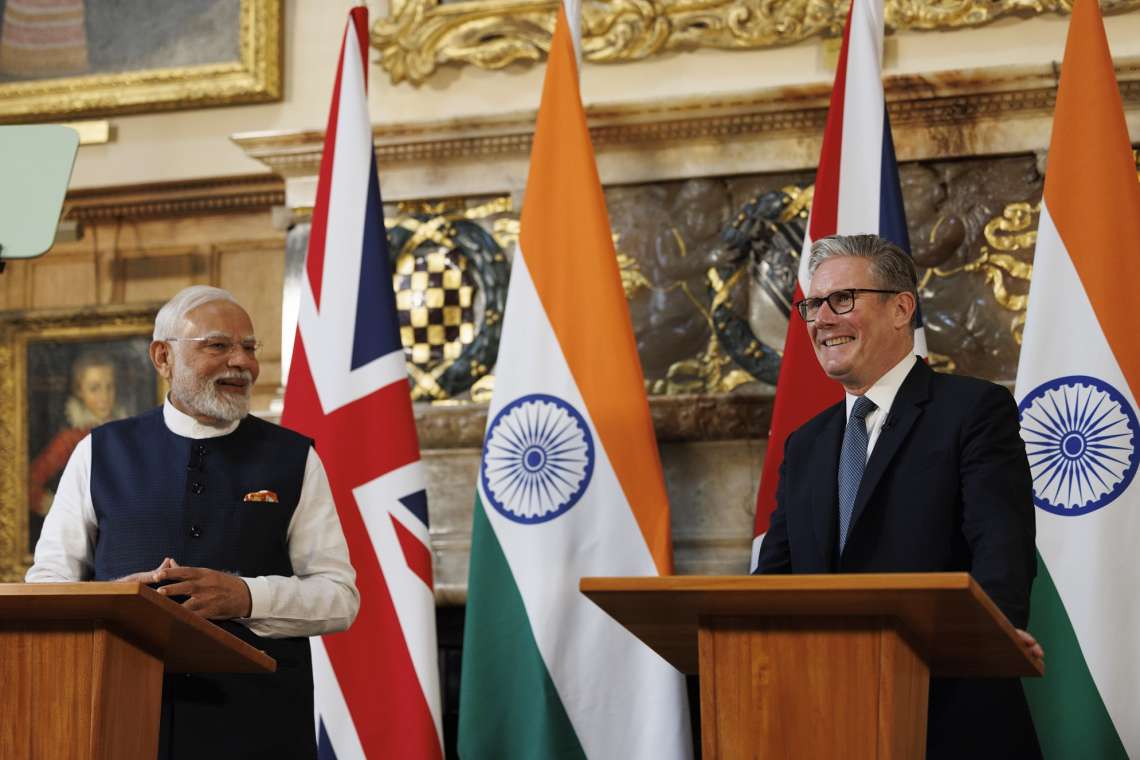
Britain and India share a complex history, extensive people-to-people connections and important economic, educational and cultural relationships. Millions of people have family, professional, educational or community links with both countries.
Maintaining a constructive relationship does not mean agreeing with every decision made by the Indian government. Nor does friendship between the two countries require silence about legitimate concerns. Mature relationships are capable of accommodating honest disagreement.
Indeed, those of us with connections to both countries can play a valuable role by encouraging understanding, promoting dialogue and explaining differing perspectives with fairness.
But this role becomes more difficult when political activity is dominated by confrontation and accusations. We should not allow the actions of a small number of campaigners to define the wider British Indian community or determine the character of the relationship between our two countries.
We need a community confident enough to debate difficult questions without losing sight of its shared interests.
A better way forward
I call upon political activists, community organisations and individuals of every political persuasion to exercise restraint, show mutual respect and place the wider public interest above partisan advantage.
Campaigners should be free to organise peaceful demonstrations and articulate their concerns within the law. Equally, those who disagree must have the freedom to express their own views peacefully. Neither side should seek to silence the other through intimidation, threats or personal abuse.
The answer to political disagreement is not to suppress debate, but to improve its quality.
We should encourage public meetings where opposing arguments can be examined, articles that explain issues carefully, discussions that include different perspectives and campaigns that mobilise citizens around clear, achievable objectives.
Above all, we must ensure that our younger generations inherit a culture of democratic participation rather than permanent confrontation.
Our community’s future will not be secured by deciding who can shout the loudest or who can mobilise the largest crowd. It will be secured by the quality of our ideas, the integrity of our actions and our determination to work for the common good.
My appeal is simple. Let us put democracy before dogma, reason before rhetoric and community welfare before partisan interests.
I will continue to defend the right of people to express their opinions, including opinions with which I strongly disagree. But I will also continue to challenge political approaches that, in my judgement, deepen divisions, encourage confrontation and offer little constructive benefit to British Indian communities.
We have worked too hard over many decades to build our place in British society to allow ourselves to become divided by imported political rivalries. Our heritage should be a source of confidence, our diversity a source of strength and our democratic freedoms a means of achieving progress.
The measure of a statesman is not the ability to mobilise people against an opponent. It is the ability to bring people together despite their differences, to listen when disagreement is difficult and to pursue solutions that serve society as a whole.
That is the democratic tradition I believe in. It is the progressive approach I have sought to follow throughout my public life, and it is the principle that will continue to guide me.
Britain’s Indian communities need bridges, not barriers; dialogue, not division; and leadership that unites rather than leadership that polarises. That is the future we should work together to build.