October 6, 2021
4 mins read

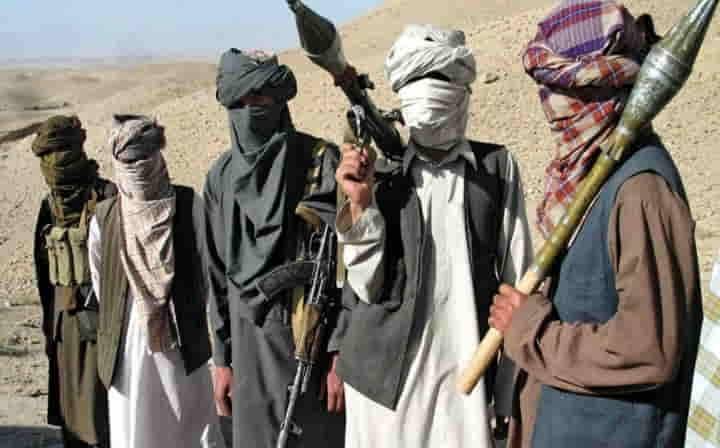
Taliban meet UK delegation amid economic woes

The Taliban met with Sir Simon Gass, the British prime minister’s high representative for Afghan transition, and Martin Longden, the charge d’affaires of the U.K. mission to Afghanistan in Doha…reports Asian Lite News.

Afghanistan’s Taliban leaders met Tuesday with UK officials for the first time since taking power, a move the group hopes will pave the way for the country to refill cash-starved coffers as it teeters on the brink of economic collapse.

The Taliban said meanwhile they arrested 11 members of the rival Islamic State group.

The Taliban’s meeting with British diplomats in the capital Kabul came a day after they met with an Iranian delegation, another first since assuming the helm, to discuss trade relations, a key driver of Afghanistan’s economy.

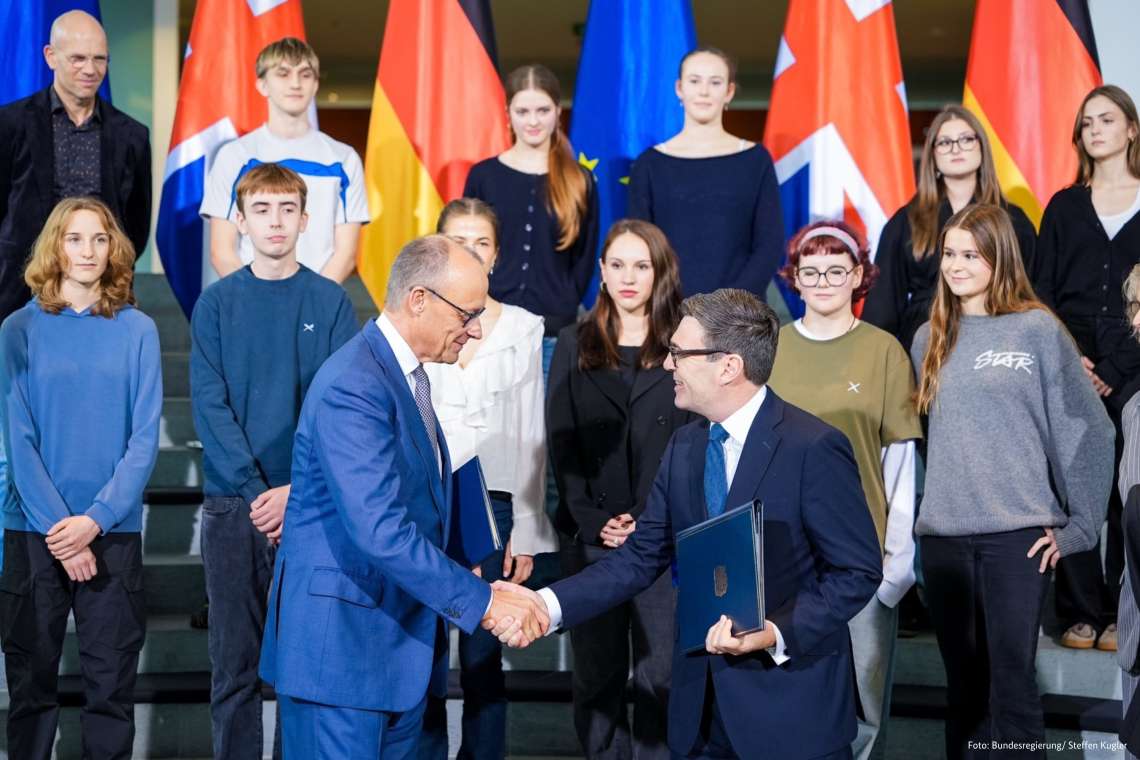
The Taliban met with Sir Simon Gass, the British prime minister’s high representative for Afghan transition, and Martin Longden, the charge d’affaires of the U.K. mission to Afghanistan in Doha.

The meeting marked Britain’s first diplomatic visit to the country since the Taliban seized Kabul on Aug. 15, and took control of Afghanistan following the U.S. exit.

After the meeting, Longden tweeted that “substantial discussions” were held with the Taliban leadership covering a wide range of topics, including the humanitarian crisis, terrorism and the importance for safe passage for U.K. and Afghan nationals, and the rights of women and girls.

He fell short of recognizing their government officially, a Taliban wish, and described the meeting as a “test.”

“It’s early days and unsurprisingly, there are points of difference between us. But such difficult challenges lie ahead for Afghanistan (and beyond),” he tweeted. “It’s right to test if we can engage pragmatically and find common ground _ in the interests of both the UK and Afghan peoples.”

In a statement, the Taliban said it was committed to good relations with all countries. “In return, we want the international community to return the cash capital of the Afghan nation to our nation,” it said, referring to billions in Afghan assets frozen in U.S. accounts.

The Taliban met Monday with a delegation from neighboring Iran to regulate trade between the countries, Taliban spokesman Bilal Karimi said. They agreed to increase trading hours at the Islam Qala border crossing from eight hours per day to 24 and to better regulate the collection of tariffs and improve roadworks. Customs are a key source of domestic revenue for Afghanistan.

Afghanistan, an aid-dependent country, is grappling with a liquidity crisis as assets remain frozen in the U.S. and disbursements from international organizations that once accounted for 75% of state spending have been paused.

Meanwhile, Taliban officials said Tuesday they arrested 11 members of the Islamic State group, a rival and bitter enemy of the insurgents, in Kabul. The IS affiliate, based in eastern Nangarhar province, has claimed responsibility for a spate of recent attacks targeting Taliban forces in eastern Afghanistan and elsewhere.

Karimi posted on Twitter that the raid was carried out Sunday night in the Afghan capital’s Fifth Police District. He provided no further details. The raid came just hours after a bombing that targeted the Eid Gah Mosque in Kabul, killing at least five people.

IS claimed responsibility for the mosque attack late Monday, saying in a posting by its Amaq news agency that one of its suicide bombers targeted senior Taliban figures following a mourning service.

Sunday’s bombing was the deadliest attack in Kabul since the Taliban took control of Afghanistan with the chaotic departure of the last U.S. troops on Aug. 31. IS had also claimed responsibility for the horrific bombing on Aug. 26 that killed more than 169 Afghans and 13 U.S. military personnel outside the Kabul airport, where thousands of people were trying to reach the airport to escape Taliban rule.

The world has been watching whether the Taliban will live up to their initial promises of tolerance and inclusiveness toward women and ethnic minorities. However, Taliban actions so far, such as renewed restrictions on women and the appointment of an all-male government, have been met with dismay by the international community.

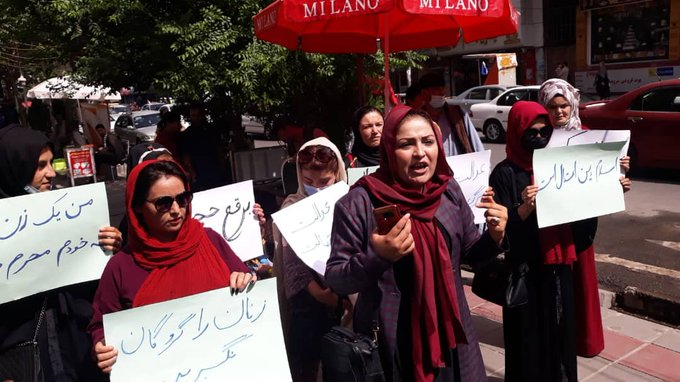
Protests against the Taliban’s policies toward women continued Tuesday, with a demonstration in a Kabul private school by female teachers and students who held up signs saying “Education is a right.” The protest was held indoors to avoid backlash from the Taliban, who have recently outlawed demonstrations held without permission from the government.

The U.N. continued to sound the alarm about the country’s dire economic situation, saying a humanitarian crisis is imminent. The world body’s children’s agency warned that half of Afghanistan’s children under age 5 are expected to suffer from severe malnutrition as hunger takes root amid serious food shortages.

“There are millions of people who are going to starve and there is winter coming, COVID raging, and the whole social system collapsed,” said Omar Adbi, UNICEF’s deputy executive director for programs, during a visit to a Kabul children’s hospital.

ALSO READ-Taliban killed 13 ethnic Hazaras

READ MORE-India terms Pakistan world’s biggest destabilising force

Previous Story

Under fire, Boris tries to return to election agenda

Next Story

Russel calls for greater environmental governance investments

Previous Story

Under fire, Boris tries to return to election agenda

Next Story

Russel calls for greater environmental governance investments

Latest from -Top News

Pakistan Risks Overstretching Itself in Yemen War

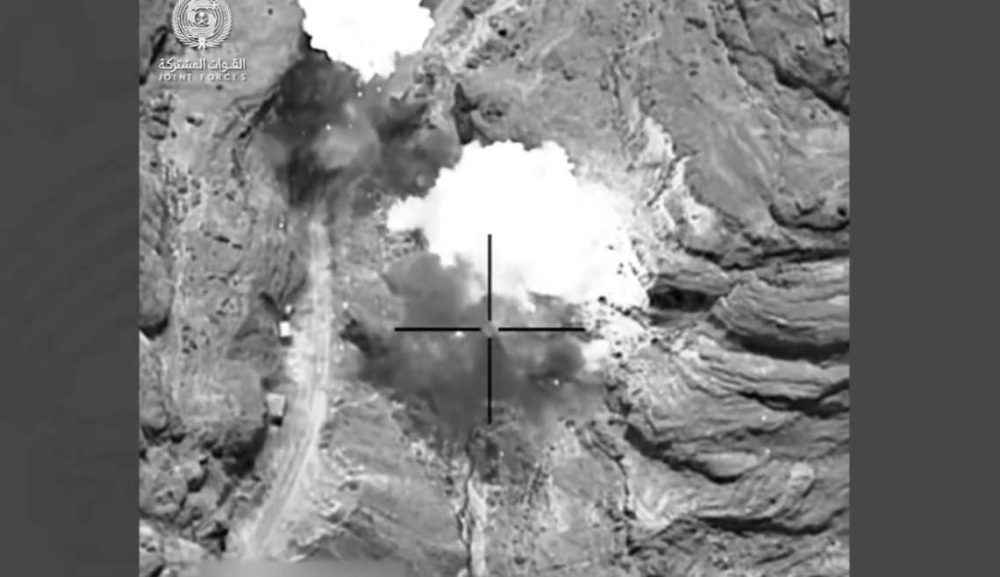
Pakistan’s expanding military role in Saudi Arabia amid the Yemen conflict could strain its defence resources and fragile finances…reports Asian Lite News Desk Pakistan’s military involvement in the war in Yemen may prove unsustainable because of mounting financial pressures and competing security demands, according to a new report. Islamabad’s growing military presence in Saudi Arabia risks stretching its defence resources while exposing the country to greater strategic and economic challenges. An article by Andrew Wilson in One World Outlook describes Pakistan’s involvement as a case of “fiscal and strategic overreach”, arguing that the country lacks the financial flexibility to sustain an expanded military commitment. Pakistan’s external finances depend heavily on an International Monetary Fund (IMF) programme, financial support from Gulf countries and remittances from Pakistani workers in the region. The report argues that deeper military involvement in the conflict could place additional pressure on these sources of financial stability. It also warns that deploying troops and military equipment abroad could weaken Pakistan’s capacity to address security challenges along its eastern border and deal with two domestic insurgencies. The move could also draw Islamabad into a conflict it has sought to approach cautiously. A Reuters report in May, citing Pakistani security and government sources, said Islamabad had deployed around 8,000 troops, a squadron of approximately 16 aircraft, mostly JF-17 fighter jets, two drone squadrons and a Chinese HQ-9 air-defence battery to Saudi Arabia. According to those sources, Riyadh was financing the deployment, with Pakistani personnel operating the equipment. The sources also said a confidential agreement contemplated the possibility of deploying up to 80,000 troops. Islamabad has not confirmed those figures, although it has acknowledged its military presence in Saudi Arabia, including the deployment of fighter jets at King Abdulaziz Air Base from April. The One World Outlook article argues that Saudi financial support can cover allowances and operating expenses but cannot easily replace military equipment needed elsewhere or resolve the political and strategic challenges of participating in the Yemen conflict. Pakistan’s defence budget is another concern. For the 2026-27 financial year, the federal government allocated PKR 3 trillion, or approximately $10.8 billion, to defence services. The allocation represents an 18 per cent increase from the original PKR 2.55 trillion provision and amounts to around 2.1 per cent of projected gross domestic product (GDP). Defence spending accounts for approximately 16 per cent of the federal government’s PKR 18.8 trillion expenditure. Military pensions are budgeted separately at PKR 822 billion, while debt servicing costs stand at approximately PKR 8 trillion, more than two-and-a-half times the defence allocation. The report argues that these competing financial obligations leave little room for additional military expenditure without placing further pressure on public finances. Pakistan’s reliance on IMF assistance also limits its fiscal flexibility. The country must meet the conditions attached to the programme, including a primary budget surplus target of 2 per cent of GDP and continued restraint on development spending. According to the article, these requirements make it difficult for Islamabad to finance an additional military commitment without compromising other budgetary priorities. Pakistan’s economic indicators offer limited reassurance. Economic growth for the 2025-26 financial year is estimated at between 3.6 and 3.7 per cent, while inflation reached approximately 10.3 per cent in September following an energy price shock. Foreign exchange reserves stood at around $21.5 billion at the end of September. Although this marks an improvement from the low levels recorded in 2023, the report notes that the reserves cover only a few months of imports. Financial assistance from Gulf partners remains central to Pakistan’s external stability. The article says Islamabad holds approximately $8 billion in Saudi deposits at its central bank. In July, the State Bank of Pakistan said Riyadh had extended the maturity of $5 billion in deposits to December 2028, easing the country’s immediate external financing requirements. A further $3 billion deposit was also extended in the spring. However, the article argues that these arrangements provide temporary relief rather than long-term financial independence, particularly as regional conflict threatens the stability of the Gulf economies on which Pakistan relies. The report concludes that Pakistan faces a difficult balance between supporting Saudi Arabia militarily and preserving the financial and military resources needed to address its domestic and regional challenges.
Go toTop

Don't Miss

UK Front Pages Highlight 21/01: UK Politics, Global Conflicts, and Historical Revelations Dominate Today’s Headlines

The front pages of major UK newspapers and the BBC

UK Eyes Wider EU Trade Reset

UK officials have explored the possibility of creating a frictionless