August 12, 2021
3 mins read

Record Increase in Entry of Indian Students to UK Universities

Two-thirds of the 65 universities polled by the Times Higher Education magazine confirmed that most lectures would remain online for the coming academic year, but that they planned as much in-person teaching as possible, reports Asian Lite Newsdesk

As UK has moved India from its travel red list to amber list, the number of Indian students taking admission into UK universities and other higher education courses has increased 19 percent, according to media reports.

The acceptance figures released by Universities and Colleges Admissions Service a day after the UK moved India from the red list to the amber list, a record number of 3,200 students have been accepted onto UK institutions, the Hindustan Times cited news agency PTI.

Most Covid-19 restrictions in England have been lifted last month as part of the final step of the British government’s roadmap out of the lockdown.

Air India has recently announced non-stop flights to London from six Indian cities, including Delhi, Mumbai, Ahmedabad, Bengaluru, Amritsar and Kochi between August 16 and September 1.

Meanwhile, local media reported that many of the top universities in the UK have refused to return to full face-to-face classes in the autumn, despite government advice that they can lift all Covid-19 restrictions.

According to The Sunday Times report, 20 of the leading 24 Russell Group universities said a proportion of undergraduate teaching will continue to be held online, which means they will offer blended learning to mix the online and face-to-face teaching for classes, seminars and lectures, reports Xinhua news agency.

Meanwhile, two-thirds of the 65 universities polled by the Times Higher Education magazine confirmed that most lectures would remain online for the coming academic year, but that they planned as much in-person teaching as possible.

They said the decisions were driven by the risk of coronavirus spreading in large lecture classrooms, as well as the educational benefits of blended learning.

Most universities said they would require students to wear masks on campuses. Some will also instruct students to socially distance.

Students may also need to be double jabbed to attend concerts, discos or other social events. The decision has dismayed college students who coped with severe disruption last year.
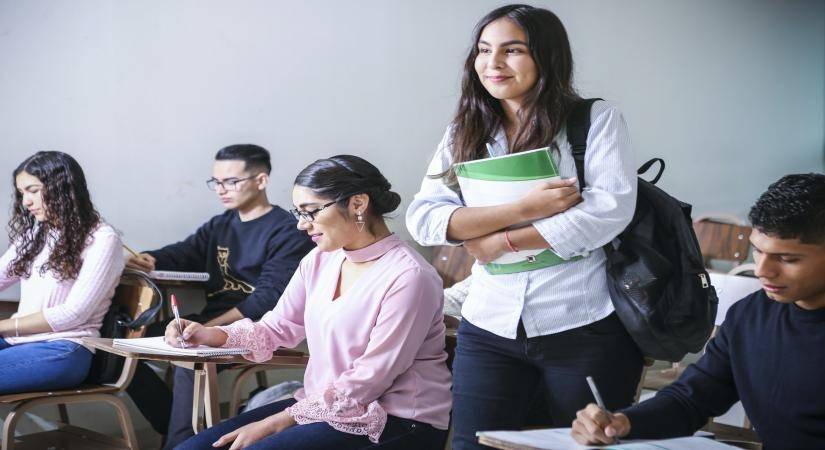
Students in Manchester, Leeds and Liverpool have launched petitions calling for a full return to “normality in terms of teaching” and demanding fee refunds.

In Manchester, where some of the strictest lockdowns took place, nearly 10,000 have signed.

Claire Marchant, chief executive of the universities admissions service Ucas, said that online teaching might mean that universities could enrol more students.

It was predicted that top universities in Britain have to cope with a 10 per cent surge of applicants with A and A+ grades, compared to 2019, due to the cancellation of college entrance exams in the pandemic.

Chevening scholarship

UK government has already invited applications for its Chevening Scholarship programme for 2022-23 to enrol for a one-year master’s degree in British universities.

The Chevening scholarships offer full financial support for one year to candidates applying for a master’s degree at any UK university — covering nearly 12,000 courses from in than 150 universities.

The scholarship will cover tuition fees for the selected course; travel expenses and visa fees; and a monthly stipend, a statement by the British High Commission said here.

Alex Ellis, British High Commissioner to India, said: “Chevening scholarships offer a unique opportunity for the future leaders of India to study at some of the world’s best universities in the UK. Whatever your background, your geography, please apply for this chance to learn and experience the best of what the UK has to offer and in doing so, strengthen the living bridge between our two countries.”

India is home to the largest Chevening programme in the world. Chevening has been running the scholarship and fellowship programme in India since 1983. It has so far offered scholarships to more than 3,300 scholars and fellows from across India.

The applicants for Chevening scholarships must have a minimum work experience of two years and a strong academic background.

The deadline to apply is November 2.

There are four Chevening alumni present in Prime Minister Narendra Modi’s current council of ministers — Piyush Goyal, Gajendra Shekhawat, Anupriya Patel and Devusinh Chauhan.

ALSO READ-Malala portrays the ‘real’ refugee girls

READ MORE-Uni leaders go to India to promote UK education

Previous Story

J&K’s Bangus Awaam Mela witnesses heavy footfall

Next Story

US prefers India over Pakistan: Imran Khan

Previous Story

J&K’s Bangus Awaam Mela witnesses heavy footfall

Next Story

US prefers India over Pakistan: Imran Khan

Latest from -Top News

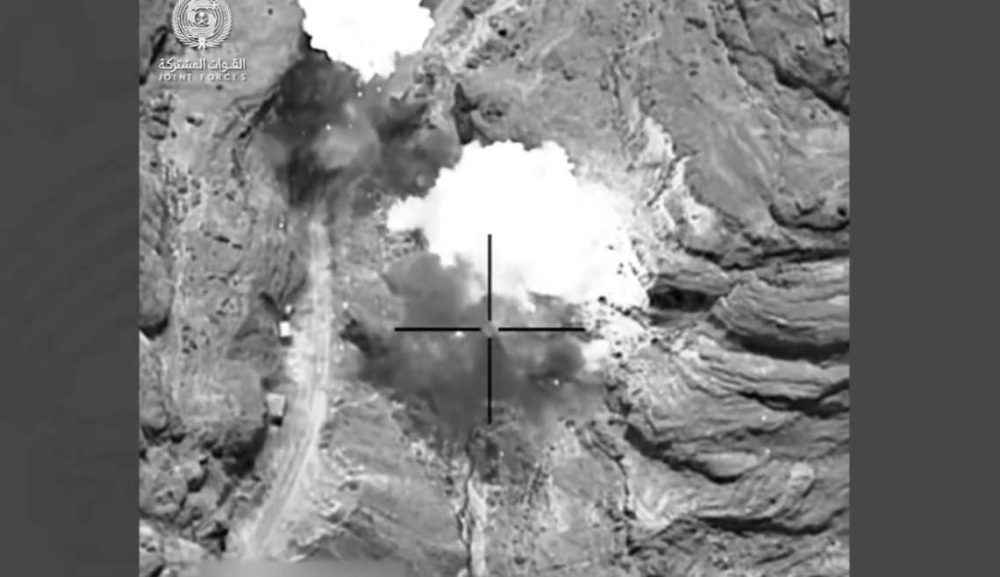
Pakistan Risks Overstretching Itself in Yemen War

Pakistan’s expanding military role in Saudi Arabia amid the Yemen conflict could strain its defence resources and fragile finances…reports Asian Lite News Desk Pakistan’s military involvement in the war in Yemen may prove unsustainable because of mounting financial pressures and competing security demands, according to a new report. Islamabad’s growing military presence in Saudi Arabia risks stretching its defence resources while exposing the country to greater strategic and economic challenges. An article by Andrew Wilson in One World Outlook describes Pakistan’s involvement as a case of “fiscal and strategic overreach”, arguing that the country lacks the financial flexibility to sustain an expanded military commitment. Pakistan’s external finances depend heavily on an International Monetary Fund (IMF) programme, financial support from Gulf countries and remittances from Pakistani workers in the region. The report argues that deeper military involvement in the conflict could place additional pressure on these sources of financial stability. It also warns that deploying troops and military equipment abroad could weaken Pakistan’s capacity to address security challenges along its eastern border and deal with two domestic insurgencies. The move could also draw Islamabad into a conflict it has sought to approach cautiously. A Reuters report in May, citing Pakistani security and government sources, said Islamabad had deployed around 8,000 troops, a squadron of approximately 16 aircraft, mostly JF-17 fighter jets, two drone squadrons and a Chinese HQ-9 air-defence battery to Saudi Arabia. According to those sources, Riyadh was financing the deployment, with Pakistani personnel operating the equipment. The sources also said a confidential agreement contemplated the possibility of deploying up to 80,000 troops. Islamabad has not confirmed those figures, although it has acknowledged its military presence in Saudi Arabia, including the deployment of fighter jets at King Abdulaziz Air Base from April. The One World Outlook article argues that Saudi financial support can cover allowances and operating expenses but cannot easily replace military equipment needed elsewhere or resolve the political and strategic challenges of participating in the Yemen conflict. Pakistan’s defence budget is another concern. For the 2026-27 financial year, the federal government allocated PKR 3 trillion, or approximately $10.8 billion, to defence services. The allocation represents an 18 per cent increase from the original PKR 2.55 trillion provision and amounts to around 2.1 per cent of projected gross domestic product (GDP). Defence spending accounts for approximately 16 per cent of the federal government’s PKR 18.8 trillion expenditure. Military pensions are budgeted separately at PKR 822 billion, while debt servicing costs stand at approximately PKR 8 trillion, more than two-and-a-half times the defence allocation. The report argues that these competing financial obligations leave little room for additional military expenditure without placing further pressure on public finances. Pakistan’s reliance on IMF assistance also limits its fiscal flexibility. The country must meet the conditions attached to the programme, including a primary budget surplus target of 2 per cent of GDP and continued restraint on development spending. According to the article, these requirements make it difficult for Islamabad to finance an additional military commitment without compromising other budgetary priorities. Pakistan’s economic indicators offer limited reassurance. Economic growth for the 2025-26 financial year is estimated at between 3.6 and 3.7 per cent, while inflation reached approximately 10.3 per cent in September following an energy price shock. Foreign exchange reserves stood at around $21.5 billion at the end of September. Although this marks an improvement from the low levels recorded in 2023, the report notes that the reserves cover only a few months of imports. Financial assistance from Gulf partners remains central to Pakistan’s external stability. The article says Islamabad holds approximately $8 billion in Saudi deposits at its central bank. In July, the State Bank of Pakistan said Riyadh had extended the maturity of $5 billion in deposits to December 2028, easing the country’s immediate external financing requirements. A further $3 billion deposit was also extended in the spring. However, the article argues that these arrangements provide temporary relief rather than long-term financial independence, particularly as regional conflict threatens the stability of the Gulf economies on which Pakistan relies. The report concludes that Pakistan faces a difficult balance between supporting Saudi Arabia militarily and preserving the financial and military resources needed to address its domestic and regional challenges.
Go toTop

Don't Miss

Saudi backs India’s strategic outreach

In a series of engagements, the Indian delegation met Saudi

Political Dynamics in Bihar Shift as Nitish Kumar Steps Down

Jitan Ram Manjhi and Santosh Kumar Manjhi are also expected