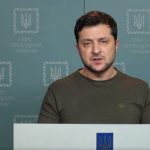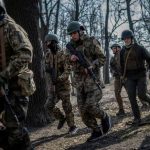
Putin and the heads of the LDR and DPR signed a friendship, cooperation, and mutual aid agreement…writes Aditi Bhaduri
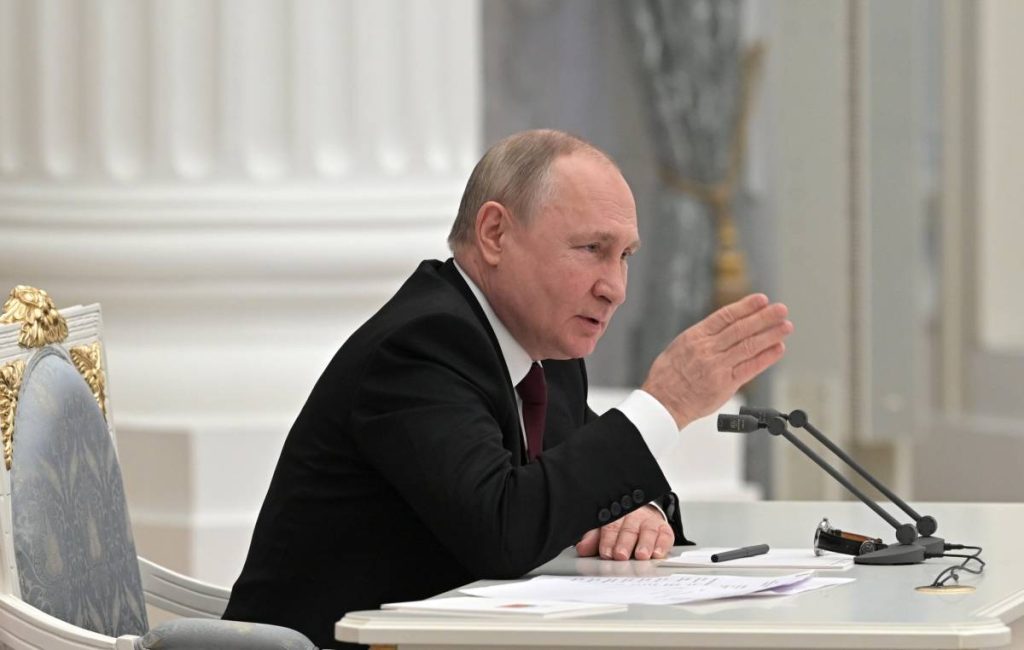
On February 21, 2022 Russian President Vladimir Putin dramatically recognized the independence of two self-proclaimed Republics in eastern Ukraine, the Donetsk People’s Republic (DPR) and the Luhansk People’s Republic (LPR).
Putin and the heads of the LDR and DPR signed a friendship, cooperation, and mutual aid agreement.
What does this mean?
That Russia can now officially start sending military aid to the region.
Following the announcement, Latvia, a former Soviet Republic, called on the European Union to impose sanctions on Russia.
British Prime Minister Boris Johnson called the move a “flagrant violation of the sovereignty and of Ukraine.”
What does the independence of these two Republic mean for Ukraine?
Ukraine loses more territory.
Why did the Russian Federation take this step?
To understand the urgent situation, one must go back to 2013 when the genesis of the Ukraine crisis began.
How did it all start?
In November 2013, Ukrainians protested in the national capital Kyiv against Ukrainian President Viktor Yanukovich. He had just rejected a deal for Ukraine’s greater economic integration with the European Union. Thought to be close to Moscow, the protesters also wanted Kyiv to be more independent of Russia. The protesters were met with great force by the police and it snowballed into greater violence. President Yankovich had to finally flee the country in February 2014.
Turmoil continued till elections in Ukraine and President Pyotr Poroshenko took charge in Kyiv.
Crimean crisis
In March 2014, Russian troops entered the Crimean peninsula and Russia conducted a referendum amongst the residents of Crimea. The reason cited was security for the ethnic Russian population of the peninsula as well as o southeast Ukraine. Sixty per cent of the peninsula’s approximately two million residents identified as Russians. They voted overwhelmingly for Crimea’s accession to the Russian Federation. The peninsula was thereby incorporated into Russian Federation.
Why is the Crimean peninsula important for Russia?
Located on the Black Sea the peninsula was, till March 2014, part of eastern Ukrainian, connected to it a small strip of land.
Russia stations part of its Black Sea fleet in the Port city of Sevastopol.
The territory had been part of the Union of Soviet Socialist Republic since 1921. In 1954 it was given to Ukraine, one of the fifteen Soviet Republics then. When the USSR was dissolved in 1992 and Ukraine emerged s a sovereign republic it retained Crimea as part of its territory. The majority of its population however identified themselves as Russians.
What happened next?
In May 2014 pro-Russian separatists in the eastern Ukrainian provinces of Donetsk and Luhansk also held a referendum to declare independence from Ukraine. Majority of people of both provinces identify as Russians.
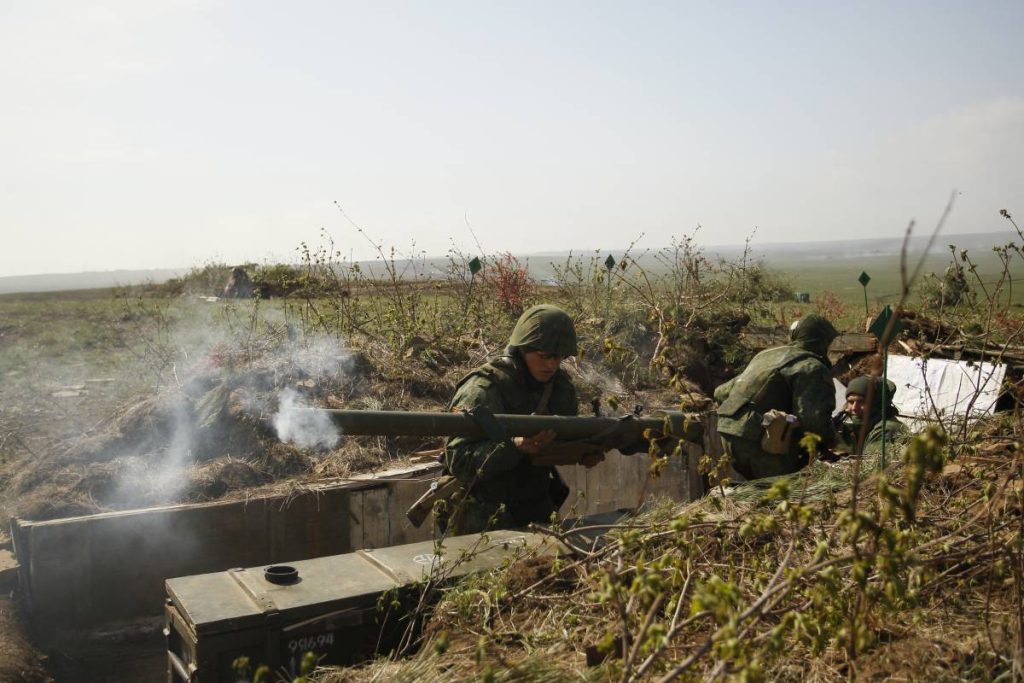
Since then, the regions have witnessed a low profile but protracted violence between Russian backed separatists and Ukrainian forces.
A major flashpoint occurred when in July 2014 a Malaysian Airlines flight was shot down over Ukrainian airspace, killing all 298 on board. Dutch investigation concluded that a Russian built missile had downed the aircraft.
The Minsk Accords
Since February 2015 France, Germany, Russia and the Ukraine have tried to broker peace through the Minsk Accords.
Amongst its provisions were: cessation of violence and a ceasefire throughout the region; return of Luhansk and Donetsk provinces to Ukraine under conditions of greater political and economic autonomy.
The Minsk Accords were never implemented to large part because of Ukrainian hesitancy, seeing it as a defeat for itself.
Role of NATO
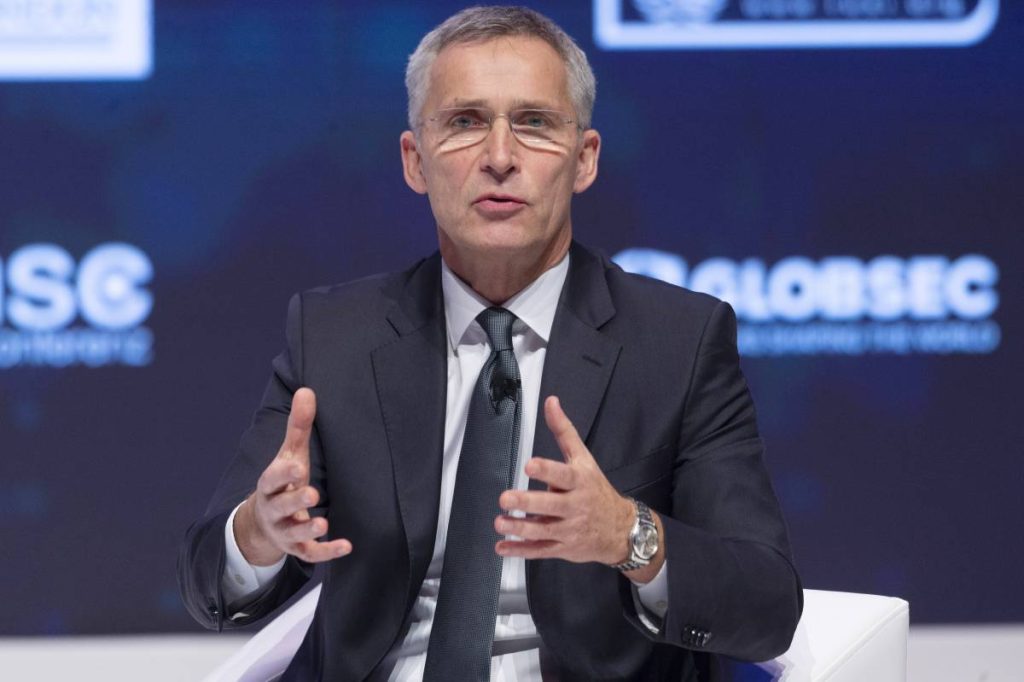
IN 2016 April, NATO announced that it would deploy four battalions to Eastern Europe, rotating troops through Estonia, Latvia, Lithuania, and Poland. These battalions were joined by two U.S. Army tank brigades, deployed in Poland in September 2017.
The move was aimed at deterring future Russian military action against any other sovereign state in the region.
Russia saw it as another attempt by NATO to expand into Russia’s neighbourhood and its traditional sphere of influence.
In 2018 the USA imposed new sanctions on a number of Russian individuals and entities for their role in the conflict in eastern Ukraine.
In the same year the State Department approved the sale of anti-tank weapons to Ukraine, the first such sale of lethal weaponry to the country since 2014.
In October 2018 Ukraine participated in a number of large-scale air exercises conducted by the US and seven other NATO member-states.
Recent developments
In spring 2021 violence between Russian-backed rebels in the breakaway region s of Eastern Ukraine and Ukrainian military escalated.
Russia moved troops and military equipment near the border with Ukraine 8n October 2021. More than 100,000 troops were placed at the borders, sparking western fears of a Russian invasion of Ukraine.
Russia also demanded that Ukraine commit itself to not joining NATO.
Most Ukrainians are not averse to the idea of their country becoming a part of NATO.
No such invitation has, however, been extended to it.
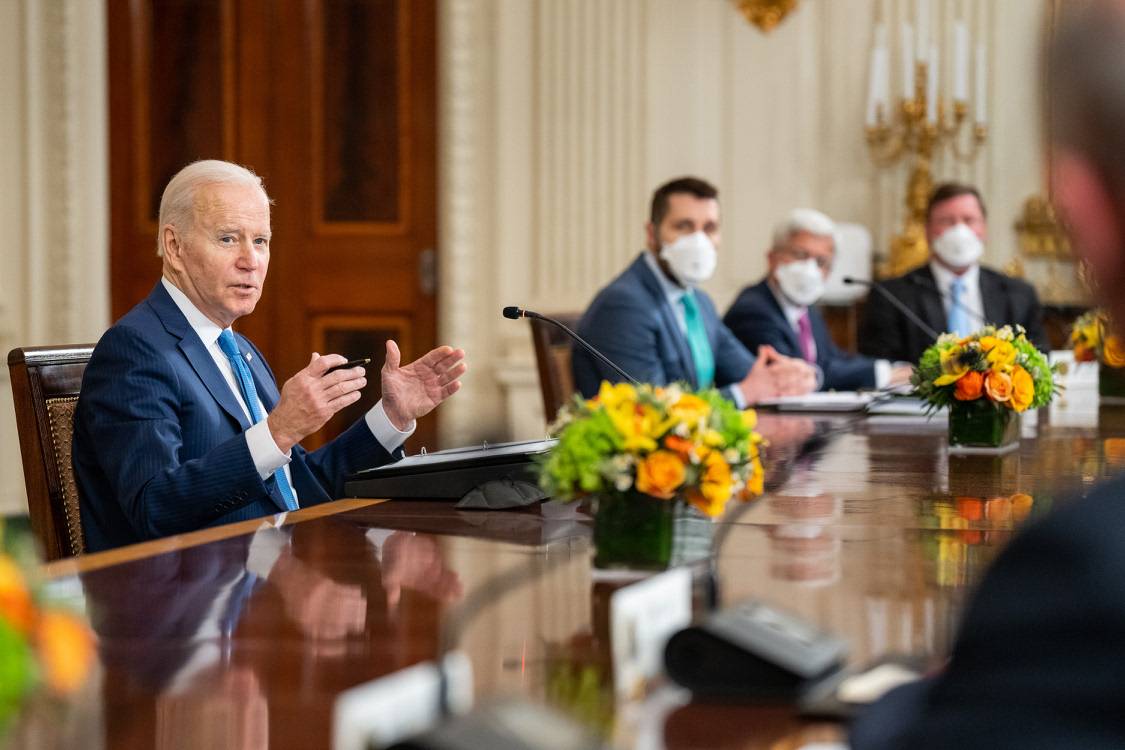
In early February 2022 US President Joe Biden ordered 3000 US troops to move to NATO countries of Poland and Romania, that border Russia.
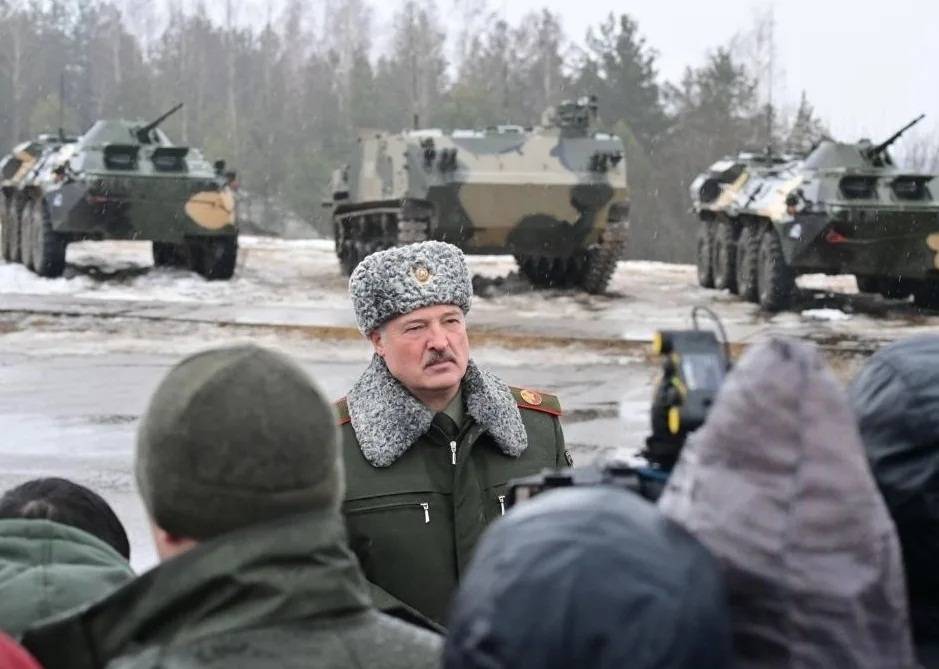
On February 9 Russia and Belarus began large-scale military exercises called United Resolve in Belarus on its western borders with Poland and Lithuania and along its southern flank with Ukraine.
On February 10 Ukraine began its own military exercises involving drones and anti-tank weapons sent by NATO members Turkey and UK.
Both drills concluded on February 20.
On February 15, Russia announced partial withdrawal of troops from near the Ukrainian border.
(Aditi Bhaduri is a columnist specialising in Eurasian geopolitics) (The content is being carried under an arrangement with indianarrative.com)