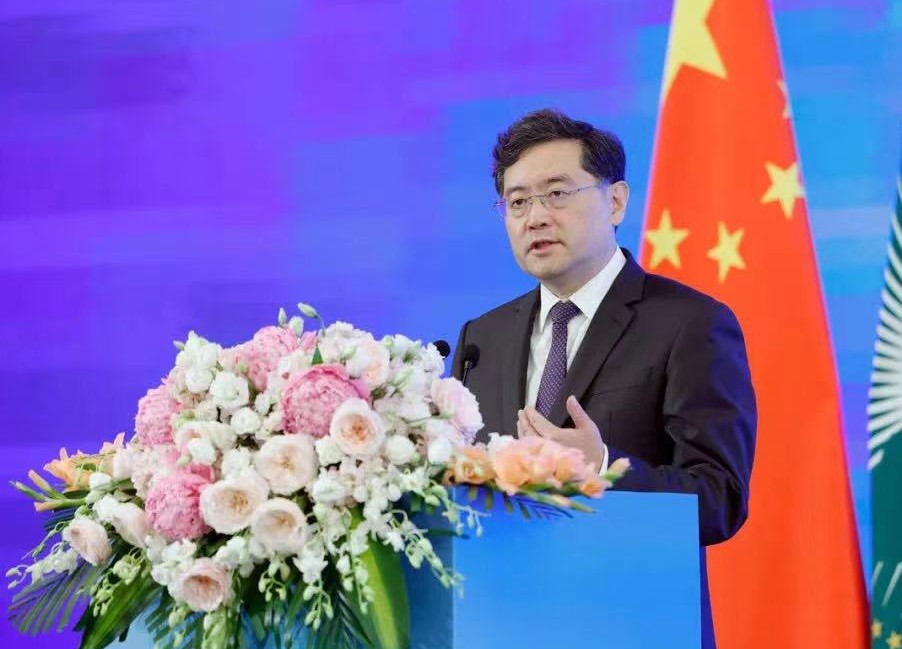
Has the disappearance of Qin taken place not because of Xi’s orders but in spite of them? Has Qin Gang become the ‘chicken’ that is being removed to scare the ‘farmer’, Xi himself? … writes Prof. Madhav Das Nalapat
The absence from the public eye for almost a month of Foreign Minister Qin Gang of the People’s Republic of China has given rise to speculation that he has been cashiered for having an extra-marital relationship with a Chinese television anchor who often travelled abroad. Other theories mention the possibility of blackmail of the Foreign Minister by a “hostile power” i.e. the United States. A third claims that the fast-promoted Qin has fallen foul of CCP General Secretary Xi Jinping. The degree of opacity in the higher circles of the CCP resembles a bottle of black ink, hence such theories remain just that, hypotheses as to why Qin has been missing for almost a month.
That he has landed in disgrace because of a romantic liaison with an attractive television presenter is contrary to the fact that this relationship almost since it began must have been well known to not just the CCP General Secretary, but to lesser authorities as well. As envoy to the US, he would have been under 24/7 surveillance, and knowledge of any love affair, assuming that he had one, would have been known to CCP General Secretary Xi Jinping. The fact is that in less than 18 months, Qin was promoted from envoy to the US to being the Foreign Minister of China. The missing diplomat is part of the relatively younger group (most in their 40s or 50s) that has been collected around him by Xi Jinping.
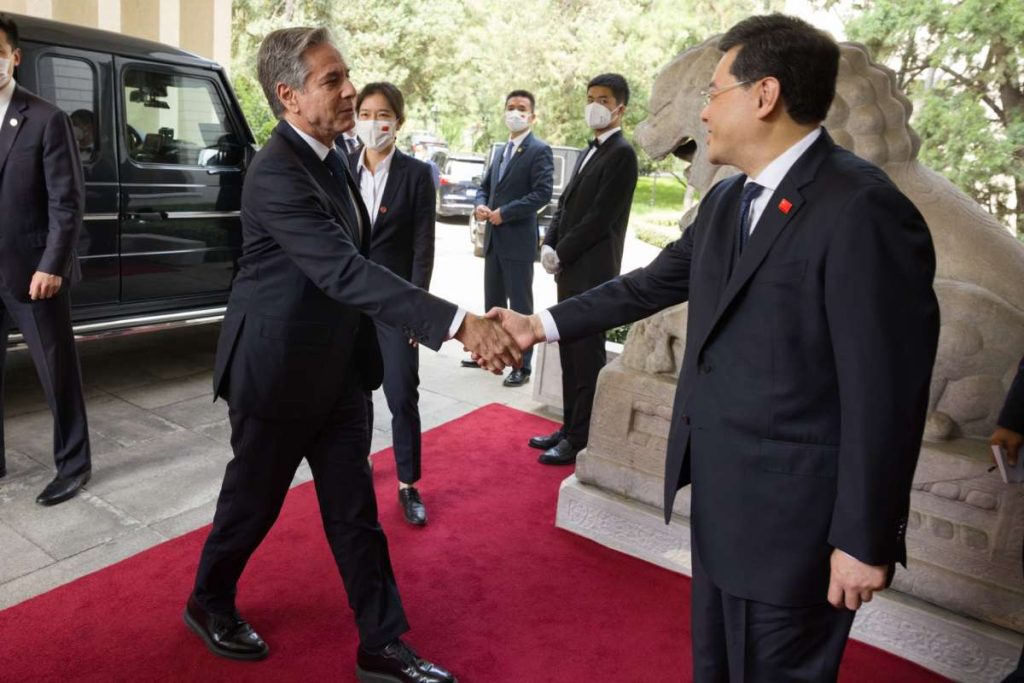
Each member of this inner circle of the CCP Supremo would be aware not just that his (there would probably not be a woman within the group) swift ascent was because of Xi’s patronage, but that were Xi Jinping to fall, not just the job but very likely the freedom and maybe in some cases the life of the Xi acolyte would immediately be severely impacted. That Qin Gang became a hidden dissident while he was within the trusted inner circle of assistants of Xi is implausible. Only a confirmed loyalist of Xi would have been sent to the most sensitive posting outside China for any PRC diplomat, the PRC embassy in Washington.
As for the young lady, had she been regarded as even a bit unreliable from the regime’s point of view, she would not have been made an important news anchor by Phoenix television. Phoenix, although technically not state-controlled, is in effect very much a part of the Agitation & Propaganda wing of the CCP’s United Front. Just as in the case of Qin, the presumed lady friend’s loyalty to the regime would have been examined under a microscope and judged to be fool-proof.
Were there any doubts about her reliability, Qin Gang’s rumoured affair with the anchor would have speedily ended with her being sent out in disgrace, and at the least an admonition to Qin to stay away from anyone less than fully reliable as a regime supporter.
Did the Chinese FM reveal “secrets” to the anchor? Under Xi Jinping, the level of secrecy expected by those in the inner circle is even more than was ever the case earlier. Anything personal about Xi Jinping, for example, would be out of bounds to reveal to anyone, even what the General Secretary had for breakfast. Did Qin Gang break the 24/7 Code of Omerta (silence and secrecy) expected of him by just revealing not matters of state, but personal matters relating to the uppermost levels of the CCP? We do not know, and probably never will. As for falling prey to CIA lures, that again appears improbable, as only an individual of tested loyalty would have been sent to Washington and later given what may be the swiftest promotion in the Chinese diplomatic service, made Foreign Minister.
What then? It may be remembered that from mid-2022 onwards, the present writer was mentioning reports reaching him from Moscow about a weakening of the hold of President Putin within the Kremlin as a consequence of the way the Ukraine war was developing. Recent events have shown that to be very likely a reality.
Till now, CCP General Secretary Xi Jinping has wielded power within the country and the party on the level of Stalin or Mao. As a result, there has been concealed discontent about his absolutist ways. Have the seniors within the CCP core who dislike such a return to absolutism become strong enough to “kill the chicken to scare the farmer”? Has the disappearance of Qin taken place not because of Xi’s orders but in spite of them? Has Qin Gang become the “chicken” that is being removed to scare the “farmer”, Xi himself? To show him that unless he returns from Mao’s ways to that of the Great Helmsman’s successors until Xi took over in 2012? If Qin Gang has truly been disgraced, that may be an indication that Xi’s absolute grip on the CCP is under challenge.
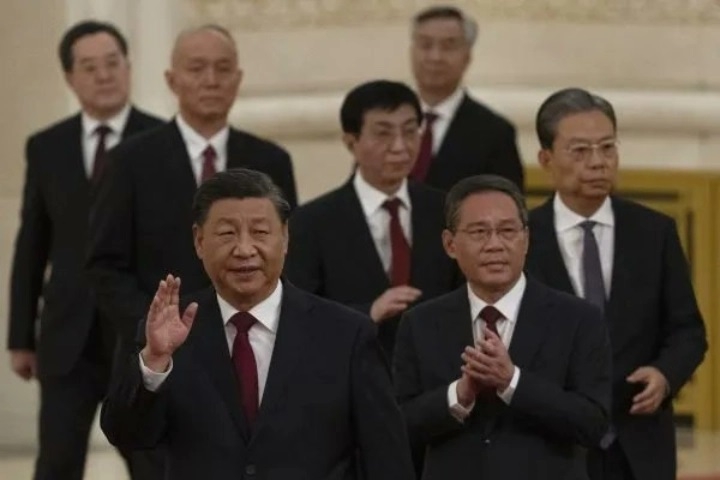
That he can no longer ignore and humiliate seniors in the way he has been doing since taking charge. The days ahead will show whether the fortunes of Foreign Minister Qin have plummeted or not. If they have, then even if outward appearances are to the contrary, it may be the first visible evidence that the hold of Xi is weakening, else a tested Xi loyalist such as Qin would not have been dealt with in the way he appears to have been. Of course, China being Communist China, it may be that it was indeed a heart attack that has taken Qin away from his jobs and not the work of a cabal engaged in resistance to Xi’s Mao-style grip over the CCP.
Given the unexpectedly robust coming together by countries such as those in the Quad as a reaction to Xi’s expansionist ways and the fall in PRC economic performance, given the possibility of supply sources and markets shrinking, not to mention the turmoil caused by Xi’s Zero Covid policy resistance to the top leader within the upper echelons of the CCP cannot any more be dismissed as impossible. If such be the case, Qin Gang may be the first high-level victim of a purge of Xi loyalists within the governance structure of the PRC.