The event underscores the SCCI’s commitment to enhancing the presence of Emirati businesses and enterprises in the Indian market…reports Asian Lite News
The Sharjah Chamber of Commerce and Industry (SCCI) embarked on the first leg of its trade mission to India as it organised the Sharjah-India Business Forum in the city of Chennai.
The forum’s agenda featured more than 160 bilateral business meetings representatives of companies participating in the trade mission and more than 100 Indian companies in Chennai, representing various sectors and economic activities.
The event underscores the SCCI’s commitment to enhancing the presence of Emirati businesses and enterprises in the Indian market, opening new export channels for them, and facilitating seamless communication for its members with key stakeholders in India across various sectors. The Chamber also seeks to showcase the promising investment opportunities available in Sharjah across all sectors.
The forum was attended by HE Abdullah Sultan Al Owais, Chairman of the SCCI, HE Waleed Abdul Rahman Bukhatir, Second Vice Chairman of the SCCI Board of Directors, and HE Ziyad Mohmoud Khairalla, Board Member Honorary Treasure at SCCI.
Also present were Abdul Aziz Al Shamsi, Assistant Director-General for Communication and Business Sector at SCCI; Jamal Saeed Buzangal, Director of the Media Department at SCCI; Marwan Salem Al Muhairi, Head of Exhibitions at the Sharjah Exports Development Centre (SEDC) affiliated with Sharjah Chamber, and Sultan Abdullah Al Ali, Head of the Investor Services Department at SCCI, as well as Lalu Samuel, Chairman of the Indian Business and Professional Council in Sharjah, in addition to several CEOs and officials of industrial, production, and export companies in the emirate.
During the forum, the Sharjah Chamber’s delegation discussed coordinating efforts with trade and industrial chambers and investment authorities in Chennai; with the aim to attract more Indian businessmen to invest in the emirate and facilitate global expansion for Sharjah-based businesses, opening new and promising markets for SCCI members.
In his opening speech at the forum, Abdullah Sultan Al Owais highlighted the robust and deep-rooted ties between the UAE and India. These ties have tremendous potential and serve as a leading model in rapidly growing and prospering international economic relations.
The bilateral trade between the two countries is projected to reach US$ 250 billion by 2030. The UAE is also India’s seventh largest investor, with investments totaling around US$ 18 billion in 2023.
Al Owais affirmed that the Sharjah-India Business Forum is a testament to Sharjah Chamber’s commitment to strengthening cooperation and collaborative business prospects among businessmen and investors from both countries, particularly in Sharjah and Chennai.
He elucidated that the Sharjah Chamber looks forward to enhancing investments, fostering partnerships, and strengthening the robust economic ties between the UAE and India.
He pointed out the remarkable growth in bilateral non-oil trade between the two nations, which soared to $50.5 from May 2022 to April 2023, marking a significant 5.8 percent increase from the previous year.
The bilateral meetings between the SCCI businessmen and their counterparts featured a variety of discussions focusing on avenues for cooperation and investment partnerships. During these meetings, Emirati companies showcased their products and services, which were well-received by the Indian side, bolstering the potential for possible business deals between the two sides.
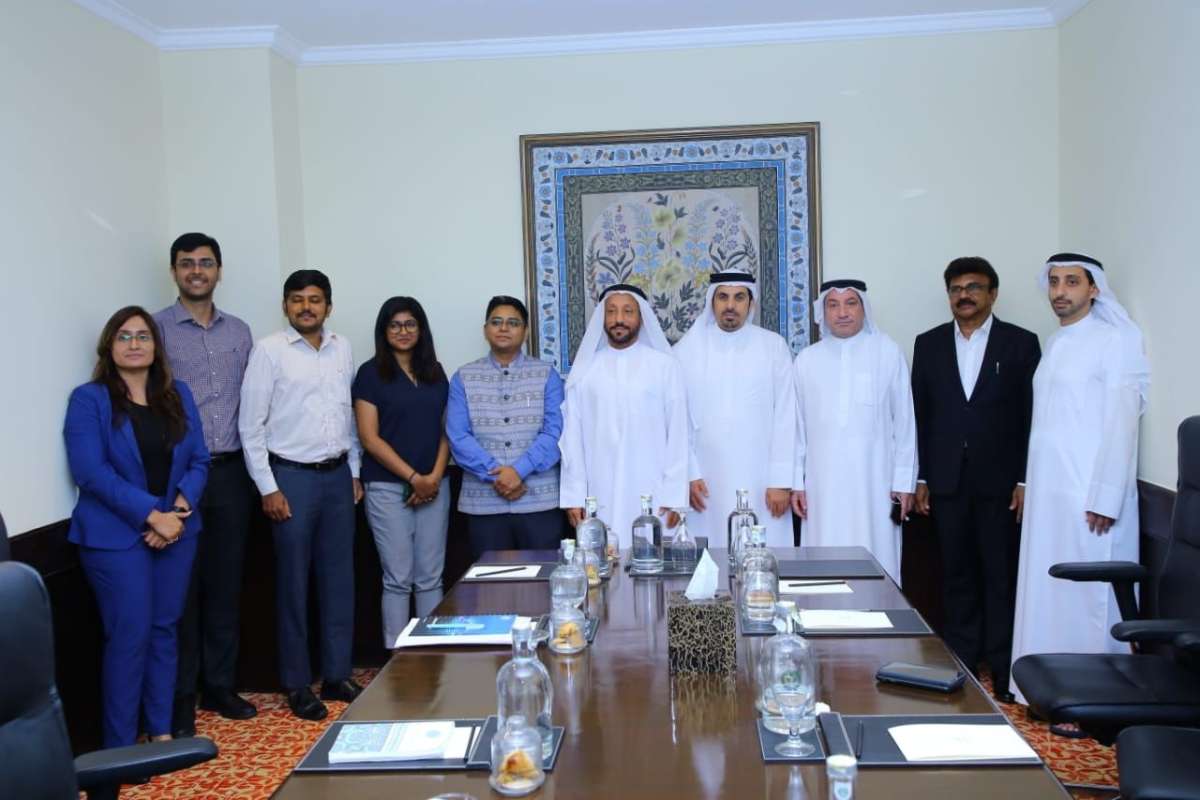
As part of the SCCI’s trade mission, a comprehensive business meeting was convened with representatives of “Madras Electrical Traders Association Chennai”, which comprises companies engaged in the electricity trade sector.
The meeting was attended by HE Abdullah Sultan Al Owais, HE Waleed Abdul Rahman Bukhatir, HE Ziyad Mohmoud Khairalla, and Jamal Saeed Buzangal. Representing the Indian side, HE Hkumichand Shah, President of the Madras Electrical Traders Association Chennai, and Ramraj Bhandari, Vice President of the Association, along with several members of the Association were present.
Both sides discussed ways to enhance cooperation and coordination between the Sharjah Chamber and the Association, besides boosting communication mechanisms and the exchange of information regarding investment opportunities available in both countries in the fields of energy and electrical industries.
The SCCI’s trade mission also held a business meeting with “Guidance Tamil Nadu”, the investment promotion agency of the Government of Tamil Nadu in India. The gathering explored ways to bolster economic and investment cooperation between the two nations.
During the meeting, which was attended by several officials from both sides, HE Abdullah Sultan Al Owais showcased to Sarin Paraparakath, Senior Vice President of the Guidance Tamil Nadu, the facilitations and distinctive investment opportunities available to Indian companies operating in Sharjah.
Al Owais also underscored the significance of such periodic meetings in facilitating communication among investors and business leaders in both Sharjah and India.
Scheduled to be extended until May 10th, the SCCI’s trade mission to India will be heading to their second leg in Mumbai, where a business forum will be organised bringing together mission’s members with officials and leaders from commercial and industrial chambers.
ALSO READ: ‘DXB on track to surpass 90m passengers this year’