A Milan gathering celebrates 4,000 years of Mediterranean music, revealing shared cultural roots through scholarship, performance and a powerful tribute to the region’s enduring modal traditions….reports Asian Lite News
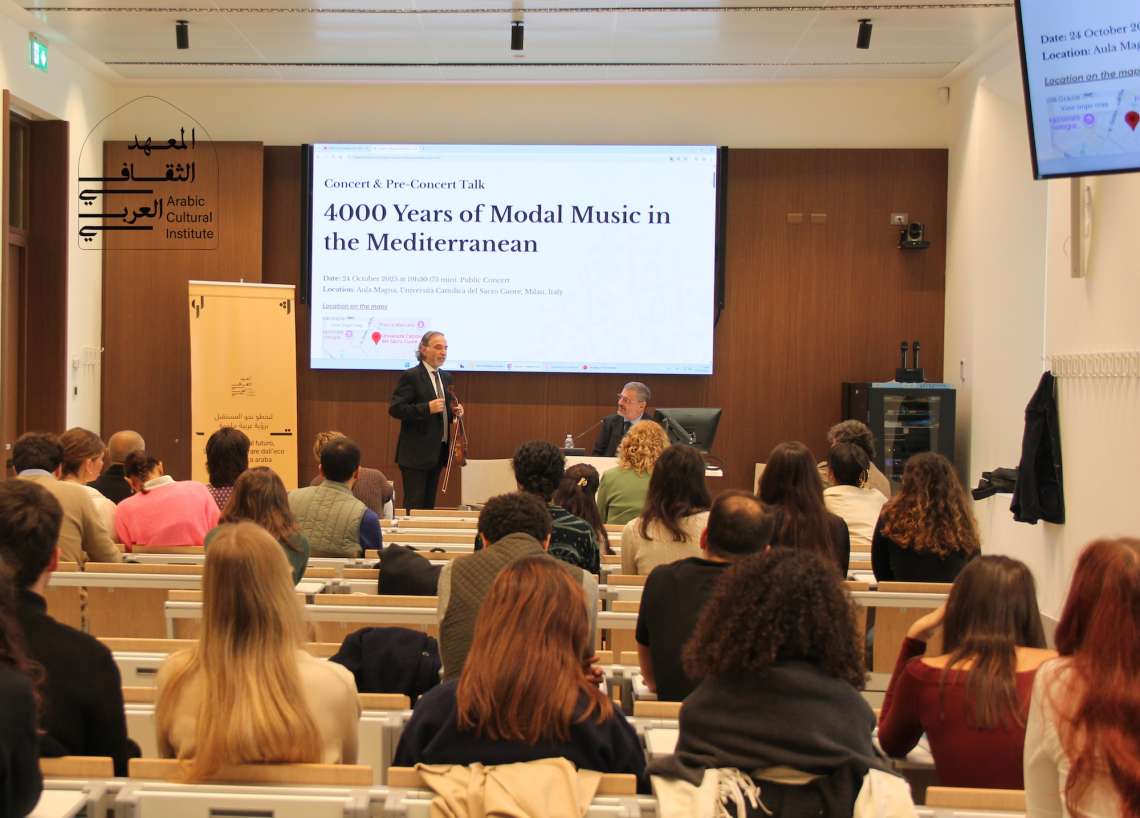
A 4,000-year musical legacy came to life in Milan as the Arabic Cultural Institute hosted a full-day international programme celebrating Mediterranean music as a unifying cultural language. Held at the Catholic University of Milan, the event examined how modal musical traditions have travelled, intertwined and endured across civilisations for millennia, creating a shared artistic heritage that bridges regions, religions and eras.
The gathering was led by Dr Wael Farouq, Director of the Arabic Cultural Institute, and brought together renowned scholars and performers from Italy, France, Lebanon and Egypt. Opening sessions, moderated by Dr Farouq, featured insights from Prof Enrico Reggiani of the Catholic University of the Sacred Heart and Prof Nidaa Abou Mrad of Sorbonne University. Both experts in modal systems, they explored the deep continuity linking Arab, Jewish, Christian and Greco-Roman musical traditions.
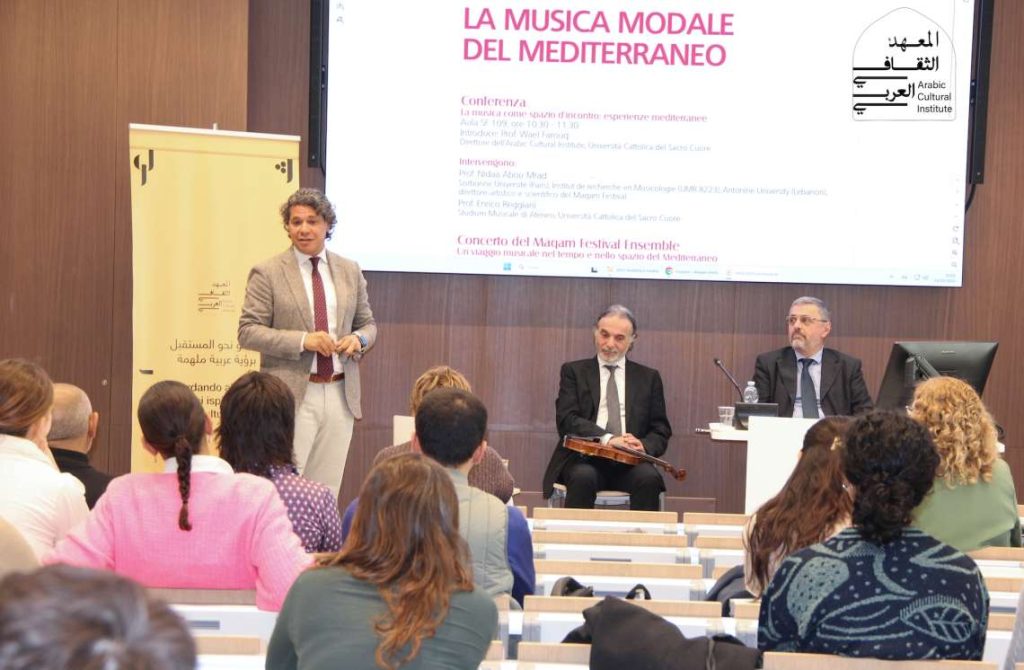
Dr Farouq described Mediterranean culture as a single language expressed through many dialects, noting that modal music provides the grammar and structure that has survived political shifts, demographic changes and historical upheavals. Through live interludes, the speakers demonstrated how sacred and secular music across the region share melodic patterns, emotional registers and rhythmic sensibilities that reveal common origins.
The day culminated in an evening concert at the university’s Aula Magna, offering audiences a sweeping journey through the history of Mediterranean sound. The performance began with the world’s oldest known melody—etched into a clay tablet discovered in ancient Ugarit—before moving into the musical innovations of medieval Baghdad, spiritual Sufi compositions and liturgical traditions stretching across Syriac and Coptic communities.
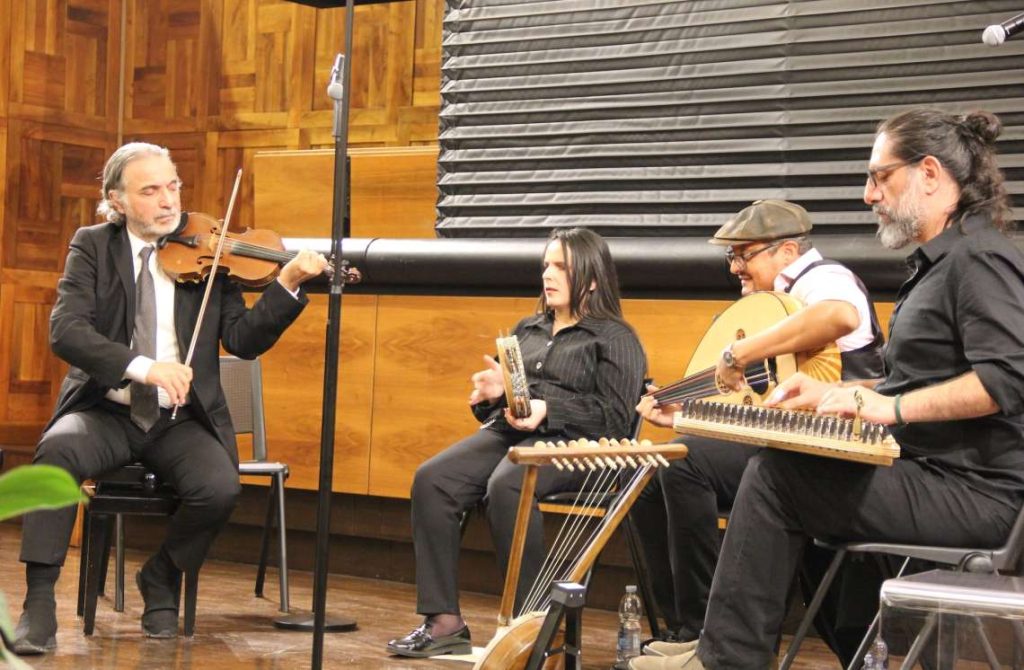
Led by Prof Abou Mrad on kemantché, vielle and violin, the ensemble also included acclaimed musicians Tarik Beshir on oud and vocals, Rafka Rizk on vocals, and Ghassan Sahhab on qanun and lyre. Their programme traced seven musical epochs, weaving references to the Arab Renaissance and nods to Dante Alighieri’s cultural connections to the Mediterranean world.
Dr Farouq, who was recently honoured with the 2025 Mediterranean Excellence Award for culture and intercultural dialogue, said the event demonstrated how music has long served as a bridge between societies. He noted that in a region marked by diversity, the shared foundations of modal music continue to offer a powerful reminder of collective memory, identity and coexistence.