The condemnation followed Israeli attacks on Thursday, which the Israeli military claimed were aimed at destroying Hezbollah’s rearming operations.
The European Union on Saturday strongly condemned Israel’s recent airstrikes in southern Lebanon and urged it to uphold the ceasefire agreement reached last year with the Iran-backed militant group Hezbollah.
The condemnation followed Israeli attacks on Thursday, which the Israeli military claimed were aimed at destroying Hezbollah’s rearming operations. The strikes targeted multiple sites in southern Lebanon, prompting sharp criticism from both Lebanese officials and international observers.
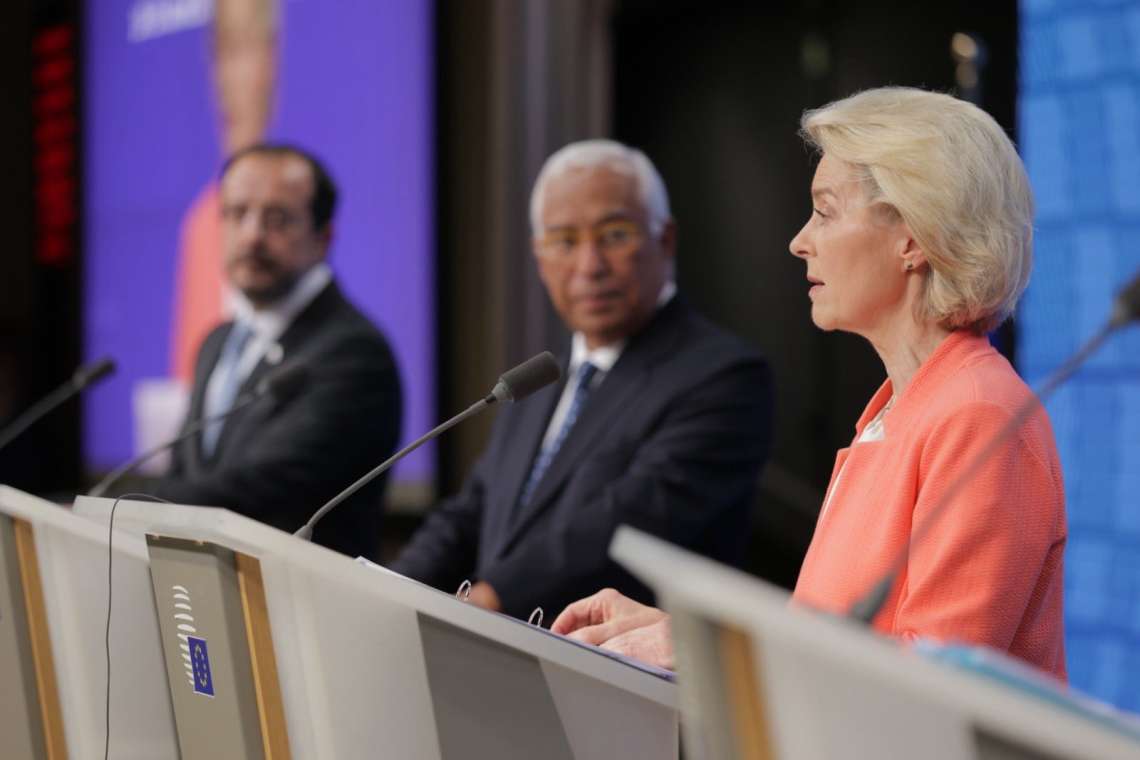
“The EU calls on Israel to cease all actions that violate resolution 1701 and the ceasefire agreement reached a year ago in November 2024,” said Anouar El Anouni, the EU’s foreign affairs spokesman. “At the same time, we urge all Lebanese actors and especially Hezbollah to refrain from any measures or responses that could further inflame the situation.”
El Anouni stressed that “focus by all parties must be on preserving the ceasefire and the progress achieved so far,” warning that renewed hostilities could unravel months of fragile calm along the Lebanon-Israel border.
The European Union’s statement came amid rising concern that the escalation could reignite a broader regional conflict at a time when tensions remain high between Israel and several Iran-backed groups in the Middle East.
According to reports, the Israeli army had earlier instructed residents of four southern Lebanese villages to evacuate their homes, warning that operations would target Hezbollah’s military infrastructure in the area. Israel claimed the strikes were a necessary response to the militant group’s efforts to rebuild its weapons stockpiles and military positions.
In response, the Lebanese army accused Israel of attempting to “undermine Lebanon’s stability” and “prevent the completion of the army’s deployment” under the terms of the ceasefire agreement. The Lebanese military said that the latest attacks directly violated UN Security Council Resolution 1701, which ended the 2006 war between Israel and Hezbollah and called for both sides to respect the Blue Line — the UN-demarcated border between the two countries.
Lebanese President Joseph Aoun also condemned the strikes, calling them “a dangerous provocation” that risked destabilising the country’s southern border. Iran, a key backer of Hezbollah, described the Israeli assault as “savage” and urged the international community to take immediate steps to stop what it called “Israeli aggression.”
“Israel’s attacks are a blatant violation of international law and the sovereignty of Lebanon,” Iran’s foreign ministry said in a statement on Friday. “The silence of the global community will only embolden Israel to commit further crimes.”
Lebanon and Israel remain technically in a state of war, with no formal peace treaty between them. However, since the end of the Lebanese civil war in 1990, armed confrontations along the border have largely involved Hezbollah, not the Lebanese national army.
Hezbollah — considered a terrorist organisation by the United States and several Western nations — is the only Lebanese faction that refused to disarm after the 1975–1990 civil war. The group has long justified its military presence by claiming a responsibility to “liberate” Lebanese territory still occupied by Israel and to defend the country from Israeli aggression.
Over the years, Hezbollah’s role has expanded beyond Lebanon’s borders, including involvement in regional conflicts such as the war in Syria. Its close alliance with Iran has made it a major component of Tehran’s influence network across the Middle East.
Analysts warn that the latest escalation could threaten the delicate balance maintained under the 2024 ceasefire deal. The EU’s appeal reflects growing international anxiety that any misstep could spiral into renewed confrontation between Israel and Hezbollah — a conflict that could draw in Iran and destabilise the wider region.
For now, both sides have refrained from declaring open hostilities, but with exchanges of rhetoric intensifying, the situation along the Lebanon-Israel border remains tense and uncertain.