India condemns Afghan civilian deaths amid Pakistan–Taliban clashes, while political turmoil deepens in Islamabad as Imran Khan supporters protest and MEA questions Pakistan’s commitment to democratic norms….reports Asian Lite News
India has strongly reiterated its support for Afghanistan’s territorial integrity and voiced serious concern over the rising civilian toll as clashes intensify along the Pakistan–Afghanistan border. The Ministry of External Affairs (MEA) condemned reports of Afghan civilian casualties amid days of heavy cross-border fire, even as political unrest deepens inside Pakistan, prompting New Delhi to remark that “democracy and Pakistan don’t go together”.
MEA spokesperson Randhir Jaiswal, addressing the weekly briefing, said India was closely tracking developments along the sensitive frontier where hostilities between Pakistani forces and the Taliban-controlled Afghan military have flared repeatedly in recent weeks.
“We have seen reports of border clashes in which several Afghan civilians have been killed. We condemn such attacks on innocent Afghan people. India strongly supports the territorial integrity, sovereignty and independence of Afghanistan,” Jaiswal said.
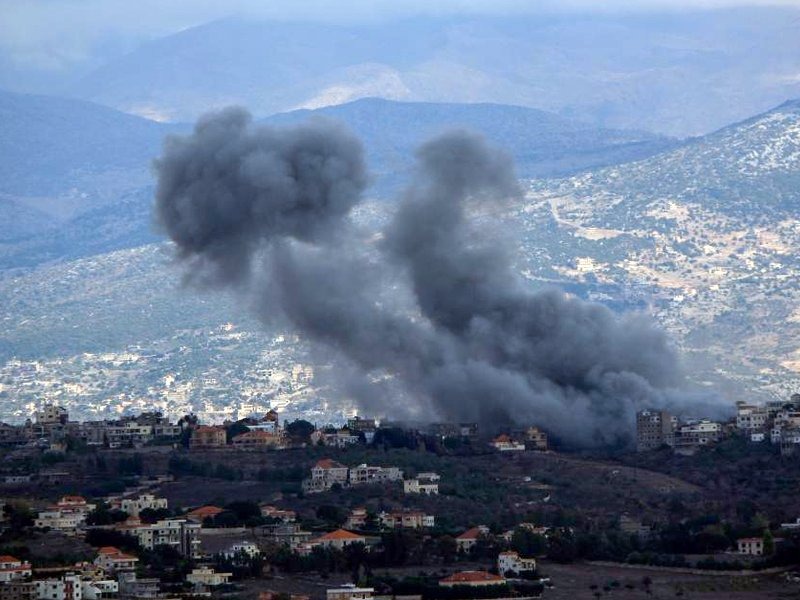
The comments came against a backdrop of worsening violence between the two neighbours. Afghan officials have accused Pakistan of air and artillery strikes targeting civilian areas, while Islamabad claims the Taliban has provoked clashes through repeated border violations. Mediation attempts by Saudi Arabia, Turkey, and Qatar have failed to break the deadlock, allowing tensions to harden.
Taliban spokesperson Zabihullah Mujahid alleged that Pakistani forces launched fresh attacks in the Spin Boldak district of Kandahar late on Friday, prompting retaliation from Afghan units. “Unfortunately, this evening the Pakistani side once again launched attacks towards Afghanistan in the Spin Boldak district of Kandahar, prompting the Islamic Emirate forces to respond,” he posted on X.
Local officials told Afghanistan’s Tolo News that Pakistani strikes hit civilian structures and homes, leaving five people dead and several injured. Ali Mohammad Haqmal, head of information for Spin Boldak, claimed that Pakistan “initiated the aggression” and continued firing even after Afghan forces halted their response.
On the Pakistani side, Dawn newspaper quoted an official in Quetta who said the exchange of fire began around 10 pm on Friday and continued for hours. The border has remained volatile for more than a month, with Islamabad accused of launching multiple air operations inside Afghan territory as militants continue to exploit the porous frontier.
The renewed violence has coincided with a growing political crisis inside Pakistan, drawing unusually sharp commentary from India. When asked about declining democratic standards under the current government, especially the heavy restrictions surrounding former prime minister Imran Khan, Jaiswal offered a pointed one-line assessment.
“Democracy and Pakistan don’t go together. The less we talk the better,” he said, indicating both India’s scepticism and its reluctance to be drawn deeper into Islamabad’s internal turmoil.
Political tensions within Pakistan have surged as Khan’s supporters mount demonstrations demanding greater access to the jailed leader, who has been incarcerated since 2023 following a corruption conviction. His party, Pakistan Tehreek-e-Insaf (PTI), has alleged mistreatment, restricted communications, and uncertainty over his health.
Khan’s sister, Uzma Khanum, was recently allowed to visit him at Rawalpindi’s Adiala Jail. Her arrival sparked protests outside the Islamabad High Court and the prison, with PTI loyalists calling for fewer curbs on meetings and greater transparency about Khan’s condition.
Meanwhile, Pakistan’s powerful military establishment has issued unusually direct criticism of the former premier, fuelling speculation about deepening rifts between political and institutional power centres. Analysts say the hostility between the military leadership and Khan’s camp has contributed to a climate of instability at a time when Pakistan is grappling with economic stress, internal unrest, and deteriorating relations with Kabul.
The combined effect of border hostilities, mediation failures, diplomatic breakdowns and political strife has created a tense environment that threatens regional stability. India’s decision to comment — albeit cautiously — underlines New Delhi’s concern that prolonged confrontation between Pakistan and Afghanistan could spill over into wider insecurity across South Asia.
With mediation efforts stalled and both Islamabad and Kabul trade accusations, there is little clarity on how the border crisis will de-escalate. For now, India has limited its response to humanitarian concern and reiteration of its long-standing support for Afghanistan’s sovereignty — but the diplomatic undercurrents suggest New Delhi remains wary of the widening fault lines on both sides of the border.