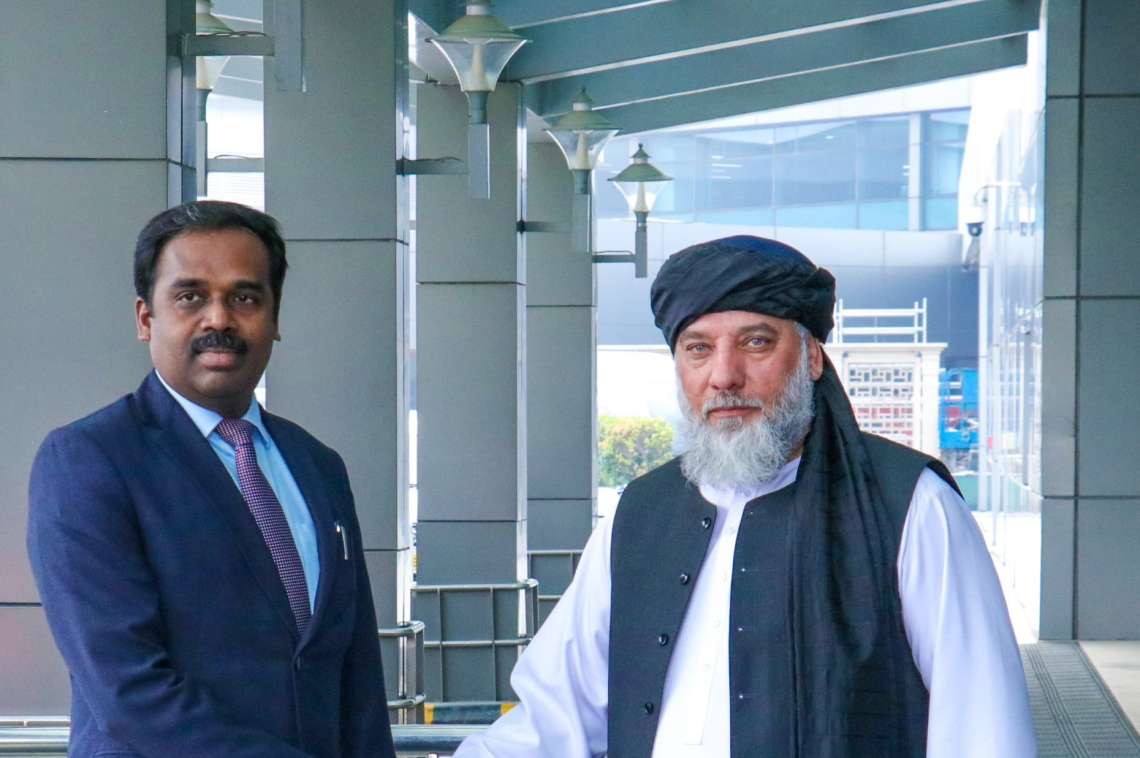
Afghan trade chief’s Delhi visit places Chabahar at the forefront as India restores full diplomatic presence in Kabul and both sides push for stronger regional connectivity and investment….reports Asian Lite News
Afghanistan’s Minister of Industry and Commerce, Alhaj Nooruddin Azizi, arrived in New Delhi on Wednesday, opening a five-day official visit that marks one of the most significant engagements between India and the Taliban administration since the fall of Kabul in August 2021. The visit, welcomed warmly by the Ministry of External Affairs (MEA), signals accelerating economic diplomacy between the two sides, with a strong focus on trade revival, investment pathways and greater use of India-built infrastructure in the region.
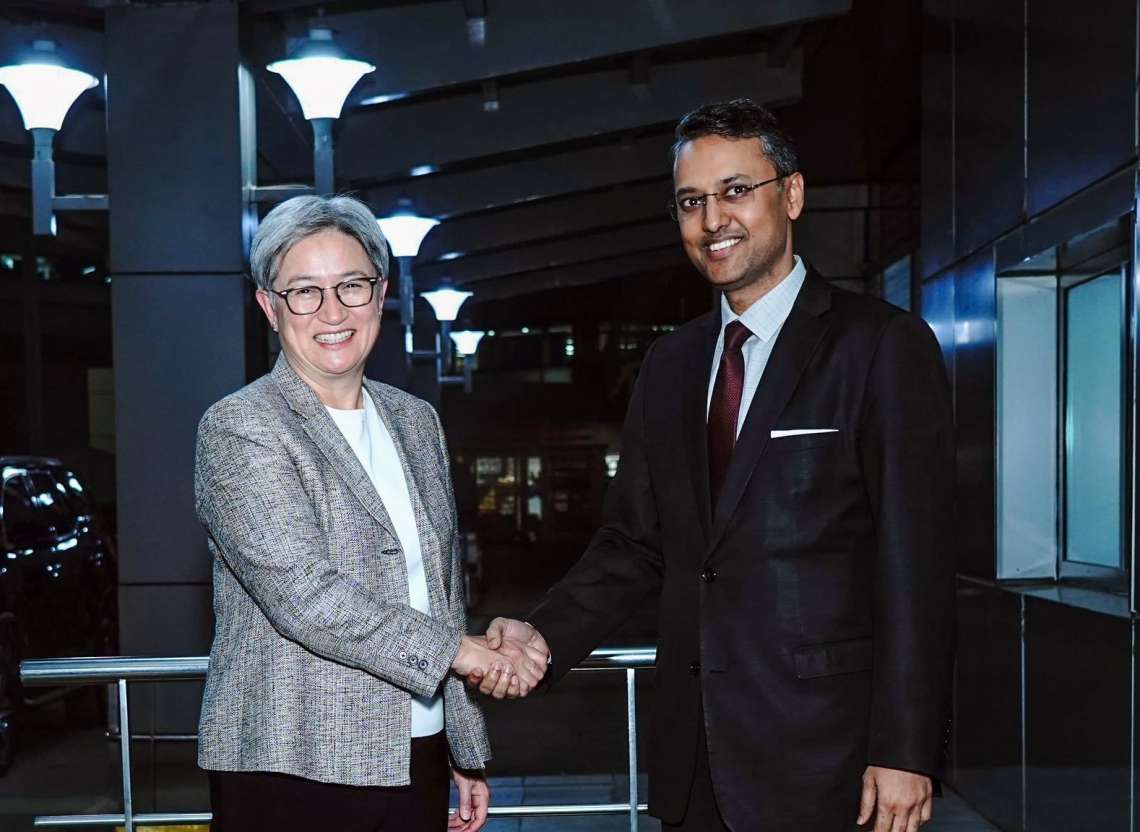
“Advancing bilateral trade and investment ties is the key focus of the visit,” MEA spokesperson Randhir Jaiswal said in a post on X, as he received Azizi in the capital. The Afghan minister, accompanied by a senior delegation, is also scheduled to visit the India International Trade Fair (IITF) 2025 at Pragati Maidan, where Afghan businesses traditionally maintain a strong presence.
Chabahar at the centre of talks
While the visit will cover a broad sweep of commerce and connectivity issues, Kabul has made its top priority unambiguously clear: scaling up the “effective utilisation” of Chabahar Port in Iran, developed by India, and activating new trade corridors at a moment when Afghanistan’s traditional routes are under stress.
In a statement issued just before the delegation’s departure, Afghanistan’s Ministry of Industry and Commerce said the discussions in Delhi would concentrate on expanding economic cooperation and improving transit conditions through the port. It highlighted plans for meetings with India’s Ministers of External Affairs and Commerce, as well as interactions with trade bodies, investors and private-sector representatives from both countries.
“The focus of these meetings is to expand economic cooperation, facilitate trade relations, create joint investment opportunities, and strengthen Afghanistan’s role in the region’s transit routes,” the ministry said, calling the visit a major step in improving bilateral communication and developing alternative trade pathways.
Afghanistan sees Chabahar as increasingly vital after sharp escalations in border tensions with Pakistan—long the main conduit for Afghan exports—which have disrupted trade flows and caused heavy financial losses for traders on both sides. The Afghanistan-Pakistan Joint Chamber of Commerce and Investment recently estimated that closures and restrictions at border crossings had cost businesses more than USD 100 million.
With uncertainty clouding the future of these routes, Afghan officials have begun publicly championing Chabahar as a new “opportunity”, citing its reliability, geographic advantage and direct access to the Indian market. Several Afghan trade groups, including the Kabul Dry Fruit Exporters Union, say shipments to India through the port are currently running “smoothly, with no problems”, offering a sharp contrast to the turmoil on the Pakistan frontier.
Mohammadullah Bakhtyar, Director at Afghanistan’s Ministry of Commerce and Industry, recently underscored the port’s strategic value at a transit meeting in Kabul. Iran’s Free Economic Zones—particularly Chabahar, he said—give Afghanistan an indispensable link to open seas, reducing transport costs and boosting its role as a regional transit hub connecting South Asia, Central Asia, the Middle East and beyond.
Deeper diplomatic and trade opening
Azizi’s visit builds on momentum generated during the October 2025 visit of Afghanistan’s acting Foreign Minister, Mawlawi Amir Khan Muttaqi—the highest-level Taliban engagement with India since 2021. That trip resulted in New Delhi’s landmark decision to restore its Technical Mission in Kabul to full Embassy status, signalling renewed confidence in dealing with the Taliban-run administration.
External Affairs Minister S. Jaishankar announced the upgrade following his meeting with Muttaqi, with the MEA stressing India’s commitment to “deepening its bilateral engagement with the Afghan side in all spheres of mutual interest”. The restored Embassy, the ministry noted, will expand India’s capacity to support Afghanistan’s development, humanitarian needs and institution-building priorities.
During the October dialogue, both sides also agreed to establish a joint trade committee aimed at advancing economic cooperation and exploring opportunities in minerals, energy and other critical sectors. Kabul subsequently invited Indian companies to evaluate emerging business options, particularly in areas where the Taliban government claims to have opened new investment windows.
A cautious recalibration
New Delhi has not formally recognised the Taliban administration, but the diplomatic and commercial re-engagement underway indicates a carefully calibrated shift aligned with India’s longstanding regional interests. Afghanistan remains central to India’s connectivity ambitions, especially through Chabahar, which is a key link in the proposed International North–South Transport Corridor stretching toward Central Asia and Russia.
For Afghanistan, India offers market size, investment potential and infrastructure expertise at a time when the country remains diplomatically isolated and economically fragile. With traditional trade routes constrained and political uncertainty weighing on regional commerce, Kabul appears determined to diversify its partnerships and rebuild economic stability.
Azizi’s visit—coming amid intensifying Afghan outreach—suggests that both sides see economic cooperation as a pragmatic pathway to stabilising ties, regardless of the unresolved political complexities that still define India-Taliban relations.