June 20, 2025
4 mins read

Amber heat health alert issued across England

The UKHSA alert warns there could be “a rise in deaths” among people with pre-existing health conditions and those aged over 65

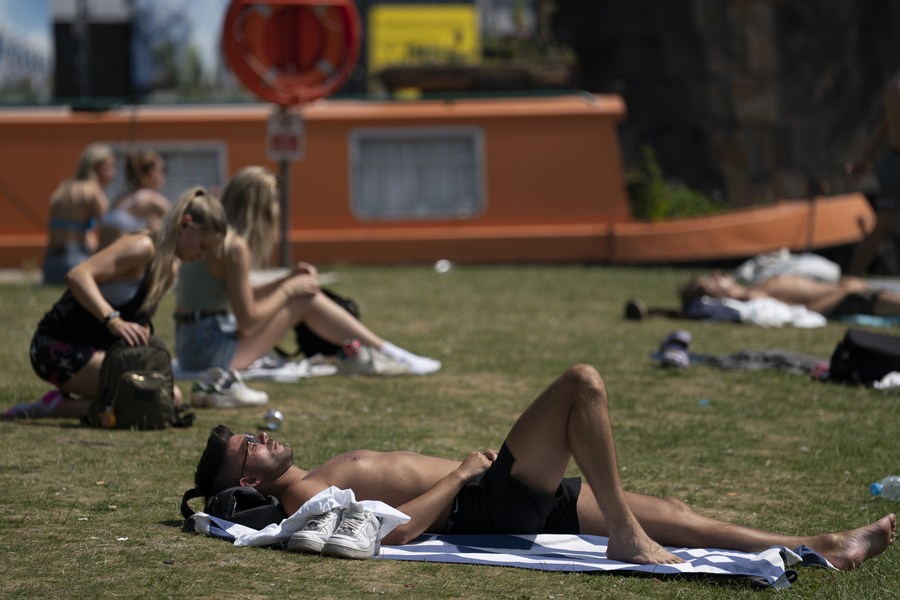
An amber heat health alert has been issued across England as the UK experiences a surge in temperatures, marking Thursday as the hottest day of the year so far.

Temperatures peaked at 32.2°C (89.9°F) at both Kew Gardens and Heathrow Airport in west London, surpassing the previous high of 29.4°C (85°F) recorded in Suffolk last Friday. Bushy Park in Teddington and Wisley in Surrey also saw soaring temperatures, reaching 31.6°C (88.88°F). Forecasts suggest the heat may intensify further, with highs of 33°C (91°F) expected by the weekend.

Wales and Northern Ireland also recorded their hottest days of the year, with 30.1°C (86.1°F) in Bute Park, Cardiff, and 25.7°C (78.2°F) at Castlederg in County Tyrone. In Scotland, Glasgow saw a high of 24.3°C (75.7°F), though this fell short of the 25.7°C (78.2°F) recorded earlier this month in Lossiemouth.

In light of the rising temperatures, the UK Health Security Agency (UKHSA) has issued an amber heat health alert for all regions in England. The alert is in force from midday on Thursday until 9am on Monday and warns of likely disruption to health and social care services. It also highlights the potential for an increase in illness and even death among older individuals and those with existing health conditions.

An amber alert signals that the weather is likely to have a significant impact, and public health agencies are urging residents to take precautions, particularly to protect vulnerable groups. The UKHSA has advised staying hydrated, keeping homes cool, and avoiding strenuous activity during the hottest parts of the day.

The Met Office says the UK is now edging toward official heatwave status, which is declared when high temperatures are sustained over three consecutive days. Thresholds for a heatwave differ across the UK, ranging between 25°C and 28°C depending on the region.

According to deputy chief meteorologist Dan Holley, the heat will continue to build as the week progresses, potentially peaking on Sunday. He also indicated the likelihood of thundery showers developing by Saturday morning, alongside the possibility of “tropical nights” – when temperatures remain abnormally high overnight – adding further strain to those most susceptible to heat-related health issues.

The Local Government Association (LGA), which represents councils in England and Wales, has joined charities in urging the public to check on elderly neighbours, people living alone, and others who may be at risk. They have also reinforced the importance of using sun protection, drinking fluids regularly, and staying out of the sun during peak hours.

This week’s extreme weather comes amid broader concerns about climate change and its long-term impact on the UK. The Met Office recently warned that there is a 50:50 chance of UK temperatures reaching 40°C or more again within the next 12 years.

That benchmark was first passed during the record-breaking summer of 2022, when the mercury hit 40.3°C (104.5°F) in Coningsby, Lincolnshire, on 19 July. The previous national record was 38.7°C (101.7°F), set in Cambridge in 2019.

The 2022 heatwave had severe consequences. The intense heat led to widespread fires that destroyed homes, schools, churches, and farmland. Emergency services in London, Leicestershire and South Yorkshire declared major incidents, and the fire brigade faced unprecedented demands.

More worryingly, the summer of 2022 saw over 3,000 heat-related deaths recorded in England, with more than 1,000 of these among older adults during the four-day peak of the heatwave. These statistics have prompted public health officials to treat extreme heat as a significant and growing threat to life.

Experts have stressed the need for better preparation and adaptation measures. These include ensuring public buildings are equipped to handle extreme temperatures, improving early warning systems, and prioritising the health and safety of high-risk groups. Health professionals also recommend redesigning urban environments with more green spaces and shade to help lower ambient temperatures in densely populated areas.

As the UK heads into what may be another record-breaking weekend, the authorities are encouraging people to take the heat seriously. Public information campaigns are being rolled out across media channels, with advice on how to stay safe and help others.

While many may welcome the sunshine, especially at the start of summer, the rising frequency and intensity of heatwaves underline the urgency of addressing climate risks. The coming days will test not only the resilience of public services but also the public’s ability to adapt to a new normal in British weather.


Previous Story

Overcrowded jails fuel prisoner violence

Next Story

Strangulation in pornography to be made illegal

Previous Story

Overcrowded jails fuel prisoner violence

Next Story

Strangulation in pornography to be made illegal

Latest from -Top News

Pakistan Risks Overstretching Itself in Yemen War

Pakistan’s expanding military role in Saudi Arabia amid the Yemen conflict could strain its defence resources and fragile finances…reports Asian Lite News Desk Pakistan’s military involvement in the war in Yemen may prove unsustainable because of mounting financial pressures and competing security demands, according to a new report. Islamabad’s growing military presence in Saudi Arabia risks stretching its defence resources while exposing the country to greater strategic and economic challenges. An article by Andrew Wilson in One World Outlook describes Pakistan’s involvement as a case of “fiscal and strategic overreach”, arguing that the country lacks the financial flexibility to sustain an expanded military commitment. Pakistan’s external finances depend heavily on an International Monetary Fund (IMF) programme, financial support from Gulf countries and remittances from Pakistani workers in the region. The report argues that deeper military involvement in the conflict could place additional pressure on these sources of financial stability. It also warns that deploying troops and military equipment abroad could weaken Pakistan’s capacity to address security challenges along its eastern border and deal with two domestic insurgencies. The move could also draw Islamabad into a conflict it has sought to approach cautiously. A Reuters report in May, citing Pakistani security and government sources, said Islamabad had deployed around 8,000 troops, a squadron of approximately 16 aircraft, mostly JF-17 fighter jets, two drone squadrons and a Chinese HQ-9 air-defence battery to Saudi Arabia. According to those sources, Riyadh was financing the deployment, with Pakistani personnel operating the equipment. The sources also said a confidential agreement contemplated the possibility of deploying up to 80,000 troops. Islamabad has not confirmed those figures, although it has acknowledged its military presence in Saudi Arabia, including the deployment of fighter jets at King Abdulaziz Air Base from April. The One World Outlook article argues that Saudi financial support can cover allowances and operating expenses but cannot easily replace military equipment needed elsewhere or resolve the political and strategic challenges of participating in the Yemen conflict. Pakistan’s defence budget is another concern. For the 2026-27 financial year, the federal government allocated PKR 3 trillion, or approximately $10.8 billion, to defence services. The allocation represents an 18 per cent increase from the original PKR 2.55 trillion provision and amounts to around 2.1 per cent of projected gross domestic product (GDP). Defence spending accounts for approximately 16 per cent of the federal government’s PKR 18.8 trillion expenditure. Military pensions are budgeted separately at PKR 822 billion, while debt servicing costs stand at approximately PKR 8 trillion, more than two-and-a-half times the defence allocation. The report argues that these competing financial obligations leave little room for additional military expenditure without placing further pressure on public finances. Pakistan’s reliance on IMF assistance also limits its fiscal flexibility. The country must meet the conditions attached to the programme, including a primary budget surplus target of 2 per cent of GDP and continued restraint on development spending. According to the article, these requirements make it difficult for Islamabad to finance an additional military commitment without compromising other budgetary priorities. Pakistan’s economic indicators offer limited reassurance. Economic growth for the 2025-26 financial year is estimated at between 3.6 and 3.7 per cent, while inflation reached approximately 10.3 per cent in September following an energy price shock. Foreign exchange reserves stood at around $21.5 billion at the end of September. Although this marks an improvement from the low levels recorded in 2023, the report notes that the reserves cover only a few months of imports. Financial assistance from Gulf partners remains central to Pakistan’s external stability. The article says Islamabad holds approximately $8 billion in Saudi deposits at its central bank. In July, the State Bank of Pakistan said Riyadh had extended the maturity of $5 billion in deposits to December 2028, easing the country’s immediate external financing requirements. A further $3 billion deposit was also extended in the spring. However, the article argues that these arrangements provide temporary relief rather than long-term financial independence, particularly as regional conflict threatens the stability of the Gulf economies on which Pakistan relies. The report concludes that Pakistan faces a difficult balance between supporting Saudi Arabia militarily and preserving the financial and military resources needed to address its domestic and regional challenges.

UK and Germany Ratify Kensington Treaty

Britain and Germany ratify the Kensington Treaty, agreeing new cooperation on AI, quantum research, defence and security while targeting investment, jobs and Russian hybrid threats…reports Asian Lite News Desk Britain and Germany

Economic tide is turning in Bangladesh

If there is one thing that can bring some comfort to the struggling Bangladeshi economy, it is good relations with India. Bangladesh should remember that Delhi’s backing, through easy supplies of essentials
Go toTop

Don't Miss

India-UK FTA talks may conclude as early as Sept

India has made at least two visits to the UK,

‘Bobby on every beat’ 

PM sets out ‘next phase’ covering economic growth, NHS backlogs,