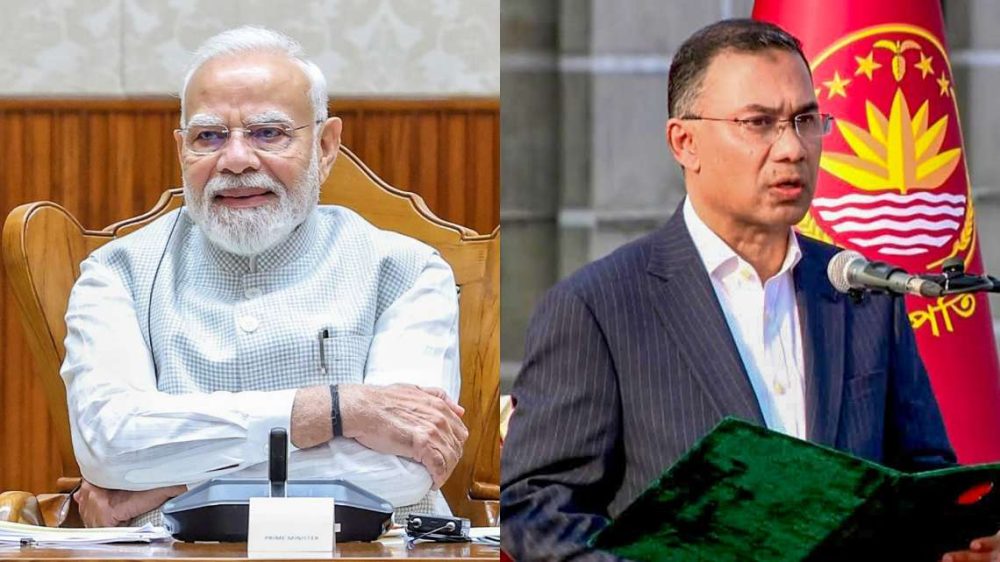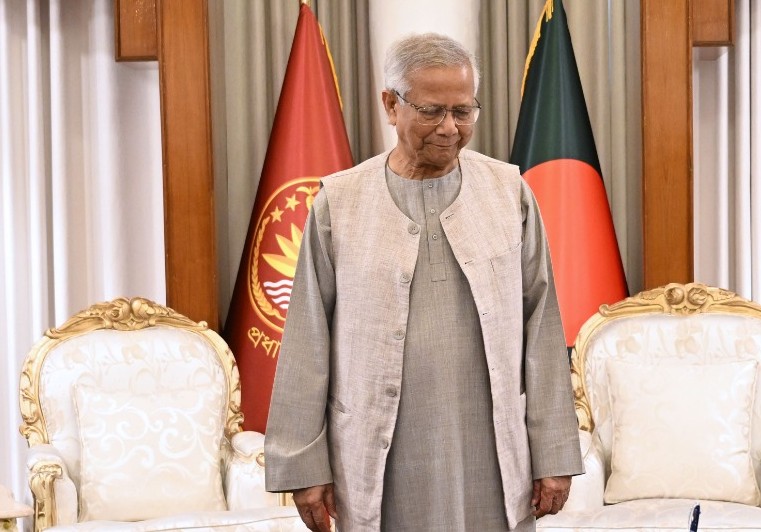
Expectations are rife that the transfer of power may be stalled at the last moment, with Nobel Peace Prize winner and interim head Dr Muhammad Yunus remaining seated, writes Arif Islam
Officially, Bangladesh is headed for an election in less than a month. But not many Bangladeshis are convinced it will be held. Expectations are rife that the transfer of power may be stalled at the last moment, with Nobel Peace Prize winner and interim head Dr Muhammad Yunus remaining seated. Those who are more optimistic believe Dr Yunus will ensure a position to dictate terms to the next government through a referendum to be held alongside the election.
Scheduled on February 12, the election is a farce. The Awami League, with at least 35 percent loyal voters, has been barred from political activity. The third-largest Jatiya Party faced attacks throughout, was kept out of pre-election political dialogues, and is contesting on unfair terms. Together, the two parties secured 55 percent votes in the December 2008 election.
Of the four top parties, only the Bangladesh Nationalist Party (BNP) and Jamaat-e-Islami will contest, and the Interim Government is clearly favouring the Jamaat-led Islamist front. It includes Dr Yunus’s favourite Nationalist Citizen Party (NCP), formed by student leaders of the July 2024 protests. The alignments are proof enough of the forces behind the July uprising.
The setting is scandalous. The Yunus administration has done everything—from ballot design and the introduction of postal ballots for overseas Bangladeshis to administrative support—to tilt the field towards the Islamist front. In a sharp departure from the past, Bangladesh has issued 1.5 million postal ballots this year—roughly 1.2 percent of an electorate of 127 million—to allow citizens abroad to vote.

Earlier, postal ballots were limited to government employees and security personnel who could not reach polling booths. The rule mirrored India, but the Hasina government faced allegations of manipulating postal votes. Under Yunus, Bangladesh has gone halfway towards the American model of easy postal voting—one criticised by none other than President Donald Trump.
BNP has expressed strong reservations over the large-scale issuance of postal ballots. BBC reported on January 14, 2026, on a video showing a huge cache of postal ballots being counted and organised by a few individuals. BBC confirmed the video was from Bahrain. BNP alleged the operation was run by local Jamaat affiliates. Jamaat denied the charge, but new media reported that different community groups were handling ballots—an apparent violation of election procedure. Prothom Alo (January 13, 2026) noted that postal ballots could be decisive in 18 of the 300 parliamentary seats.
More than the election, the referendum to be held alongside it is the bigger issue. The Yunus administration has prepared a wish-list of political reforms—keeping the Awami League and Jatiya Party out of the process and ignoring BNP’s dissent—that would turn the table against the top three established parties and create the ground for Islamic rule. Islamists are a minority in Bangladesh’s electoral arithmetic. But the reforms, if implemented, would give them enormous leverage over policymaking through proportional representation.
The process itself is undemocratic. Under the proposed referendum mechanism, if voters approve the reforms, the next Parliament will be forced to implement them within six months. If it fails, the proposals will automatically become law. Such a mechanism is unheard of in parliamentary democracies. As if that is not enough, the Yunus administration is openly campaigning for a ‘Yes’ vote. Dr Yunus himself has used state machinery to mobilise support, and since a referendum is not technically an election, the Election Commission is imposing no restrictions on the Interim Government.
The bottom line is that, irrespective of who wins the farcical election, the referendum will create a super-parliament, with Dr Yunus and his associates presiding over it. Many in Dhaka believe that if the referendum passes, Dr Yunus may not even hand over power to the elected government. He may remain seated long enough to convert the proposals into law.
Meanwhile, the chances of the election being postponed remain, as the law-and-order situation is precarious. On January 19, miscreants launched a deadly attack on the military-police Rapid Action Battalion (RAB) in Chattogram. One RAB officer was killed and at least three others were seriously injured. Nearly 1,500 sophisticated weapons, looted from police armouries following Hasina’s fall, are in circulation. Over 700 hardcore criminals and terrorists, who escaped prisons during the July protests, have raised widespread fears of violence.
The Interim Government’s home minister is nonchalant. “I guarantee that looted arms will not be used during the election,” he told news media. Many questioned in social media if the home minister is so sure, why doesn’t he recover them?