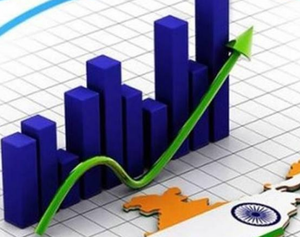
Foreign investment continues to play a critical role. Global companies are increasingly viewing India as both a manufacturing base and a large consumer market with long-term potential
India’s transformation into one of the world’s fastest-growing major economies is being driven by a powerful mix of domestic demand, digital innovation and sustained policy reforms, according to a recent report.
Over the past two decades, the country has steadily moved from a developing economy to a global growth engine, with its influence expanding across trade, technology and geopolitics. Analysts say India’s ability to maintain strong growth momentum, even as many advanced economies struggle with slowdowns, has set it apart on the global stage.
At the heart of this performance lies consistent expansion in Gross Domestic Product (GDP). In recent years, India’s GDP growth has often remained above six per cent, outperforming major economies such as the United States, European Union and Japan. Economists view this sustained growth as a reflection of both structural strengths and policy continuity.
A key pillar of India’s economic rise has been economic liberalisation. Reforms initiated in the 1990s reduced regulatory barriers, opened markets to private players and encouraged foreign investment. This created a more competitive business environment, allowing industries to expand while attracting global companies seeking new markets and cost efficiencies.
Technology has played an equally transformative role. Since the late 1990s, India has emerged as a global hub for software development and IT-enabled services. Cities such as Bengaluru and Hyderabad have become synonymous with innovation, hosting multinational tech firms as well as a thriving startup ecosystem. This growth has not only generated employment but also positioned India as a key player in the global digital economy.
Another major driver is India’s demographic advantage. With one of the world’s youngest populations, the country benefits from a vast and expanding workforce. This demographic dividend supports both manufacturing and services while fuelling consumption, which has become a central engine of growth.
Rising domestic demand, particularly from a growing middle class, is reshaping the economic landscape. Increased spending on automobiles, electronics, housing and healthcare is driving industrial expansion and boosting services. Analysts note that this consumption-led growth makes India less dependent on external demand compared to export-heavy economies.
Infrastructure development has further strengthened economic capacity. Over the past decade, the government has significantly increased investments in highways, rail networks, airports and ports, improving connectivity and reducing logistics costs. These improvements have enhanced productivity and made India a more attractive destination for global investors.
India’s digital transformation has also been a game changer. Initiatives under programmes like Digital India have expanded access to digital identity, financial services and mobile connectivity. Affordable smartphones and data services have brought hundreds of millions online, accelerating the growth of e-commerce, fintech and digital payments.
Foreign investment continues to play a critical role. Global companies are increasingly viewing India as both a manufacturing base and a large consumer market with long-term potential. Policy initiatives aimed at boosting domestic production, such as Make in India, have further encouraged companies to establish manufacturing operations in the country.
Entrepreneurship is another defining feature of India’s growth story. The country now hosts one of the world’s largest startup ecosystems, supported by initiatives like Startup India. Startups across sectors such as fintech, health-tech and artificial intelligence are driving innovation, creating jobs and attracting global capital.
Education and skill development have also contributed to this trajectory by producing a steady pipeline of skilled professionals. As industries evolve, the focus on upskilling and digital literacy is helping the workforce adapt to new economic realities.
Taken together, these factors illustrate why India’s growth story stands out globally. With strong fundamentals, a young population and an increasingly innovation-driven economy, the country appears well-positioned to sustain its upward trajectory in the years ahead.