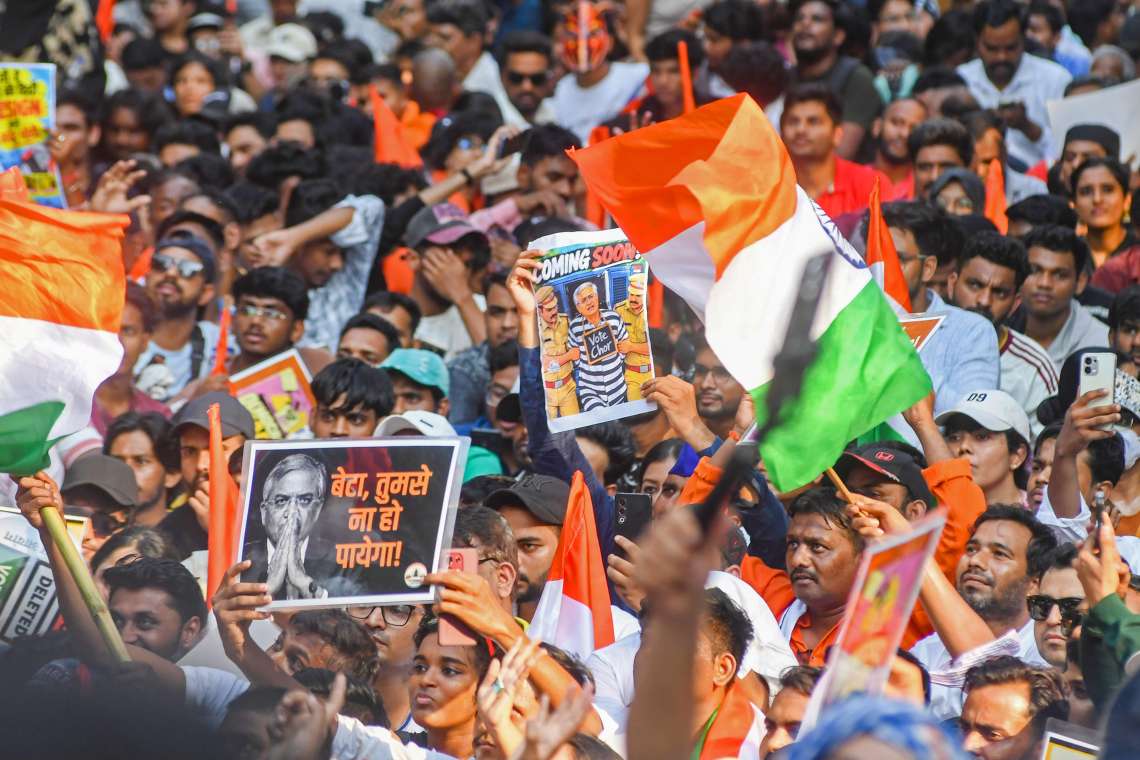
A satirical online movement inspired by a controversial judicial remark is transforming memes, outrage and youth frustration into a new political conversation in India…writes Shelja Pallath
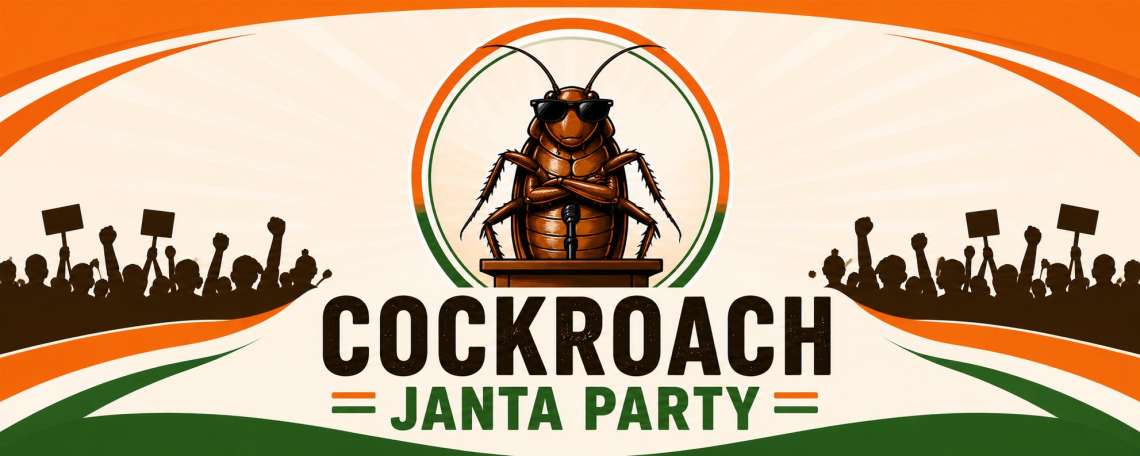
Just a controversial comment made by India’s Chief Justice Surya Kant during a hearing caused the birth of a satirical collective that takes inspiration from an insect. No wonder…it happened in India. The Justice allegedly compared ‘the unemployed youth of India who engage in journalism or activism via social media’ to cockroaches or insects. Even though he later clarified that he intended to refer to ‘people with fake and bogus degrees’ and did not use it as a general term for Indian youth, the comment surprisingly triggered youngsters and helped curate jokes, memes and outrage, ultimately resulting in the idea of a political party named Cockroach People’s Party (CJP). Even the name comes as a parody of a major political party of India, i.e. BJP.
The online movement was initiated by Abhijeet Dipke, a political communications strategist from Boston University. The initial joke idea has now become a serious thought among the current generation. Those who are ‘lazy, unemployed and have the ability to rant professionally’, as the Justice mentioned, can take membership via a Google form in this modern party. ‘I too am a Cockroach’ is the viral hashtag which has already gained momentum across various social media platforms. People, including names like Mahua Moitra and Kirti Azad from other political parties, have already joined the community through this. Everyone is amazed by the ‘more than 10 million’ followers the party has on Instagram, which has already surpassed BJP’s Instagram followers. Still, CJP’s momentum continues to grow.
What will be the relevance of this virtual party in India? Or what will be the future of the party? There are many speculations regarding this. Some argue that it is just a social media frenzy, while others see it as a hopeful political phenomenon that is never going to end in a day.
According to some surveys, young Indians are not very interested in political activities or engagement, even though the country has one of the youngest populations among its 1.4 billion people. When they come together on platforms like this, rivals have to be cautious for sure, as it is becoming an example of their direct involvement rather than generational fatigue.
As Dipke says, ‘people are frustrated because they don’t feel represented. When entering adulthood, education is no longer a guarantee for growth and stability.’ Youth are really fed up with the current system, which has resulted in a new political event. This meme-driven movement is now shaped by hashtags, which may seem unnatural, but it is a better beginning. Even Abhijeet’s former AAP connection has faced criticism because of this. But the so-called cockroaches are now on a single platform that depicts itself as a political front of the youth, by the youth and for the youth.
What we can understand from this is that people are really in search of new political formations, which may not necessarily be parties, but social experiments like this. This experiment has already become the voice of the voiceless that was muted over these years.
As Antonio Gramsci once said, “The old world is dying, and the new world struggles to be born.” The emergence of movements like the Cockroach People’s Party reflects exactly this transition, where young people are no longer willing to inherit what Greta Thunberg calls “a broken world.” What may appear as satire, memes or online outrage is also a deeper expression of political exhaustion, frustration and a growing demand among the youth for representation, relevance and change.