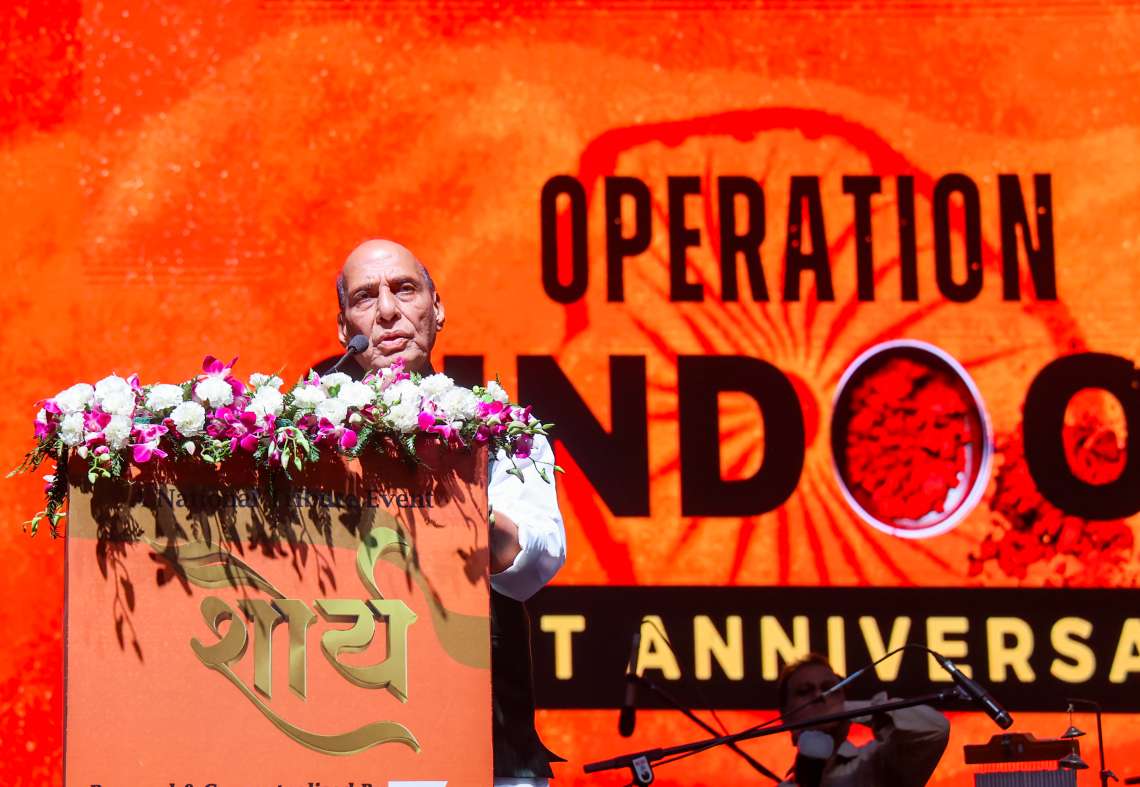
Operation Sindoor was not just an act of revenge or a conventional military strike, but it was a multi-domain exercise that transformed India’s image into a decisive and proactive power capable of calibrated, coordinated responses, writes Dr Rakesh Sharma
Operation Sindoor that India carried out to avenge the deaths of 26 innocent tourists in Jammu & Kashmir by Pakistan-sponsored terrorists was not a regular military action but it marked a decisive evolution in how to launch a successful battle under the shadow of nuclear deterrence. The well-crafted Indian military strikes combined with high-intensity precision ensured that the cross-border fights did not extend beyond terrorist-linked targets.
The military response appeared like an airstrike as it involved warplanes and drones. But it was a calibrated campaign by tri-services which was appreciated for effective planning, precision, smooth joint-service coordination, and use of cyber technology. Integrated Air Command and Control System (IACCS), in synergy with the Army, Navy, put forth a strong defence against Pakistani attacks, when Indian warplanes and drones created mayhem inside Pakistan.
Sukhoi-30, Rafale, Mirage 2000, and MiG-29 together ensured that India targeted terror infrastructure inside Pakistan, while dominating the aerial battlefield. Besides these warplanes, drones played a significant role in making the air strikes successful. They were the eyes of the operation as they carried out surveillance, identified targets and provided real-time coordinates to fighter jets. Moreover, they performed battle damage assessment, bringing evidence before the world.
The strikes were executed in a short time window and hit multiple locations at the same time to ensure surprise and effectiveness. This caused confusion and led to delayed response from Pakistan, reflecting structural destruction, operational paralysis, and psychological shock. The carefully planned Indian strikes also limited collateral damage as the intense localised explosions led to the collapse or severe damage of terror training camps, storage facilities, fuel and ammunition depots and command nodes.
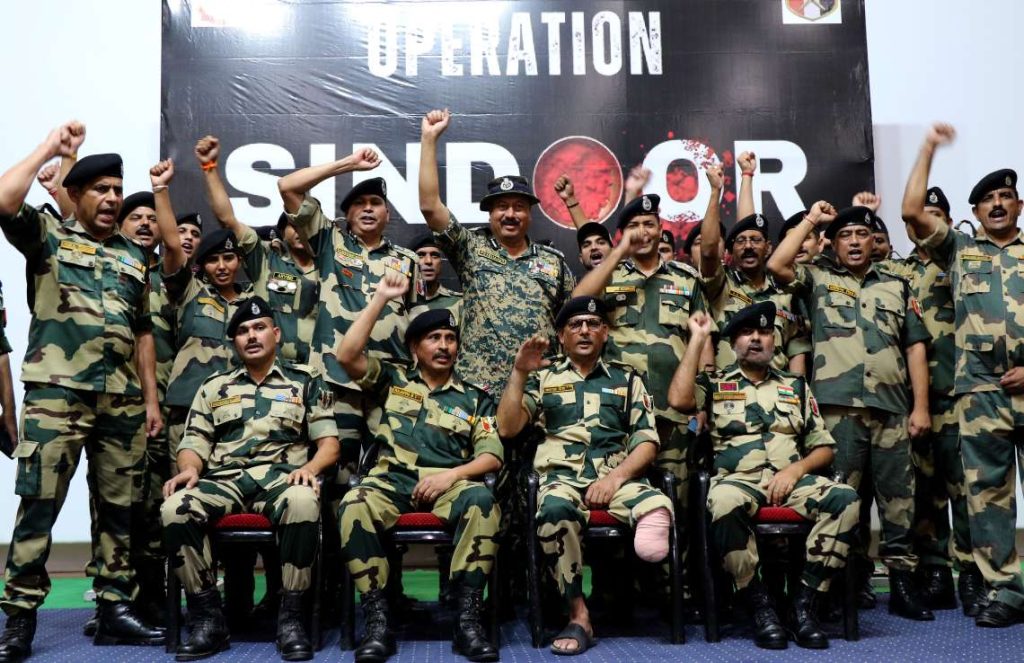
Indian Army aided the operations by aiding the strikes through artillery attacks. Tried and tested Bofors howitzers and indigenous Pinaka multi-barrel rocket launchers and the Akash missile system earned appreciation for contributing to the Operation Sindoor.
While the Indian navy was less visible throughout the military action, it played strategically very important role. It established dominance in the Arabian Sea and created pressure on Pakistani military forces. Aircraft carrier INS Vikrant, destroyers like Kolkata-class destroyer, and numerous frigates and submarines could have imposed a blockade on Karachi Port, which accounts for 60 percent of Pakistan’s trade.
Operation Sindoor could not have been successful without cyber warfare, which was a quiet but critical layer of the military action. It allowed the Indian military to discreetly monitor Pakistani military communications, gather intelligence, and then disrupt digital networks, all of this translating into precision attacks. Cyber electronic overlap techniques like radar interference and spoofing weakened Pakistan’s air defence effectiveness, which allowed Indian drones and missiles to penetrate deeper into Pakistan and hit the targets.
Nobody had expected India would hit different locations across Pakistan in May 2025, thanks to its earlier restraint in limiting military actions to Pakistan-administered Kashmir and the broader deterrent effect of nuclear tensions.
Notably, there were no apparent nuclear threats from both sides as the tensions after the Pahalgam attacks began simmering. Moreover, there was no strong mobilisation of forces, especially, by India. New Delhi signalled its intentions clearly; it did not want to escalate the conflict into a full-fledged war. But its leaders continued to express their determination of punishing those behind the Pahalgam attack.
Soon the Indian Air Force (IAF) warplanes targeted terrorist-linked infrastructure that had been identified and publicly called out by the political leadership. India managed to convey its message to Islamabad and the rest of the world that it wanted solely to destroy the terrorism ecosystem on Pakistani territory, which caused bloodshed in Jammu & Kashmir for over three decades.
It was a deterrent action undertaken under the shadow of nuclear deterrence. The disciplined and objective conduct of Indian forces did not allow Pakistan to exploit the situation and effectively portray it as a gross violation of its sovereignty. New Delhi achieved a few geopolitical and geostrategic objectives even as Operation Sindoor set a precedence.
The military action signalled that any such terror events in India were likely to receive similar or more severe reaction in the future. Moreover, it managed to detach terrorism from being a home-bound security challenge and link it with Pakistan. What we can conclude is that Operation Sindoor was not just an act of revenge or a conventional military strike, but it was a multi-domain exercise that transformed India’s image into a decisive and proactive power capable of calibrated, coordinated responses.