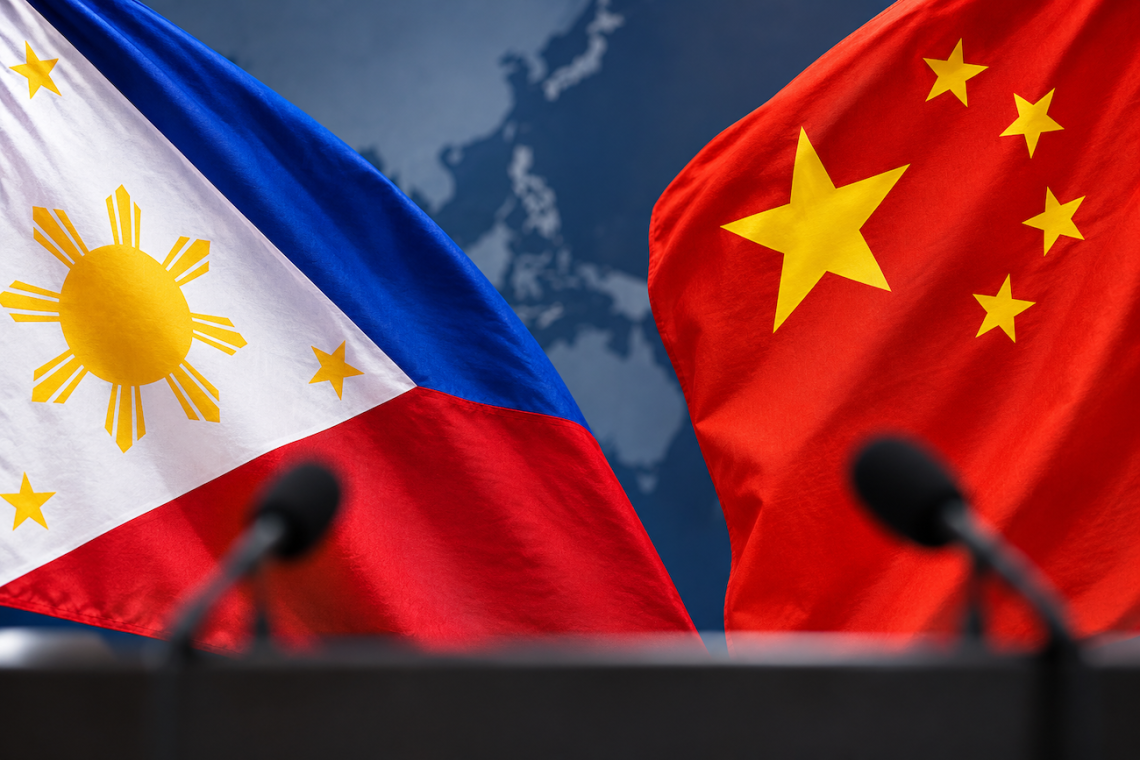
Rising tensions in the South China Sea and concerns over China’s regional assertiveness have prompted two US senators to introduce bipartisan legislation aimed at strengthening coordination and crisis planning in the Indo-Pacific. The measures focus on improving diplomatic engagement and preparing structured responses to potential flashpoints involving Beijing…reports Asian Lite News
Amid escalating geopolitical tensions in the Indo-Pacific, two bipartisan US senators have introduced legislation aimed at strengthening diplomatic coordination and crisis management with regional allies, as concerns grow over China’s assertive posture in the South China Sea.
US Senators Tammy Duckworth and John Curtis have put forward two separate bills intended to enhance coordination between the Departments of State and War and to improve preparedness for potential security flashpoints involving the People’s Republic of China in the Indo-Pacific region. The proposals come as Washington seeks to reinforce partnerships across Asia in response to ongoing maritime and territorial disputes.
The legislative push coincided with Duckworth’s visit to the Philippines and Singapore, where she met regional partners and participated in high-level security discussions aimed at reaffirming US commitment to Indo-Pacific allies.
“In the face of PRC aggression, the US needs to stay focused and use all the tools at our disposal to push back in a way that’s sustainable in the long-term and doesn’t rely solely on our military to solve every problem,” Duckworth said.
She added that the bipartisan bills would require the Departments of State and Defence “to come up with a clear plan to strengthen coordination, diplomacy and crisis management in the region — under this Administration and the next.”
Curtis also highlighted concerns about regional instability, arguing that the Indo-Pacific continued to face “threats of instability from adversaries like China” and calling for a “proactive posture” to safeguard US interests and those of its allies.
According to the senators, the first proposal, titled the South China Sea Strategy Act, would instruct the State Department to develop a formal diplomatic engagement strategy focused on the South China Sea. It would also designate lead responsibility for coordinating US engagement with allies and regional partners, aiming to streamline diplomatic efforts in an increasingly complex security environment.
The bill also seeks to strengthen defence capabilities, maritime law enforcement capacity and resilience against “foreign malign influence”. It would further establish mechanisms for interagency and international coordination in the event of regional crises that fall short of open conflict.
The second measure, called the Strategy for Crisis Management Act, would require the Department of War to develop detailed “crisis playbooks” for potential flashpoints in the South China Sea. These documents would outline sequenced response options, trigger indicators, planning scenarios, risk analysis, possible off-ramps, and coordination frameworks involving foreign partners as well as US departments including State, Commerce and Treasury.
The senators said improved preparation was essential given the potential scale of disruption in the region. They warned that a flare-up involving disputed islands west of the Philippines could place more than 750,000 Americans living in the country at risk and disrupt up to one-third of global maritime trade, including shipments of oil, gas, electronics and agricultural goods.
The South China Sea remains one of the world’s most strategically sensitive waterways. China’s expansive territorial claims overlap with those of several Southeast Asian nations, including the Philippines and Vietnam, contributing to recurring tensions and periodic confrontations at sea.
US lawmakers have increasingly focused on building long-term deterrence strategies in the Indo-Pacific, combining diplomatic engagement with military preparedness and economic coordination. The latest bipartisan effort reflects growing political consensus in Washington over the need to respond to shifting power dynamics in the region while avoiding direct escalation.