US lawmakers warn Chinese money laundering networks are helping Mexican cartels move billions from deadly fentanyl sales…reports Asian Lite News Desk
Chinese-linked money laundering networks have become crucial financial partners for Mexican drug cartels, helping move billions of dollars in illicit profits around the world and undermining efforts to tackle the fentanyl crisis, US lawmakers and expert witnesses have warned.
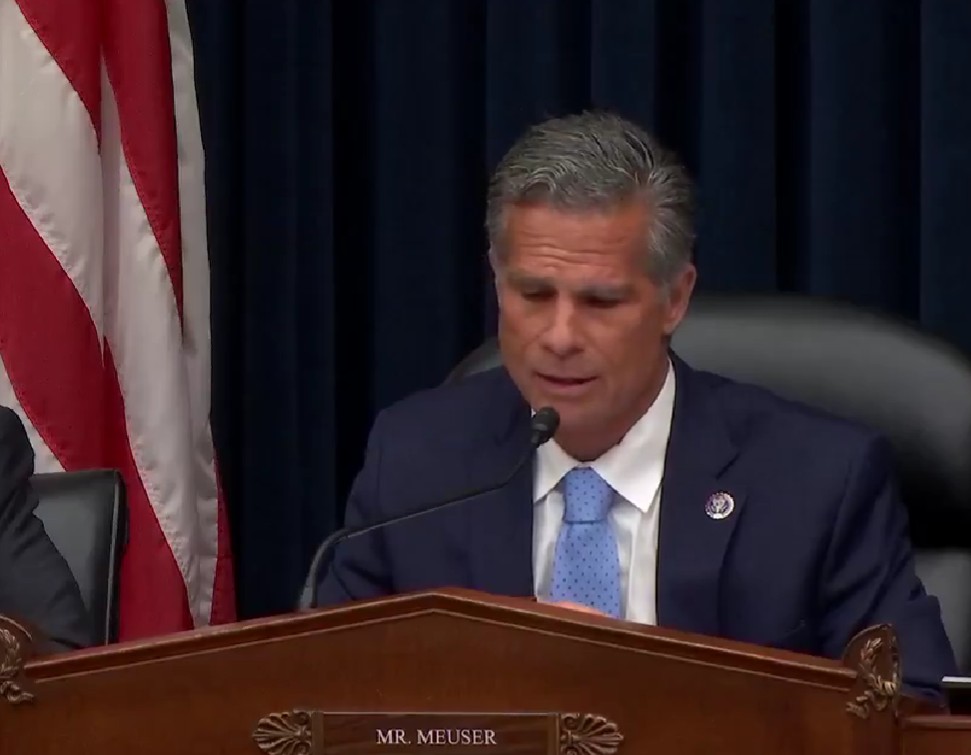
The claims emerged during a hearing of the House Financial Services Subcommittee on Oversight and Investigations, where politicians and specialists examined how Chinese money laundering networks, known as CMLNs, are allegedly exploiting weaknesses in the American financial system while continually adapting their methods to avoid detection.
Subcommittee chairman Dan Meuser said the networks play a central role in handling profits generated by fentanyl sales across the United States.
“What’s happening is that from China, the so-called precursors of fentanyl are being shipped to cartels. Cartels are developing fentanyl, shipping it to the US, and making the sales take place,” Meuser said.
He outlined what he described as a sophisticated international financial cycle designed to disguise the origins of drug money and move it across borders.
“Within the US, the various players and actors there, both for the cartels and for some Chinese foreign nationals that are here, are laundering the money, taking the US dollars they receive and converting them into pesos, for the most part, shipping those pesos back to Mexico, where Mexico then converts them again from pesos to Chinese currency, which goes back to China,” he said.
Lawmakers heard evidence suggesting that Chinese money laundering organisations have developed a wide range of methods to conceal illicit proceeds, making them increasingly difficult for authorities to track.
Liana Rosen, a specialist in international sanctions and financial crimes at the Congressional Research Service, said criminal networks use multiple channels to move and disguise funds.
“Yes, all of the above have been involved in Chinese money laundering networks,” Rosen said when asked whether cash-intensive businesses, real estate and money service businesses were being exploited.
“What’s really interesting about these Chinese money laundering networks is the variety of ways in which they launder these illicit funds,” she said, adding that they “continue to adapt and evolve to avoid law enforcement detection.”
Republican Congressman Zach Nunn argued that the threat posed by the networks stretches well beyond drug trafficking and has wider implications for national security and organised crime.
“Chinese money laundering networks have become the bankers’ cartel for poisoning our communities, including over 40,000 shell companies that are operating right here in the United States today,” he said.
“Every dollar that is laundered buys more fentanyl, more guns, more product, and it’s moving directly into our country,” Nunn added.
He also alleged that the same financial channels are being used by a range of international criminal actors.
“The CCP bank networks don’t just bank the cartels; they launder money for North Korean hackers, for what’s happening in Iran, for terrorism, and certainly for Russian crime rings.”
Witnesses appearing before the committee urged the US government to adopt a broader and more coordinated response to the challenge.
Retired Treasury special agent John Cassara said Chinese money laundering groups had become increasingly involved in handling cartel profits over recent years.
“Over the past five years, Chinese money laundering rings have been increasingly moving the drug proceeds of the Mexican cartels,” he said.
“This pent-up demand for dollars from China and the cartels’ need to unload US dollar proceeds creates this unholy alliance between Chinese money launderers and the Mexican cartels,” Cassara added.
He called for “a comprehensive strategy to go after Chinese transnational crime” and proposed regional task forces bringing together federal, state and local authorities.
Leland Lazarus, founder and chief executive officer of Lazarus Consulting, also pressed for closer cooperation between government agencies, financial institutions and international partners. He argued that policymakers should strengthen transparency measures, expand enforcement tools and improve efforts to identify and dismantle criminal financial networks.
Fentanyl remains a major source of tension in US-China relations. Washington has repeatedly accused Chinese suppliers of providing precursor chemicals used by Mexican cartels to manufacture the powerful synthetic opioid. Beijing has rejected claims that it bears responsibility for America’s drug crisis and has instead called for greater cooperation between the two countries rather than the exchange of blame.