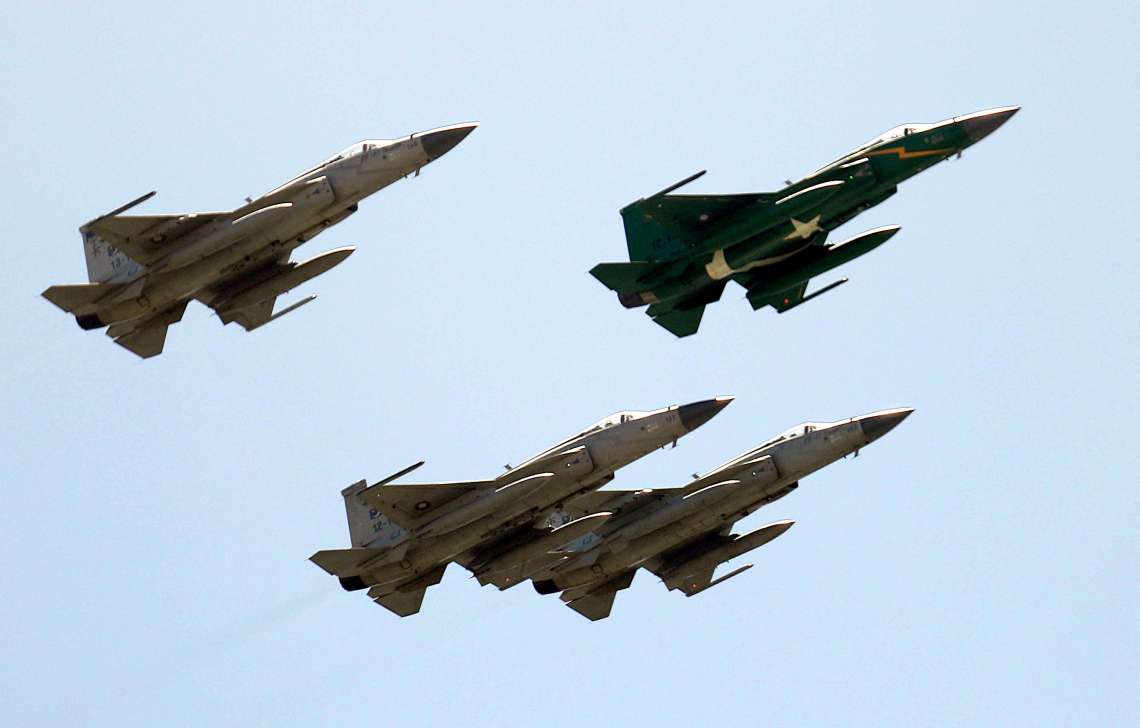
Pakistan’s JF-17 fighter jet grabs headlines as a global export hit, but production limits, absent contracts and geopolitical realities raise questions over how much of the hype is real.
Pakistan has launched a high-decibel global publicity campaign to project its co-developed JF-17 Thunder fighter jet as a major defence export success. Backed by enthusiastic foreign media coverage and amplified by domestic messaging, the campaign has sought to portray Islamabad as an emerging player in the international arms market. Yet behind the confident headlines, questions remain over whether interest is translating into actual contracts — or whether this is another example of narrative triumph outpacing material reality.
Over the past week, several reports have claimed that as many as 13 countries are in talks with Pakistan over procuring the JF-17, a light combat aircraft jointly manufactured by the Pakistan Aeronautical Complex and China’s Chengdu Aircraft Corporation. The jet has been aggressively marketed as “combat-tested,” with Pakistani officials pointing to its alleged performance during the May aerial confrontation with India as proof of its effectiveness.
Countries named in the reports include Bangladesh, Saudi Arabia, Indonesia, Morocco, Ethiopia, Sudan, Nigeria, Iraq and factions in Libya. However, none of these nations has publicly confirmed negotiations, let alone signed a procurement contract — raising doubts about how solid the reported interest really is.

Interest without ink
Much of the recent coverage relies on carefully worded phrases such as “engaged in discussions” or “expressed interest,” avoiding any confirmation of binding agreements. Defence analysts note that such language is common in arms marketing, where exploratory talks are often portrayed as imminent deals to build momentum and political pressure.
Some foreign commentary has gone further, claiming Pakistan is emerging as a “mid-tier defence provider” offering affordable platforms to countries unable or unwilling to buy expensive Western systems. But while the JF-17 is undeniably cheaper than many Western fighters, affordability alone does not guarantee sales, especially when long-term maintenance, upgrades and geopolitical alignments are taken into account.
The enthusiasm has spilled into Pakistan’s political leadership. Defence Minister Khawaja Asif went as far as suggesting that fighter jet exports could rescue the country from dependence on IMF bailouts. The arithmetic, however, tells a different story.

The maths problem
Each JF-17 is estimated to cost between $25 million and $30 million, while Pakistan’s outstanding IMF credit alone stands at $7.4 billion. To cover that amount through exports, Pakistan would need to sell nearly 250 aircraft, far beyond its current production capacity of around 20 jets per year, most of which are required for domestic use.
Production constraints are compounded by the jet’s multinational supply chain. While Pakistan manufactures the front fuselage and tail, China produces the middle and rear sections. The aircraft uses a Russian engine, British ejection seats and Chinese avionics, making rapid scale-up dependent on foreign suppliers — a significant limitation if multiple export orders were to materialise at once.
Even Pakistan’s own officials have quietly acknowledged the uncertainty. Defence Production Minister Raza Hayat Harraj admitted that talks could collapse due to “international pressures,” a diplomatic admission that geopolitics, sanctions and supplier approvals could easily derail prospective deals.

Narrative timing and regional signalling
The JF-17 export blitz has also arrived at a politically useful moment. In India, debates continue over the procurement of 114 Rafale fighters and the pace of indigenous fighter programmes. At the same time, India is positioning itself as a growing defence exporter, having supplied military equipment to nearly 80 countries in 2024–25, with domestic production hitting record levels.
Against this backdrop, Pakistan’s messaging appears as much about strategic signalling as about sales. While the JF-17 remains a capable, cost-effective aircraft for certain markets, its transformation into a global export sensation remains unproven.
For now, the story of Pakistan’s fighter jet exports is rich in sound, fury and ambition — but still light on signatures, deliveries and confirmed contracts.