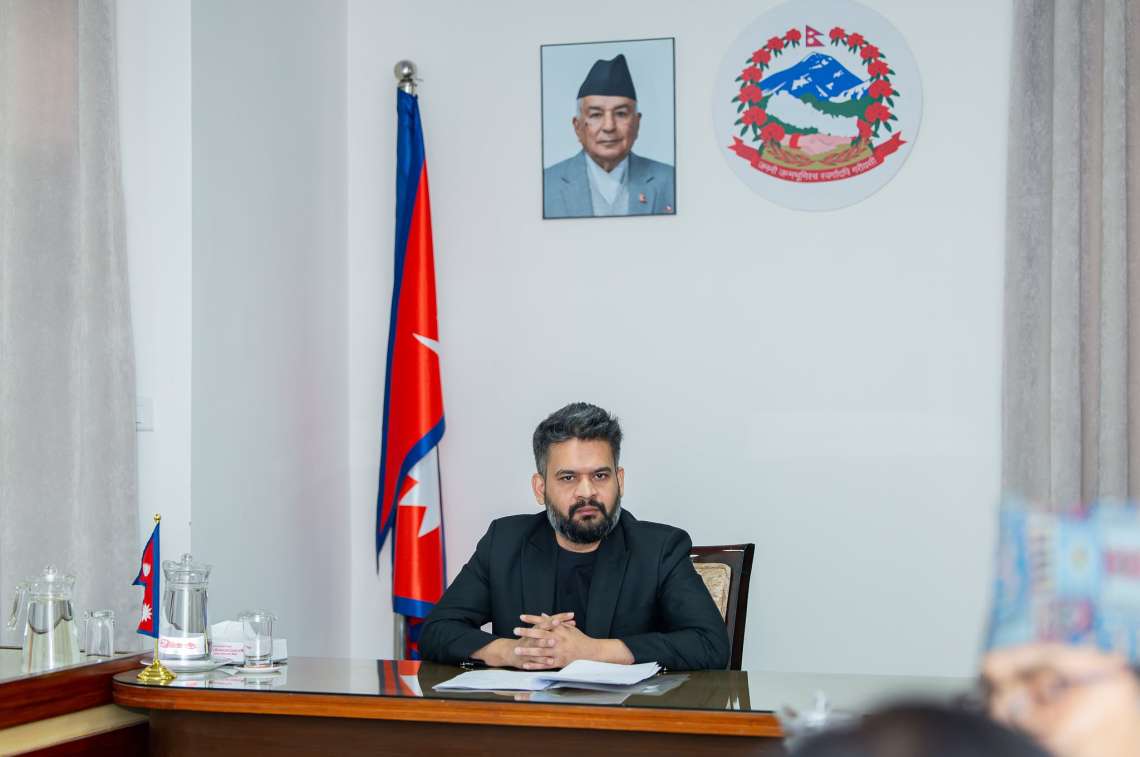
Nepal Prime Minister Balen Shah has clarified that Kathmandu is not seeking British mediation in its long running border dispute with India. …reports Asian Lite News Desk
Nepal Prime Minister Balen Shah has clarified that his government is not seeking British mediation in the longstanding border dispute with India, following controversy over remarks he made last month that appeared to suggest a role for the United Kingdom in the matter.
Addressing the inaugural session of the General Convention of the Rastriya Swatantra Party (RSP) in Chitwan on Sunday, Shah said his earlier comments had been misunderstood. He stressed that Nepal remains committed to resolving border issues through direct talks with neighbouring countries and not through third party involvement.
“We have evidence regarding Kalapani and Lipulekh. What I meant was that if it is necessary to present records from the period when the British ruled the region, we are prepared to do so. We are not seeking British mediation,” Shah said.
The Prime Minister added that Nepal possessed sufficient historical evidence to support its claims and would pursue a solution through diplomatic engagement.
“We will settle these matters ourselves through discussions with our neighbours. We have the evidence,” he said, adding that there should be no doubt about his commitment to Nepal’s national interests.
The clarification follows remarks Shah made on May 31 during his first appearance before lawmakers in the House of Representatives. At the time, he said Nepal had engaged not only with India and China but had also discussed the issue with the British government because historical records dating back to the colonial era were available in Britain.
His comments sparked criticism from opposition parties, foreign policy experts and border analysts, who questioned the suggestion of involving a third country in a bilateral dispute.
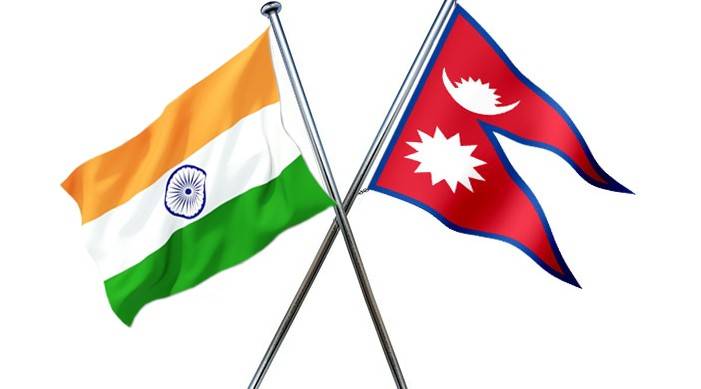
The border issue remains one of the most sensitive matters in Nepal India relations. The two countries have competing claims over the areas of Limpiyadhura, Lipulekh and Kalapani. While the territories are currently administered by India, Nepal maintains that they form part of its sovereign territory.
India responded firmly to Shah’s earlier remarks, reiterating that border matters between the two neighbours must be resolved through existing bilateral mechanisms. External Affairs Ministry spokesperson Randhir Jaiswal said in early June that no third party had any role in issues between India and Nepal and that both countries were working through established frameworks to address outstanding boundary questions.
The controversy also coincided with a visit to India by RSP President Rabi Lamichhane, who travelled at the invitation of the Bharatiya Janata Party.