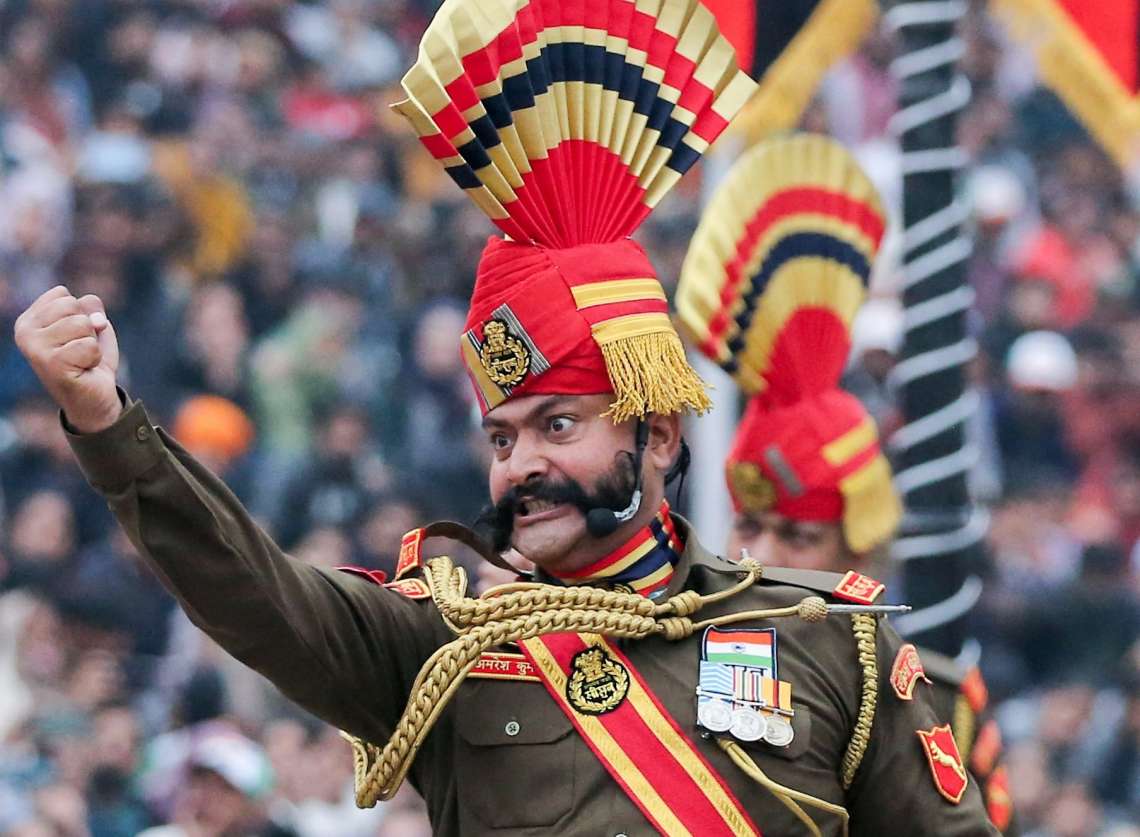
India’s military expenditure rose to $92.1 billion in 2025, reinforcing its position as the world’s fifth-largest defence spender amid a shifting global security landscape. A new SIPRI report also highlighted the continued modernisation of India’s armed forces and a modest expansion of its nuclear arsenal…reports Asian Lite news Desk
India’s military expenditure climbed to $92.1 billion in 2025, an increase of 8.9 per cent from the previous year, according to the latest SIPRI Yearbook 2026 released by the Stockholm International Peace Research Institute. The rise keeps India in fifth place among the world’s biggest military spenders, behind only the United States, China, Russia and Germany.
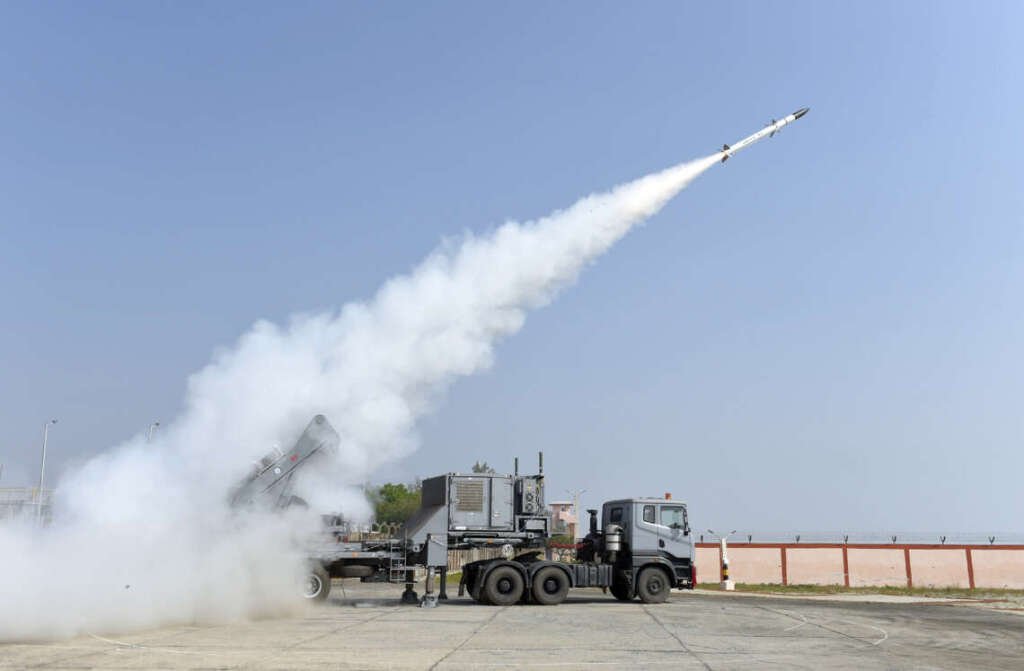
The report said India’s growing defence spending reflects its ongoing military modernisation amid heightened regional and global security challenges. SIPRI noted that New Delhi’s modernisation programme is increasingly focused on developing long-range weapons capable of reaching targets across China, while continuing to address its long-standing security rivalry with Pakistan.
India also remained one of the world’s largest buyers of military equipment. SIPRI identified the country as the second-largest importer of major arms during the 2021-25 period, accounting for 8.2 per cent of global arms imports. Among 162 countries receiving major arms transfers during that period, India ranked second only to Ukraine. Saudi Arabia, Qatar and Pakistan completed the list of the five largest recipients, which together accounted for 35 per cent of total global arms imports.
The report comes amid what SIPRI described as an increasingly unstable international security environment. It noted that the number of interstate armed conflicts doubled, from 3 in 2024 to 6 in 2025. The conflicts involved at least 13 countries and included confrontations between India and Pakistan, Iran and Israel, and the United States and Russia against North Korea, as well as disputes involving Afghanistan and Pakistan, Cambodia and Thailand, and Congo and Rwanda.
SIPRI described Operation Sindoor in May 2025 as “an unusually severe military crisis” between India and Pakistan. According to the report, India struck Pakistani air and missile bases that were likely to have nuclear-related roles, while both sides took measures to prevent further escalation. The institute also said India and Pakistan integrated cyber operations into active military conflict “for the first time” during the crisis, highlighting evolving forms of deterrence and warfare between the two neighbours.
Alongside its conventional military capabilities, India is believed to have slightly expanded its nuclear arsenal. SIPRI estimates that India possessed approximately 190 nuclear warheads by early 2026. The report said India continued to develop new nuclear delivery systems during 2025 as part of its broader strategic modernisation programme.
Globally, SIPRI warned that all nine nuclear-armed states, the United States, Russia, the United Kingdom, France, China, India, Pakistan, North Korea and Israel, are increasingly relying on nuclear weapons as instruments of national power. The institute said this trend marks a reversal of decades of efforts aimed at reducing the role and number of nuclear weapons.
At the beginning of 2026, the nine countries together possessed an estimated 12,187 nuclear weapons. Of those, around 9,745 were held in military stockpiles for potential use, while approximately 4,012 warheads were deployed with operational forces. Just over half of the deployed stockpile was believed to be maintained on high operational alert aboard ballistic missiles.
The report noted that the overall number of nuclear warheads worldwide continues to decline, largely because the United States and Russia are dismantling retired weapons. However, SIPRI cautioned that the pace of dismantlement appears to be slowing and could soon be overtaken by the deployment of new warheads entering global stockpiles.
SIPRI also highlighted growing investment in submarine-based nuclear delivery systems, particularly among nuclear-armed states in the Indo-Pacific region. India was among the countries identified as pursuing such capabilities as part of broader efforts to strengthen strategic deterrence.
In his introduction to the report, SIPRI Director Karim Haggag said the past decade had fundamentally altered the global strategic environment. He pointed to the return of large-scale interstate warfare involving technologically advanced states and what he described as the erosion of United States alliance frameworks. The report added that strategic competition between China and the United States continued to shape the security landscape across Asia and Oceania during 2025.
Against this backdrop, India’s rising military expenditure underscores its determination to enhance defence preparedness and maintain its position as a major military power in an increasingly contested regional and global environment.