India tells United Nations it will actively support global counter-terrorism strategy, citing decades of cross-border attacks and calling for stronger cooperation against evolving extremist threats.
India has reiterated its commitment to strengthening the global fight against terrorism at the United Nations, emphasising that the international community must work collectively to confront a threat that continues to evolve across borders and technologies.
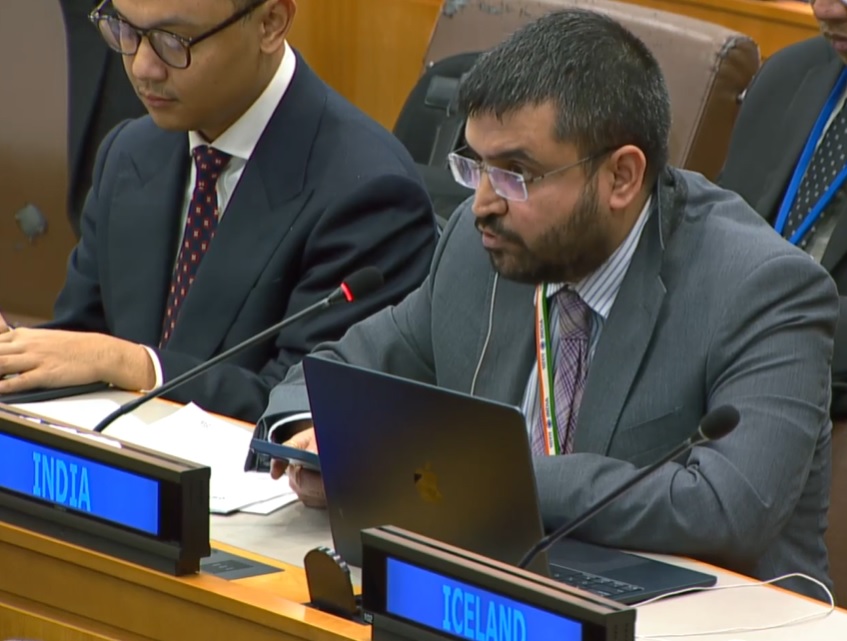
Speaking at the annual ambassadorial-level briefing organised by the United Nations Office of Counter-Terrorism, Raghoo Puri, First Secretary at India’s Permanent Mission to the UN, said New Delhi would actively support the global framework designed to coordinate international action against terrorism.
Addressing diplomats and UN officials, Puri stressed the importance of the United Nations Global Counter-Terrorism Strategy as the central mechanism for multilateral cooperation in combating extremist violence. He said India was adding its voice to calls for strengthening the strategy as a key pillar in the global counter-terrorism architecture.
“Terrorism is an existential threat to international peace and security,” Puri said during the meeting. He noted that the menace of terrorism transcends borders, nationalities and race, making it imperative for countries to cooperate closely through international institutions and agreements.
The Global Counter-Terrorism Strategy was adopted unanimously by the United Nations General Assembly in 2006. The framework aims to enhance international coordination on preventing terrorism, addressing conditions that foster radicalisation, strengthening state capacity to combat terrorist networks and ensuring respect for human rights while implementing counter-terrorism measures.
As the strategy approaches its 20th year, it is scheduled for its ninth review at the UN in July. India has indicated that it intends to play an active role in the consultations and negotiations leading up to the review.
Puri said India would remain “steadfast and engaged” throughout the process and assured member states of New Delhi’s full cooperation during discussions on the next phase of the strategy. He emphasised that India’s contributions would be informed by its own experience in confronting terrorism over several decades.
Referring to India’s security challenges, Puri said the country had faced cross-border terrorism for more than three decades and understood the human and economic costs of extremist violence. He highlighted the devastating impact such attacks have on victims, communities and national stability.
As an example, Puri cited the attack in Pahalgam in Jammu and Kashmir last year, which resulted in the deaths of 26 tourists. According to India, the attack was carried out by The Resistance Front, described by New Delhi as a proxy of the Pakistan-based group Lashkar-e-Taiba, which is listed as a terrorist organisation by the United Nations.
Puri also called for stronger international coordination against major extremist networks including Islamic State and Al-Qaeda, as well as their affiliated groups and regional proxies.
He noted that India had previously contributed to strengthening the UN’s counter-terrorism mechanisms during its tenure as a non-permanent member of the United Nations Security Council in 2021–22. During that period, India chaired the Security Council’s Counter-Terrorism Committee and worked to highlight the growing risks posed by emerging technologies.
One of the key outcomes of that initiative was the adoption of the Delhi Declaration, which focuses on combating the misuse of technologies such as drones, online platforms and digital financial systems by terrorist organisations.
The UN briefing also underscored growing concerns about the changing nature of global terrorism. Acting Under-Secretary-General for Counter-Terrorism Alexandre Zouev warned that extremist groups were rapidly adapting to counter-terrorism measures by adopting new technologies and operational tactics.
Zouev said terrorists were increasingly using tools such as artificial intelligence, drones, financial technologies and even commercial satellite systems to expand their capabilities. These technological developments, he noted, have made the global threat landscape more complex and harder for governments to monitor.
He also warned that terrorist financing networks and online radicalisation channels are becoming more sophisticated, making international cooperation and information-sharing more important than ever.
India’s intervention at the UN highlighted the country’s continuing emphasis on multilateral cooperation in addressing terrorism while drawing attention to its own experience as a target of cross-border attacks.
As the UN prepares for the next review of the Global Counter-Terrorism Strategy, diplomats say discussions are likely to focus on strengthening coordination, addressing technological threats and ensuring that counter-terrorism frameworks keep pace with rapidly evolving security challenges.