Pakistan’s exports to Afghanistan halve as border closures and deadly airstrikes deepen economic losses, fuel regional tensions and trigger calls for investigations and diplomatic intervention…reports Asian Lite News
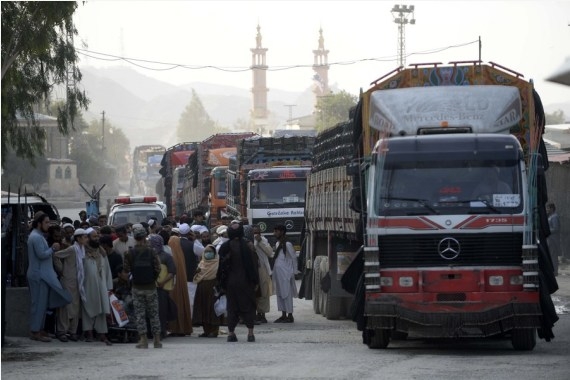
Trade between Pakistan and Afghanistan has suffered a dramatic downturn in the first seven months of the current fiscal year, as prolonged border closures and escalating military tensions disrupt economic ties and deepen regional instability.
Official data from the State Bank of Pakistan shows that Pakistan’s exports to Afghanistan fell by more than half between July and January compared with the same period last year. Export values plunged from over 550 million US dollars to nearly 230 million dollars, according to figures cited by Afghan media outlet Khaama Press. The sharp contraction reflects months of halted trade flows and deteriorating diplomatic engagement between the two neighbours.
The downturn follows the closure of key border crossings since October last year, after clashes erupted between Pakistani forces and Taliban fighters. The hostilities reportedly lasted eight days and triggered the suspension of cross-border trade. Despite multiple rounds of talks between officials from Kabul and Islamabad aimed at easing tensions, the crossings have yet to reopen, leaving traders and transporters in limbo.
The economic fallout has been particularly severe in Pakistan’s border province of Khyber Pakhtunkhwa, which depends heavily on transit trade with Afghanistan. Local media reports indicate the province has experienced a 53.02 per cent drop in revenue during the current fiscal year due to the prolonged shutdown. Collections under the Infrastructure Development Cess reportedly declined from 7.42 billion Pakistani rupees to 3.48 billion rupees during the July–January period compared with the corresponding months last year, according to Pakistan’s leading daily Dawn.
Khyber Pakhtunkhwa’s financial adviser, Muzammil Aslam, has written to Pakistan’s Commerce Minister Jam Kamal urging urgent federal intervention. In his letter, Aslam warned that the sustained border disruption is inflicting serious economic and employment consequences on the province. While an initial setback in cess collection was attributed to a court stay order that was resolved in November, subsequent recovery efforts failed as cross-border trade remained suspended.
Exporters and traders on both sides have been hit hard. Many consignments and payments are reportedly stuck at the border, while businesses struggle to meet statutory obligations amid frozen trade channels. Afghan authorities have urged traders and pharmaceutical importers to diversify supply routes to prevent shortages in domestic markets. Taliban officials have stressed reducing reliance on a single transit corridor and encouraged regional partnerships to maintain stable supplies of essential goods.
The economic strain comes against the backdrop of renewed security tensions. Pakistan has faced international criticism following airstrikes in Afghanistan’s Nangarhar and Paktika provinces earlier this month. The United Nations Assistance Mission in Afghanistan, or United Nations Assistance Mission in Afghanistan, reported that at least 13 people, including women and children, were killed and seven others injured in strikes carried out between late night on February 21 and early morning on February 22. A school, a mosque and residential homes were among the sites reportedly hit.
Human rights watchdog Amnesty International called for a thorough, independent and impartial investigation into reports of civilian casualties. The organisation expressed deep concern over harm to civilians and urged all parties to adhere to international humanitarian law. It noted that this was not the first instance in which civilians had borne the brunt of cross-border hostilities.
UNAMA condemned the strikes and demanded transparency and accountability. Afghan authorities accused Pakistan of violating national sovereignty and breaching international law, warning that an appropriate response would follow at a suitable time.
The convergence of trade paralysis and military confrontation is compounding economic fragility on both sides of the border. Afghanistan remains heavily reliant on imports routed through Pakistan, while Pakistani exporters depend on Afghan markets for agricultural goods, pharmaceuticals and manufactured products. Prolonged disruption threatens to entrench shortages, raise prices and further strain already vulnerable communities.
With diplomatic channels yet to yield a breakthrough, analysts warn that the cost of continued closure will extend beyond fiscal losses. Trade corridors that once functioned as economic lifelines now symbolise deepening mistrust. Unless political dialogue resumes in earnest and border crossings reopen, both economies risk enduring longer-term damage, with regional stability hanging in the balance.