Punjab government halts plans to demolish Lahore’s century old Ewing Hall after criticism from Christian leaders, rights groups and heritage activists….reports Asian Lite News Desk
Mounting criticism from Christian leaders, rights groups, heritage conservationists and alumni has prompted Pakistan’s Punjab government to halt plans to demolish a historic university hostel in Lahore, placing renewed attention on minority rights, heritage preservation and long standing disputes over church-owned educational properties.
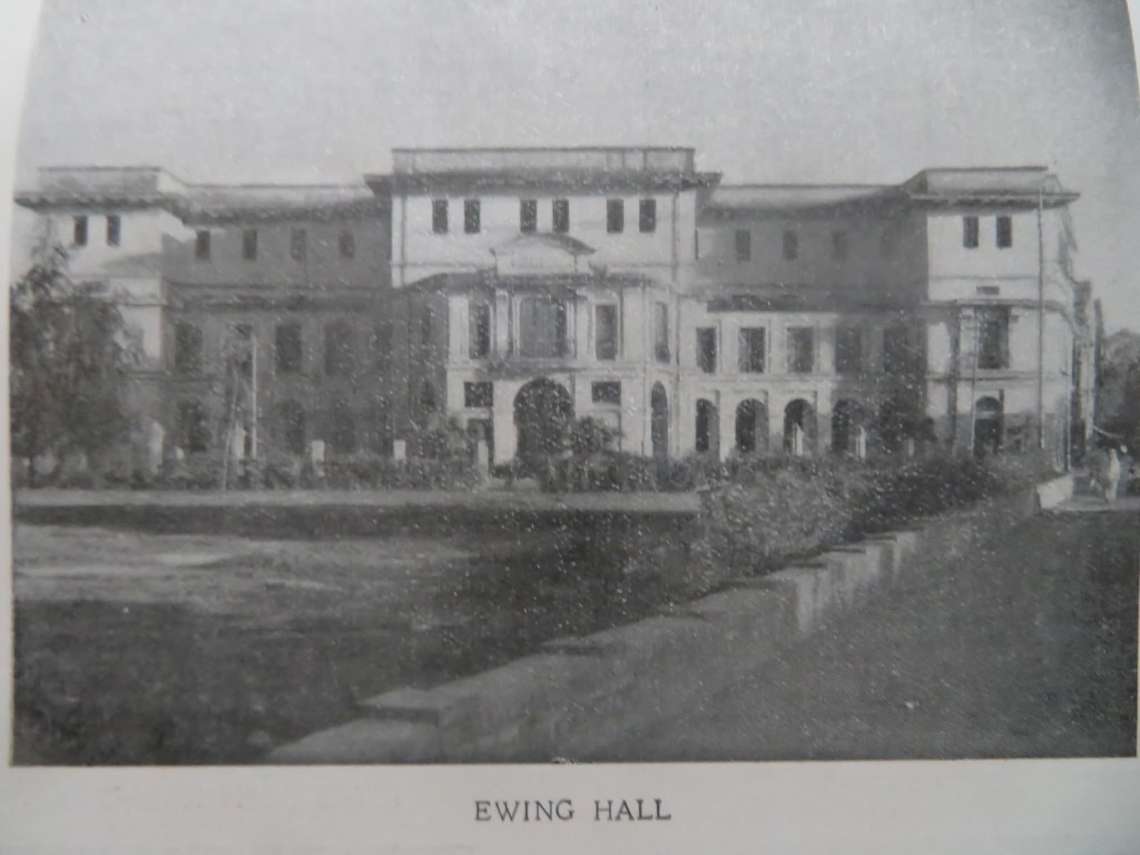
The controversy centres on Ewing Hall, a century old building located in Lahore’s historic Anarkali district. Constructed in 1916 and named after James Caruthers Rhea Ewing, a former principal who played a pivotal role in the development of Forman Christian College University (FCCU), the building has served for decades as a student hostel for one of Pakistan’s oldest and most respected educational institutions.
Founded in 1864 by the Presbyterian Church USA, FCCU is regarded as one of the country’s leading centres of higher education and has produced generations of graduates from across Pakistan.
The dispute escalated earlier this month when FCCU accused the Punjab provincial government of taking control of the property without prior consultation. In a statement posted on social media on June 11, FCCU Rector Jonathan Addleton said provincial authorities had forcibly assumed possession of Ewing Hall and ordered the university to remove its belongings from the premises.
“Very sadly, I must report that the provincial government today forcibly requisitioned Forman’s historic Ewing Hall situated in Anarkali near Neela Gumbat and the Old City, evicting FCCU security staff and residents and verbally announcing that FCCU has ’24 hours’ to remove all movable items,” Addleton said.

@QamarRev
According to the rector, the directive covered furniture, generators, historical artefacts, photographs and other university property, with officials allegedly stating that any remaining items would become government property after the deadline expired.
Addleton questioned the rationale behind the move, arguing that recent assessments had found the building to be structurally sound. He said FCCU had previously vacated the hostel out of caution while awaiting engineering evaluations but had already planned to restore and reopen the facility for student accommodation.
He noted that an engineering report commissioned by the university in March 2026 concluded that the structure remained safe and suitable for future use following renovation work.
The government’s action triggered strong reactions from members of Pakistan’s Christian community and advocates for minority rights, many of whom viewed the move as an attack on a historic institution closely linked to the country’s Christian heritage.
Among the most vocal critics was Reverend Reuben Qamar, Moderator of the Presbyterian Church of Pakistan and pastor of the FCCU Presbyterian Church. He condemned what he described as the government’s “hostile takeover” of the building and emphasised Ewing Hall’s historic significance to generations of students.
“I strongly condemn the forcible takeover of Ewing Hall by the Punjab government, a historic hostel and an integral part of Forman Christian College since 1916,” Qamar wrote on social media.
He highlighted the hostel’s role in supporting students for more than a century, saying it had helped nurture academic excellence and contributed significantly to Pakistan’s educational landscape.
The dispute quickly gained wider attention, drawing concerns from heritage conservationists who warned against the loss of a building regarded as an important part of Lahore’s architectural and educational history. Alumni and civil society groups also joined calls for the preservation of the structure, urging authorities to protect rather than demolish the landmark.
Faced with growing public pressure, the Lahore Heritage Areas Revival Board (LHAR) moved to clarify the government’s intentions. In a statement issued on June 14, the board said Ewing Hall would not be demolished following the government’s repossession of the property.

Instead, authorities pledged that the building would be preserved and restored as part of efforts to protect Lahore’s historical heritage.
The announcement was widely seen as a significant retreat from the earlier position and a response to the backlash generated by the proposed demolition.
The controversy has also revived broader debates over the status of educational institutions and properties originally established by Christian organisations in Pakistan. Many such institutions were nationalised during the 1970s under government policies that transferred control of private educational establishments to the state.
For church leaders and minority rights advocates, the Ewing Hall dispute has become emblematic of wider concerns surrounding property rights, institutional autonomy and the preservation of minority heritage sites.
While the Punjab government’s assurance that the building will be restored has eased immediate fears of demolition, questions remain over ownership, management and the future role of FCCU in the site’s administration.
The dispute is expected to continue through legal and administrative channels, even as campaigners welcome the decision to preserve one of Lahore’s most recognisable educational landmarks.