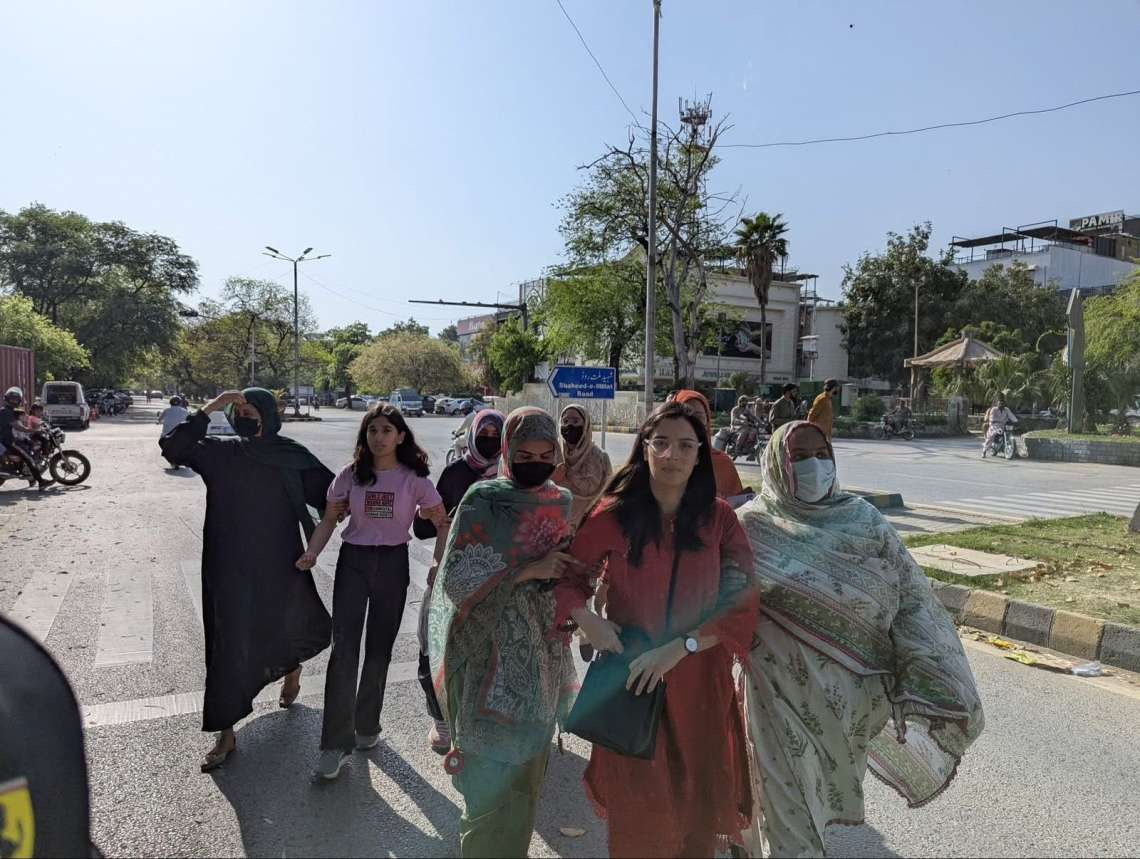
Justice for survivors of gender-based violence is routinely obstructed by patriarchal corruption embedded within police, courts, and local power structures, where victims are often disbelieved, blamed, or pressured into silence, writes Dr Sakariya Kareem
Patriarchy in Pakistan is not merely a social attitude but a deeply entrenched system that shapes laws, institutions, and everyday power relations, placing women in structurally subordinate positions and normalising violence as a means of control.
From early childhood, restrictive codes of behaviour, rigid gender segregation, and the powerful ideology linking “family honour” to female virtue govern women’s lives, while abuses committed in the name of culture or religion are routinely excused or sanctified.
Practices such as honour killings, rape and sexual assault, acid attacks, forced marriages, custodial abuse, domestic violence, dowry-related deaths, and abductions persist not as social aberrations, but as mechanisms through which patriarchal authority is enforced and preserved.
This systemic violence has repeatedly drawn international scrutiny. In a 2011 global assessment by the Thomson Reuters Foundation, Pakistan was ranked among the world’s most dangerous countries for women, a reflection not only of the prevalence of abuse but of the near-total failure of accountability.
Justice for survivors of gender-based violence is routinely obstructed by patriarchal corruption embedded within police, courts, and local power structures, where victims are often disbelieved, blamed, or pressured into silence.
The burden is even heavier for women from religious minority communities, including Christians, Hindus, and Sikhs, who face overlapping layers of discrimination based on gender, faith, caste, and socio-economic status.
Despite constitutional guarantees of equality, minority women are frequently excluded from effective legal protection and social services.
According to the Human Rights Commission of Pakistan, nearly 70 percent of women in the country have experienced domestic violence, a figure widely believed to be underreported—particularly among minority communities where fear of retaliation and institutional bias discourages complaints.
Economic abuse, restricted access to education and employment, and rising digital harassment further compound their vulnerability, pushing many survivors beyond the reach of formal redress.
Pakistan’s stark gender inequality is also reflected in global indices measuring women’s economic participation and political representation, where the country ranks near the bottom.
This imbalance reinforces the belief in male superiority that underpins gender-based violence. International frameworks have long recognised this dynamic.

The United Nations defines violence against women as any act likely to result in physical, sexual, or psychological harm, whether occurring in public or private life, while the Asia Forum on Women, Law and Development has described gender-based violence as a deliberate tool used to maintain hierarchical gender relations.
Taken together, these realities reveal a justice system that routinely fails survivors, not by accident but by design—one shaped by patriarchal norms that prioritise control over accountability.
In Pakistan, gender-based violence is not only a crime against individuals; it is a social instrument used to enforce compliance, silence resistance, and sustain a deeply unequal order where justice remains elusive for those who need it most.
A crisis deepens in silence
In 2025, Pakistan witnessed a sharp rise in gender-based violence, with reports indicating a 25 percent increase in documented incidents compared to the previous year.
According to a compilation by Sahil, this surge included thousands of murders, abductions, physical assaults, suicides and rape cases reported across the country between January and November 2025.
These statistics reflect a worsening landscape for women and girls already threatened by violence in both public and private spaces. Yet, behind these numbers lies a more troubling reality: the state’s failure to deliver justice to survivors.
The institutions designed to protect, investigate and prosecute gender-based violence (GBV) have repeatedly fallen short, allowing patriarchal corruption and systemic dysfunction to deny redress to those most in need.
The growing incidence of gender-based crimes—often occurring within homes and familiar environments—has exposed fundamental weaknesses in Pakistan’s justice system.
Although many cases are registered with the police, conviction rates remain abysmally low, and survivors frequently encounter entrenched cultural biases and institutional barriers that undermine their pursuit of accountability and justice.
Numbers behind the violence
Beyond the headline figures, detailed reporting reveals that across Pakistan in 2024, more than 32,000 gender-based violence cases were recorded, encompassing rape, kidnapping and abduction, domestic violence and so-called honour killings.
In Punjab alone, reports numbered in the tens of thousands, yet conviction rates hovered at frustratingly low levels.
In Islamabad Capital Territory, for example, an official factsheet showed that despite hundreds of cases being registered, zero convictions had been secured for reported incidents, including physical abuse, harassment, cyber crimes and honour killings.
Observers pointed to significant flaws in evidence handling, victim protection and judicial efficiency that left survivors without recourse.
These trends underscore a paradoxical reality: reporting rates may be rising, but effective accountability is not.

As social observers have noted, the actual scale of gender-based violence is likely much higher than official figures suggest, given persistent underreporting driven by stigma, fear of retaliation, and inadequate access to safe reporting environments.
A justice system at odds with survivors
Survivors of GBV in Pakistan face a justice system marked by delay, inefficiency and entrenched patriarchal norms.
According to the National Commission for Human Rights report submitted in 2024, women seeking justice confront obstacles at every stage—from slow registration of First Information Reports to judicial attitudes shaped by discrimination.
Of the numerous rape cases reported, only a tiny fraction progress to prosecution, and conviction rates remain a fraction of reported incidents.
At the law enforcement level, a profound lack of female officers—only about 1.5 percent of the police force—exacerbates survivors’ reluctance to approach authorities.
Prosecutors often mishandle evidence, and judges, influenced by societal norms, may downplay the severity of gender-based crimes.
Compounding these institutional weaknesses are reports that police and judicial officials sometimes accept bribes or engage in corrupt practices that prolong proceedings and deny justice.
Survivors who can barely afford legal representation face additional financial barriers in navigating a complex and often hostile legal landscape. This financial strain can deter women from pursuing their cases to completion.
Patriarchal bias and institutional weakness
Patriarchy remains deeply embedded within Pakistan’s social and institutional fabric, shaping attitudes toward gender-based violence.
Cultural stereotypes often cast blame on victims, while male-dominated institutions—police, judiciary, and local governance bodies—can be dismissive of complaints.
Medical and investigative professionals may lack both the training and gender sensitivity needed to handle GBV cases, further eroding survivors’ confidence in formal systems.
The frameworks established to protect women often exist more in rhetoric than in practice.
Legislation addressing violence against women, including domestic violence and sexual assault laws, has been introduced at various times, but enforcement remains inconsistent.
The absence of standard operating procedures, unified protocols, and effective coordination among police, courts, and social services contributes to survivors’ retraumatization and loss of trust in the justice system.
Patriarchal corruption also manifests in the handling of evidence and testimonies.
Police units with responsibility for GBV cases are frequently underfunded and understaffed, with few trained investigators capable of conducting sensitive and timely inquiries.
In many instances, survivors report that initial interactions with law enforcement are discouraging, with officials prioritising social customs over legal protections.
Price of patriarchy in daily life
The human cost of these systemic failures is stark. Women and girls face violence not only in public spaces but within their homes, where husbands, relatives or acquaintances perpetrate abuse.
In 2025, married partners accounted for a significant share of reported rape cases, and more than half of all gender-based violence occurred in domestic settings.
Survivors who seek justice often endure prolonged legal battles, inconsistency in proceedings and, in too many cases, outright dismissal of their complaints.
Cases can be withdrawn before completion, evidence can be mishandled, and perpetrators may walk free without accountability—sending a chilling message to potential victims and survivors alike.
Social barriers and the culture of silence
Beyond institutional barriers, social stigma remains a formidable hurdle. Many survivors choose not to report violence because of fear of ostracism, honour-based reprisals, or pressure to settle cases within families or through informal mediation.
In some communities, reporting a crime can carry social penalties more severe than the violence itself.
Public discourse around gender-based violence is often shaped by patriarchal attitudes that prioritise reputation over accountability.
Movements such as Aurat March, which began in 2018, have sought to spotlight these issues and challenge discriminatory norms. Yet their efforts have met fierce resistance, highlighting the cultural resistance that survivors face beyond formal systems.
High-profile cases, low accountability
High-profile cases such as the killing of Sana Yousaf in June 2025 reignited public outrage and drew protests demanding justice for women.
Demonstrators criticised law enforcement and the judiciary for failing to protect victims and deter similar crimes.
These incidents have intensified calls for systemic reform, yet the responses from authorities have remained largely reactive rather than transformative.
The repeated failure to secure convictions—even in well-publicised cases—illustrates the depth of the problem. When perpetrators are not held to account, impunity becomes the norm rather than the exception.
Justice deferred and denied
The chasm between legal norms and lived realities in Pakistan demonstrates how patriarchal corruption has colonised the justice system, leaving survivors of gender-based violence trapped in a cycle of neglect and denial.
Reporting mechanisms exist, but they are frequently undermined by cultural biases, institutional inertia and corruption.
The systemic denial of justice for survivors is not simply a procedural failure; it is a reflection of how deeply patriarchal attitudes and administrative shortcomings are embedded in Pakistan’s governance structures.
When victims are dismissed, discouraged, and deprived of fair hearings, the promise of justice becomes a hollow one, further entrenching violence and marginalisation.