January 14, 2023
2 mins read

US, Japan to boost alliance amid China worries

Prime Minister Kishida informed President Biden that Japan has changed its security strategy significantly and detailed the reforms, which include significant defence budget increases and planning counterstrikes, reports Asian Lite News

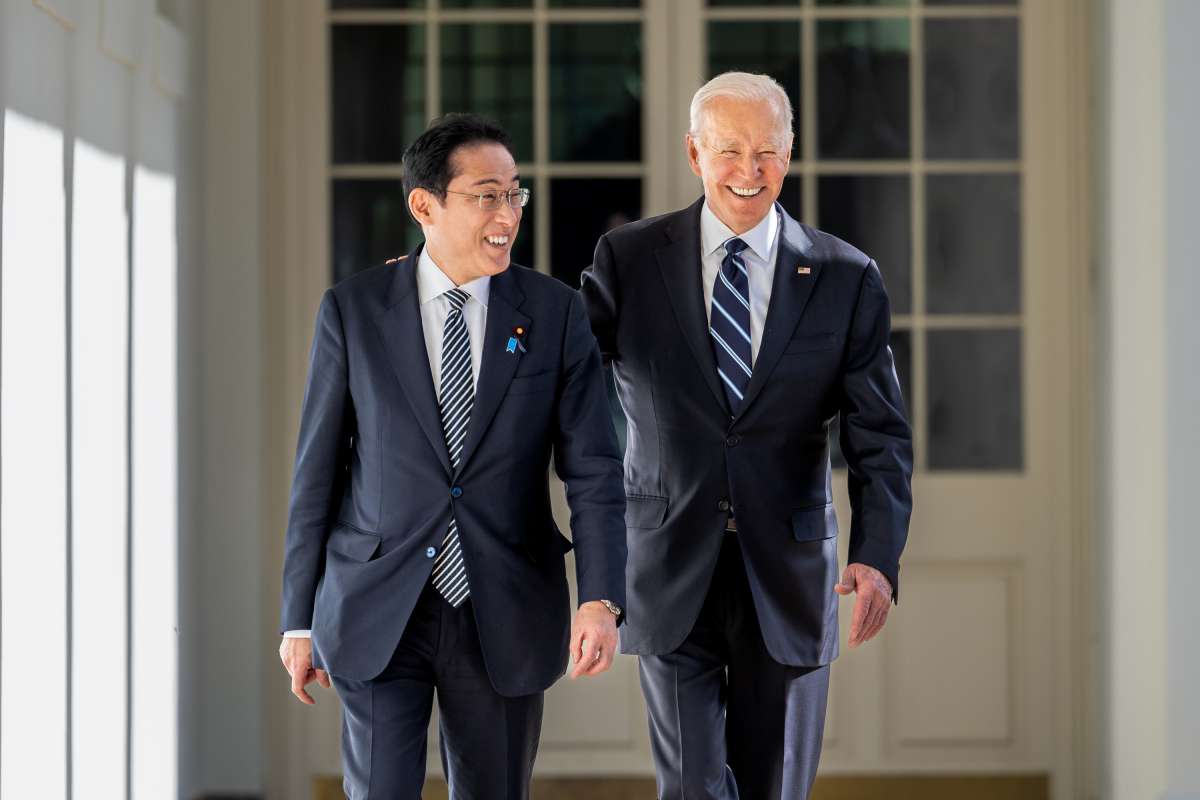
Amid China’s growing quest to take control over the Indo-Pacific, Japanese Prime Minister Fumio Kishida on Friday met US counterpart Joe Biden at the White House and agreed to strengthen the alliance between the two countries as the two sides discussed the security strategy, Japan’s NHK World reported.

During the meeting at the White House, Kishida and Biden held a two-hour-long conversation in which Kishida informed Biden that Japan has changed its security strategy significantly and detailed the reforms, which include significant defence budget increases and planning counterstrikes. In order to maintain regional peace and security, the Japanese Prime Minister said the security environment is more severe and complex than ever, as he laid emphasis on Japan’s security strategy, NHK World reported.

Taiwan Strait

President Biden and the Japanese PM also reiterated their commitment to avoid conflict across the Taiwan Strait, according to a joint statement released on Friday by the White House after a bilateral meeting between the two leaders in Washington.
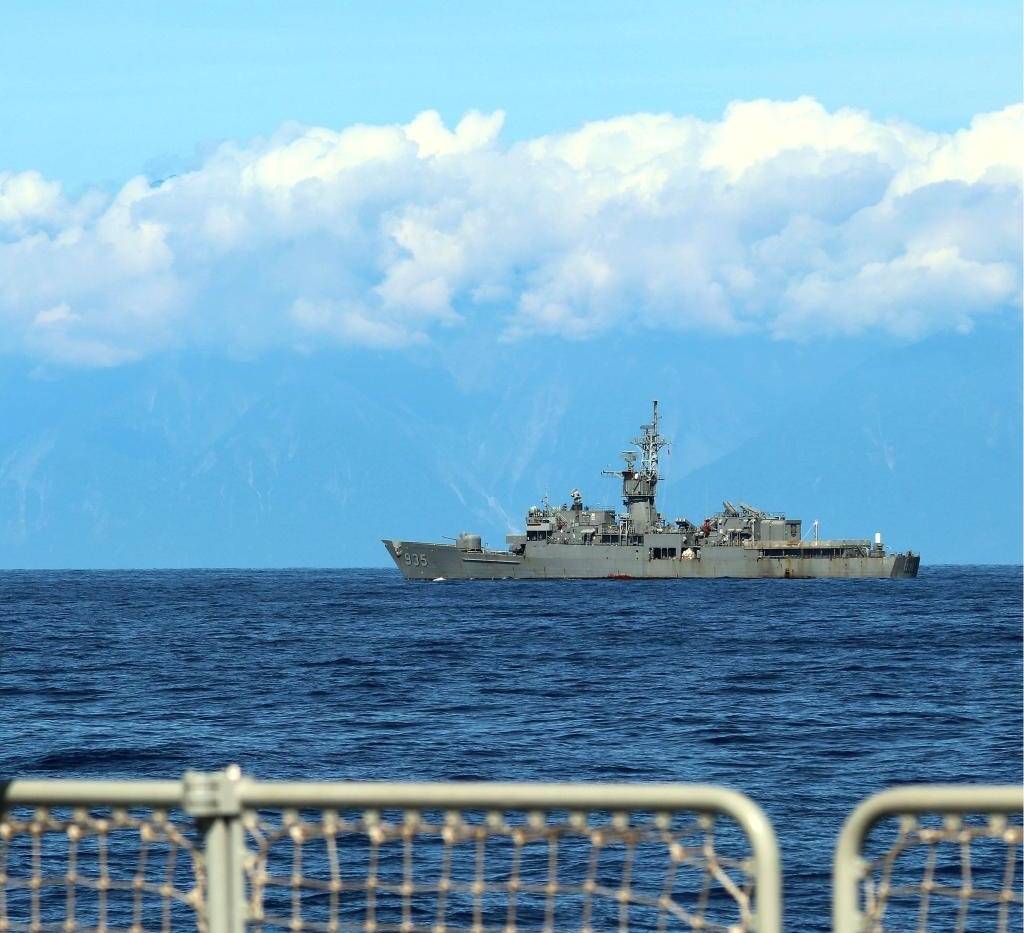
A Taiwan military vessel seen from a warship of the navy of the Eastern Theater Command during the navy’s combat exercises around Taiwan. (Photo by Lin Jian Xinhua IANS)

“We emphasize that our basic positions on Taiwan remain unchanged, and reiterate the importance of maintaining peace and stability across the Taiwan Strait as an indispensable element of security and prosperity in the international community,” the White House said in a statement posted on its website.

The situation around Taiwan escalated after former US House Speaker Nancy Pelosi visited the island in early August, angering China. In successive months, France, Japan and other western countries also sent their delegations to the island, further increasing tensions in the Taiwan Strait.

According to the White House statement, Biden also praised Japan’s new National Security Strategy, National Defense Strategy and Defense Buildup Program. “This investment will bolster security across the Indo-Pacific and beyond and modernize the US-Japan relationship for the 21st century,” the statement said.
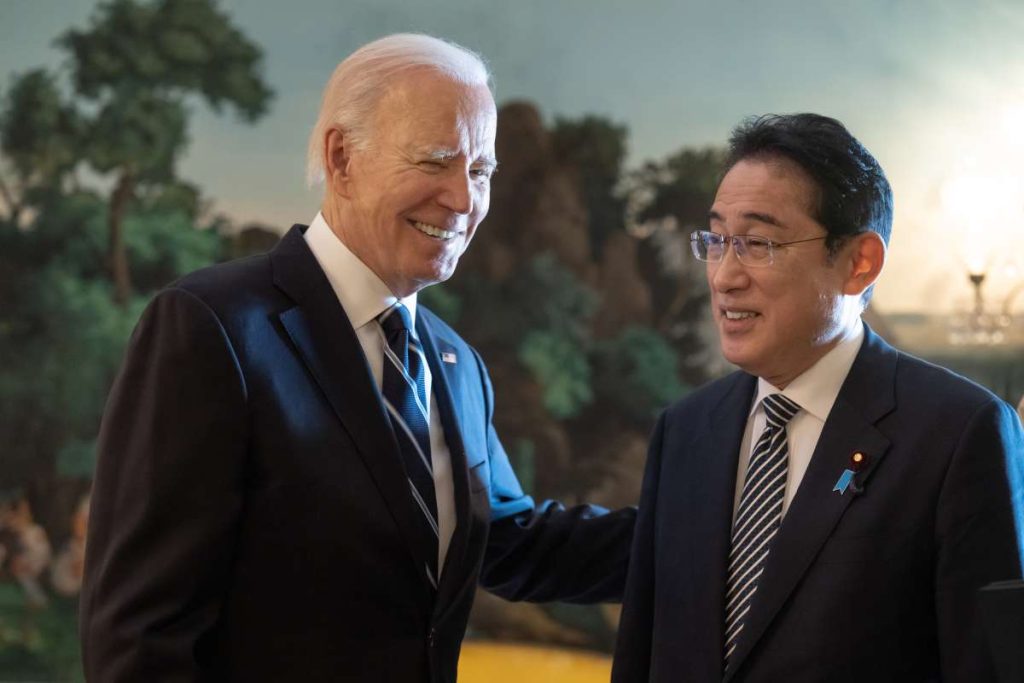
Japanese Prime Minister Fumio Kishida on Friday met US counterpart Joe Biden at the White House.

By providing adequate, transparent epidemiological and viral genomic sequence data regarding the disease’s progress, Biden and Kishida encouraged China to help public health officials throughout the world stop the spread of Covid-19 and find potential new variants.

“We also call on China to report adequate transparent epidemiological and viral genomic sequence data regarding the spread of Covid-19, to enable public health officials around the world to be prepared to reduce the spread and identify any potential new variants,” the statement read. (ANI)


ALSO READ: Japan welcomes IAF jets with water cannon salute

Newsdesk

Newsdesk

Aravind Rajeev is Deputy News Editor at Asian Lite, mostly covering the Middle East and GCC. He has over eight years of experience as a journalist, with a background in ground-level reporting, crime reporting, as well as international and regional news.

Previous Story

Crypto trading is just gambling: RBI Governor

Next Story

Pakistan, UAE hold talks on bolstering bilateral ties

Previous Story

Crypto trading is just gambling: RBI Governor

Next Story

Pakistan, UAE hold talks on bolstering bilateral ties

Latest from -Top News

Pakistan Risks Overstretching Itself in Yemen War

Pakistan’s expanding military role in Saudi Arabia amid the Yemen conflict could strain its defence resources and fragile finances…reports Asian Lite News Desk Pakistan’s military involvement in the war in Yemen may prove unsustainable because of mounting financial pressures and competing security demands, according to a new report. Islamabad’s growing military presence in Saudi Arabia risks stretching its defence resources while exposing the country to greater strategic and economic challenges. An article by Andrew Wilson in One World Outlook describes Pakistan’s involvement as a case of “fiscal and strategic overreach”, arguing that the country lacks the financial flexibility to sustain an expanded military commitment. Pakistan’s external finances depend heavily on an International Monetary Fund (IMF) programme, financial support from Gulf countries and remittances from Pakistani workers in the region. The report argues that deeper military involvement in the conflict could place additional pressure on these sources of financial stability. It also warns that deploying troops and military equipment abroad could weaken Pakistan’s capacity to address security challenges along its eastern border and deal with two domestic insurgencies. The move could also draw Islamabad into a conflict it has sought to approach cautiously. A Reuters report in May, citing Pakistani security and government sources, said Islamabad had deployed around 8,000 troops, a squadron of approximately 16 aircraft, mostly JF-17 fighter jets, two drone squadrons and a Chinese HQ-9 air-defence battery to Saudi Arabia. According to those sources, Riyadh was financing the deployment, with Pakistani personnel operating the equipment. The sources also said a confidential agreement contemplated the possibility of deploying up to 80,000 troops. Islamabad has not confirmed those figures, although it has acknowledged its military presence in Saudi Arabia, including the deployment of fighter jets at King Abdulaziz Air Base from April. The One World Outlook article argues that Saudi financial support can cover allowances and operating expenses but cannot easily replace military equipment needed elsewhere or resolve the political and strategic challenges of participating in the Yemen conflict. Pakistan’s defence budget is another concern. For the 2026-27 financial year, the federal government allocated PKR 3 trillion, or approximately $10.8 billion, to defence services. The allocation represents an 18 per cent increase from the original PKR 2.55 trillion provision and amounts to around 2.1 per cent of projected gross domestic product (GDP). Defence spending accounts for approximately 16 per cent of the federal government’s PKR 18.8 trillion expenditure. Military pensions are budgeted separately at PKR 822 billion, while debt servicing costs stand at approximately PKR 8 trillion, more than two-and-a-half times the defence allocation. The report argues that these competing financial obligations leave little room for additional military expenditure without placing further pressure on public finances. Pakistan’s reliance on IMF assistance also limits its fiscal flexibility. The country must meet the conditions attached to the programme, including a primary budget surplus target of 2 per cent of GDP and continued restraint on development spending. According to the article, these requirements make it difficult for Islamabad to finance an additional military commitment without compromising other budgetary priorities. Pakistan’s economic indicators offer limited reassurance. Economic growth for the 2025-26 financial year is estimated at between 3.6 and 3.7 per cent, while inflation reached approximately 10.3 per cent in September following an energy price shock. Foreign exchange reserves stood at around $21.5 billion at the end of September. Although this marks an improvement from the low levels recorded in 2023, the report notes that the reserves cover only a few months of imports. Financial assistance from Gulf partners remains central to Pakistan’s external stability. The article says Islamabad holds approximately $8 billion in Saudi deposits at its central bank. In July, the State Bank of Pakistan said Riyadh had extended the maturity of $5 billion in deposits to December 2028, easing the country’s immediate external financing requirements. A further $3 billion deposit was also extended in the spring. However, the article argues that these arrangements provide temporary relief rather than long-term financial independence, particularly as regional conflict threatens the stability of the Gulf economies on which Pakistan relies. The report concludes that Pakistan faces a difficult balance between supporting Saudi Arabia militarily and preserving the financial and military resources needed to address its domestic and regional challenges.
Go toTop

Don't Miss

‘Chinese transgressions potential trigger for border escalations’

Chief of Army Staff General Manoj Pande further said that

Gwadar delay upsets Shehbaz

The Prime Minister said that the electricity transmission lines could